Institutional
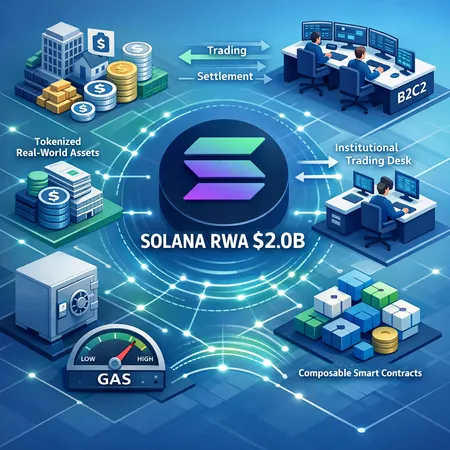
Solana recently crossed a $2.0B milestone in distributed real‑world assets tracked on RWA.xyz — a signal worth parsing. This article breaks down what the number actually means, the operational case for institutional settlement (including B2C2’s routing for stablecoins), and practical risks and opportunities for builders and product teams.

Ethereum is moving on two fronts: shoring up cryptographic resilience with a post‑quantum initiative while infrastructure like NYSE–Securitize introduces 24/7 tokenized RWA trading that could accelerate institutional inflows. This article assesses the technical and market implications for ETH-focused funds and developers.
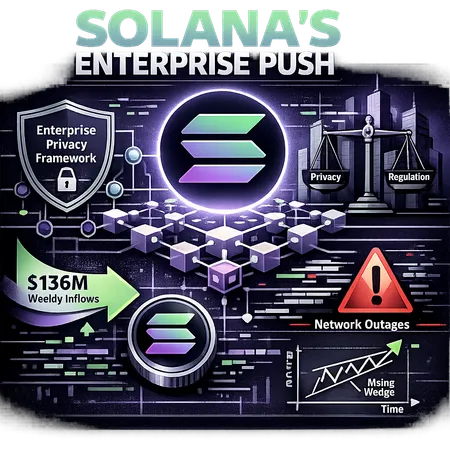
Solana’s new enterprise privacy framework and a recent $136M weekly inflow raise fresh questions about whether confidentiality features plus heavy capital can shift institutional appetite — or if technical and price risks still outweigh the upside.

Apex plans to tokenize the Omnes Mining Note (OMN) on Coinbase’s Base, creating a hashrate-backed structured note that aims to give investors programmatic access to Bitcoin mining economics without buying rigs. This feature explains the technical design, custody and liquidity mechanics on Base, the mining-market backdrop that makes tokenization attractive, and the regulatory and institutional considerations for RWA issuance on L2s.
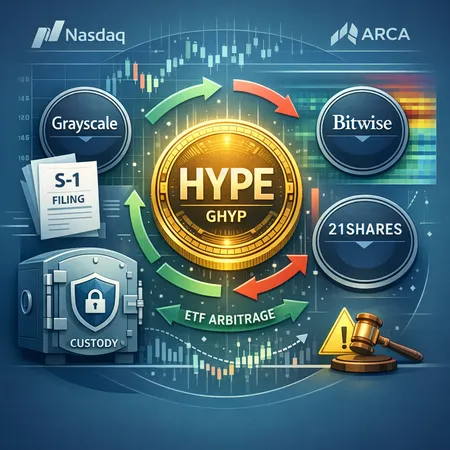
Grayscale's S‑1 filing for a spot Hyperliquid (HYPE) ETF accelerates a three-way race with Bitwise and 21Shares to capture institutional demand. This piece maps likely market impacts on HYPE liquidity, price dynamics, custody and listing specifics, and the regulatory hurdles that could delay approvals.
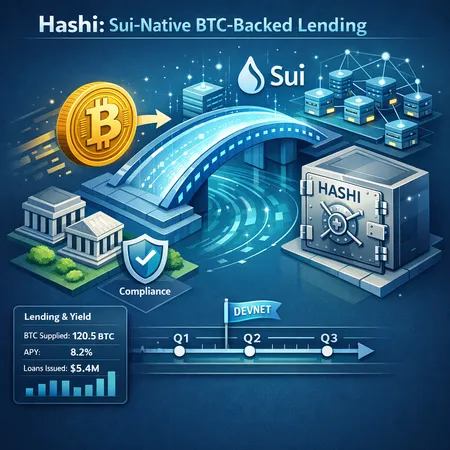
Hashi is Sui Foundation’s BTC‑backed lending primitive that introduces a compliance‑focused onchain representation of native Bitcoin into Sui’s DeFi stack. This article explains Hashi’s intent and architecture, contrasts native‑BTC primitives with wrapped models, explores likely product outcomes and risks, and gives a practical roadmap for institutions and builders.

Hyperliquid’s leap past $1B in stablecoin liquidity and a surge of oil-driven trading have pushed its perpetuals into institutional view. But liquidity depth, counterparty risk, and regulatory clarity will determine whether HYPE can truly host professional commodity flow.
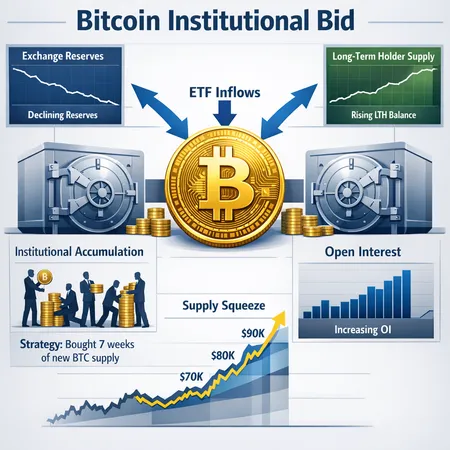
March 2026 has seen a renewed institutional bid for BTC driven by spot ETF inflows, targeted supply buys and heavy on‑chain accumulation. This article breaks down the mechanics, the on‑chain signals to watch, and realistic price-path scenarios for institutions and advanced retail investors.
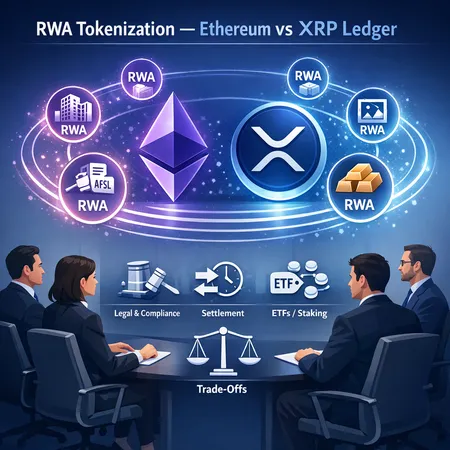
Real-world asset (RWA) tokenization is moving from pilots to production, and both Ethereum and the XRP Ledger are emerging as institutional rails. This article explains technical and regulatory trade-offs, custody and staking implications, and practical steps for institutions planning RWA pilots.

Babylon Labs and Ledger are rolling out Clear Signing to let Ledger devices participate natively in trustless Bitcoin vaults, blending hardware isolation with multi‑party signing. The integration reshapes self‑custody and institutional custody tradeoffs and opens new paths for BTC to act as trustless collateral in decentralized systems.
DeFi
All DeFi postsBitcoin
All Bitcoin postsSecurity
All Security posts- Solana Risk Assessment After the Drift $285M Exploit: Price Damage, Supports, and Actionable Trading & Validator Controls
- Preparing for the Quantum Era: Post-Quantum Security for Stablecoin Rails — Arc & Naoris Case Studies
- Inside the April 1 Drift Protocol Hack: Reconstruction, North Korea Links, and a DeFi Security Playbook