When Headlines Kill a Breakout: Venezuela, $91K and Bitcoin’s Fragile Rally in Early 2026

Summary
The sequence: breakout attempt, geopolitical headlines, fast reversal
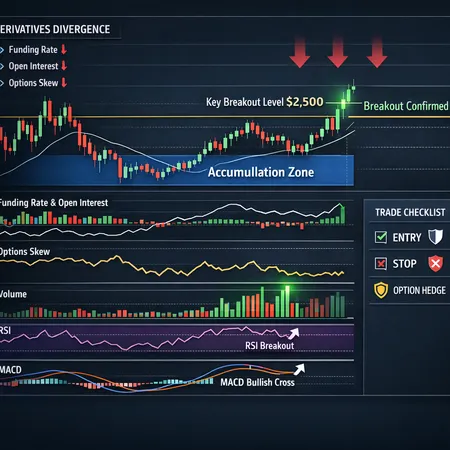
In the space of a few hours in early 2026 Bitcoin rallied toward the $91,000 area — a technically meaningful breakout zone after weeks of consolidation — only to be knocked back below $90,000 after reports of explosions in Venezuela and subsequent U.S. military action. Outlets including Cointelegraph documented the halted breakout near $91k and flagged the geopolitical layer weighing on sentiment (Cointelegraph). Coverage from CryptoPotato and CoinPedia illustrated how the headlines coincided with a swift drop below $90k and emphasized the market’s sensitivity to fast-moving conflict news (CryptoPotato, CoinPedia).
That basic sequence — technical breakout, headline, reversal — is simple on paper but messy in execution. The speed of the reversal mattered: stops, algorithmic execution and option delta hedges aggravated the move as liquidity thinned.
Why crypto reacts faster to regional conflicts than many expect
Several structural factors make BTC particularly reactive to geopolitical shocks:
- Concentrated liquidity in a handful of venues and perpetual markets: large market orders or cascading stop orders hit the same liquidity pools simultaneously. Order books can look deep one minute and fragile the next.
- High leverage in perpetual futures and margin desks means small moves force deleveraging.
- 24/7 global trading ensures immediate price discovery — there's no overnight pause to digest headlines.
Contrast that with many TradFi windows: when a regional conflict breaks during a holiday week or when major exchanges in traditional markets are closed, the crypto market can absorb the entire initial shock alone. That asymmetry amplifies headline-driven moves.
The holiday/liquidity multiplier
This episode happened during a period of relatively thin traditional-market participation. NewsBTC’s review of 2025 highlighted that Bitcoin experienced one of its calmest years on record — realized volatility had compressed significantly (NewsBTC). Low realized volatility is not the same as invulnerability. Instead, it means order books were often shallower; when a shock arrives, the same-sized headline trade produces a larger price change than it would during high-volatility regimes.
Put simply: fewer passive limit orders and less hedging capacity in TradFi means headline trades become louder in crypto.
Volatility signals: implied vs realized and what they tell you about risk pricing
Two volatility metrics matter for active traders and risk managers: realized volatility (what actually happened) and implied volatility (what options markets expect). In a calm realized-vol world, implied volatility can sit low — until an event forces it higher rapidly.
- If IV spikes more than realized — especially near event windows — options sellers get stung but options buyers can lock in protection. That repricing creates tradeable opportunities (e.g., buying protection before a headline event if IV hasn't yet priced it in).
- Conversely, when realized stays low after the headline and IV quickly mean-reverts, short volatility strategies (if sized properly) can recover premium. The trouble is distinguishing transient IV spikes from persistent regime shifts.
During the Venezuela episode, the market’s low realized-vol backdrop made the initial drop sharper; IV jumped as traders rushed to hedge, then gradually normalized as more information arrived and liquidity returned.
Trading playbooks for headline-driven intraday dips
Below are concrete tactics suitable for active traders and risk managers who want to participate in headline-driven intraday moves without getting whipsawed.
Playbook A — Scaled dip-buy with event filters
- Thesis: many headline-driven intraday dips are transient in absence of broad-market contagion.
- Execution: size 20–40% of intended position at the first clean retest of a key level (e.g., the breakout zone or VWAP), add a second tranche on a sustained retest (15–30 minutes of supportive candles) and leave the rest as optional.
- Stops: wide, volatility-aware stops (e.g., ATR-based) placed outside common liquidation clusters; avoid tight stops that trigger on order-book noise.
Playbook B — Event options hedge / skew-aware protection
- If you have directional exposure into a known geopolitical risk window, buy short-dated puts or a put spread to limit downside while keeping upside. If IV is low relative to recent realized, simple straddles can be attractive.
- Be mindful of skew: market makers price tail risk in the skew. Buying OTM protection can be cheaper than ATM in steep-skew markets but gives less delta per premium.
Playbook C — Limit liquidity-taking with book awareness
- Instead of market orders, use small posted limit orders inside the spread and increase size as orders fill. This reduces slippage in thin markets.
- Watch aggregated exchange depth and funding rate moves: sudden funding spikes indicate fast leverage unwinding; that’s often the time to reduce aggressive entries.
Playbook D — Short-term mean-reversion scalps
- In low-IV regimes that flash higher IV intraday, fast mean-reversion scalps (5–30min) can work: enter on overshoot away from a VWAP or moving-average cluster with tight, technical stops.
- Keep size small; these are gamma-sensitive trades that fail during trend extensions.
How to distinguish a transient shock from a genuine trend reversal
A headline alone does not make a trend. Here are objective checks:
- Volume and on-chain flows: Transient shocks often show a burst of spot and derivatives volume and short-lived exchange inflows. Sustained trend moves show persistent exchange flows and accumulation patterns. Monitor on-chain exchange inflows, stablecoin issuance and whale transfers.
- Breadth and correlation: If equities, FX or commodities also price in higher risk, the move likely reflects broader risk-off. Is BTC moving alone or with the risk complex?
- Candle mechanics and follow-through: A single intraday wick that retraces within hours suggests a headline spike. A multi-session break of structural support with follow-through volume is a reversal.
- Options market behavior: Persistent IV elevation and a move in term structure (front-month > farther months) imply the market expects continued volatility.
- Order book resilience: If depth rebuilds quickly near the old breakout and funding normalizes, odds favor a transient shock.
Combine these with a time filter. Give 12–72 hours for the market to absorb verified information before declaring a regime change — unless follow-up news creates a clear new narrative.
Risk management checklist for headline zones
- Reduce size going into known event windows and add only with confirmed technical signals.
- Use volatility-adjusted position sizing (ATR, realized vol lookbacks).
- Hedge naked directional exposure with short-dated options rather than crude stop placement.
- Avoid cross-exchange execution concentration: split fills to reduce venue-specific slippage.
- Keep a log of headline trades — pattern recognition helps refine which types of headlines produce durable moves.
Final notes for traders and risk managers
The Venezuela episode is a textbook example of how geopolitical risk can puncture a technical breakout in a market that had become used to low realized volatility. Rapid headline trading feeds on thin liquidity, leverage, and algorithmic stop structures to create outsized intraday moves. For active traders and risk managers, the solution isn't avoidance — it's disciplined sizing, volatility-aware execution and a systematic approach to separating noise from trend.
For practical tools, many desks now combine order-book analytics with on-chain flow monitors and options skew dashboards; platforms like Bitlet.app are part of this evolving stack for traders who want hedging and execution options in one place. Above all: respect headlines, but trade what the market proves, not what the first story suggests.
Sources
- Cointelegraph — Bitcoin's halted breakout near $91,000 amid Venezuela storms
- CryptoPotato — Bitcoin drops below $90k amid reports of explosions in Venezuela
- CoinPedia — Bitcoin loses $90k level as U.S. strikes hit Venezuela
- NewsBTC — Bitcoin records calmest year in history: volatility goes down
For more on technical breakout psychology and tactical guides, see coverage on Bitcoin.