Risk Management
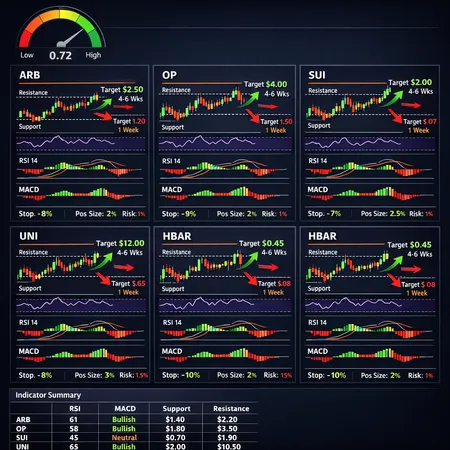
A data-driven technical roundup of ARB, OP, SUI, UNI and HBAR that synthesizes RSI, MACD and key support/resistance to give 1-week and 4–6-week scenario targets plus concrete risk-management rules for momentum and mean-reversion trades.
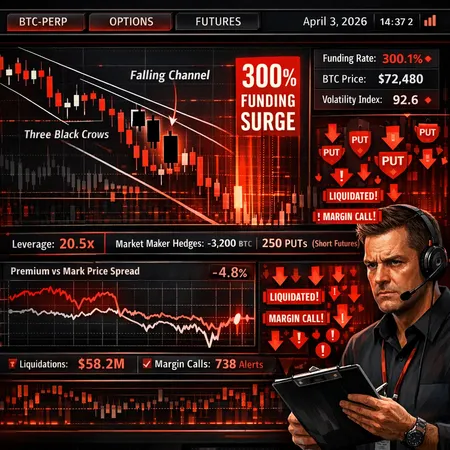
A sudden 300% spike in Bitcoin funding rates on April 3, 2026 exposed crowded leverage and elevated liquidation risk. This article explains the mechanics, how funding interacts with on‑exchange premiums and bearish technicals, and gives actionable hedging and position‑sizing rules for derivatives traders and risk managers.
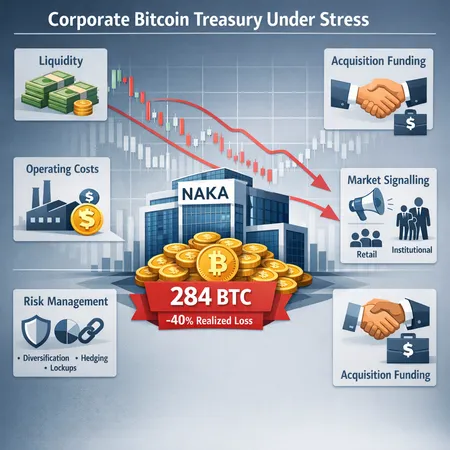
Nakamoto Inc.'s March sale of 284 BTC at a realized loss forced investors to re-examine the resilience of public bitcoin treasuries. This analysis breaks down the facts, market signaling, equity reaction, and stronger treasury risk frameworks for listed crypto holders.

A deep dive into how token burns, BTC-driven rotations, and liquidity flows shape meme‑coin moves — using SHIB’s recent burn spike as a case study. Practical trading setups and risk frameworks for high‑volatility tokens are included.
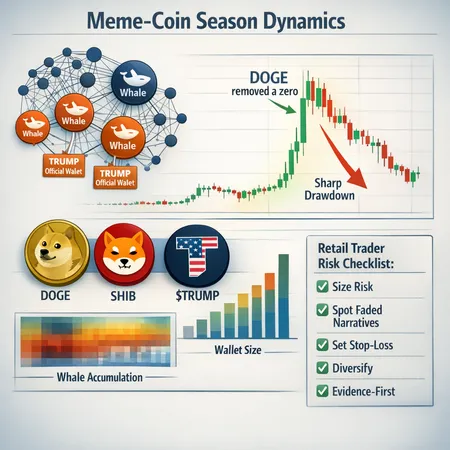
A data-driven look at how whale accumulation, millionaire buying, and psychological round-number moves shape meme-coin seasons — and a practical checklist retail traders can use to size risk and spot fading narratives.
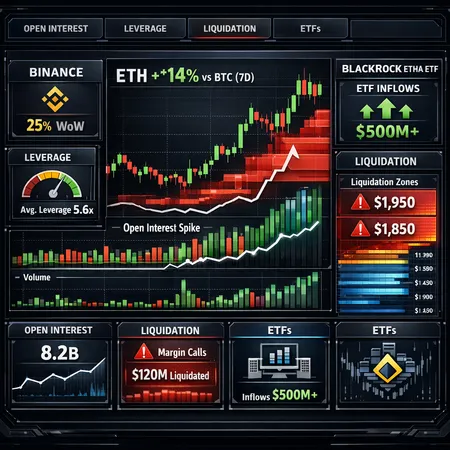
A sudden 25% week-on-week surge in ETH trading volume and rising futures open interest on Binance has reintroduced significant leverage risk into Ethereum price dynamics. This piece unpacks how exchange leverage interacts with record spot-ETF inflows and short-term outperformance versus Bitcoin to create liquidation corridors, margin pressures, and concrete risk-management rules for traders.
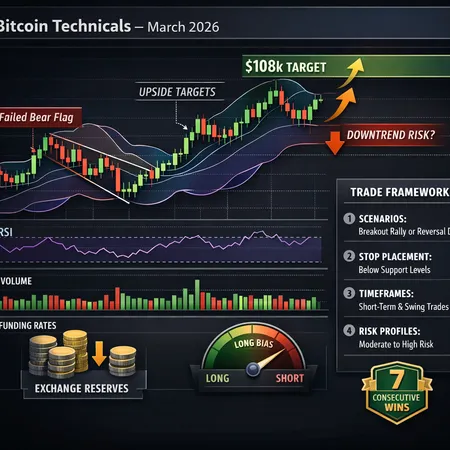
Mid‑March 2026 presents contradictory Bitcoin signals — a bear‑flag rejection versus Bollinger‑Band squeeze and multi‑day wins. This guide synthesizes those inputs into scenario-based trade rules, stop placement, timeframes and how to weight on‑chain data vs technicals.
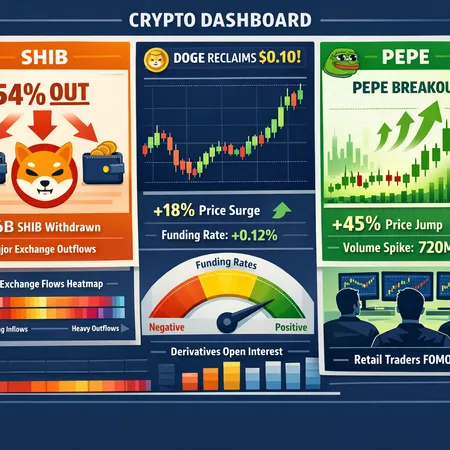
A data-driven look at how big exchange outflows, derivatives signals, and retail appetite powered rallies in SHIB, DOGE and PEPE — and how traders can read those metrics to manage risk. Practical steps for spotting short-term memecoin moves and avoiding common traps.
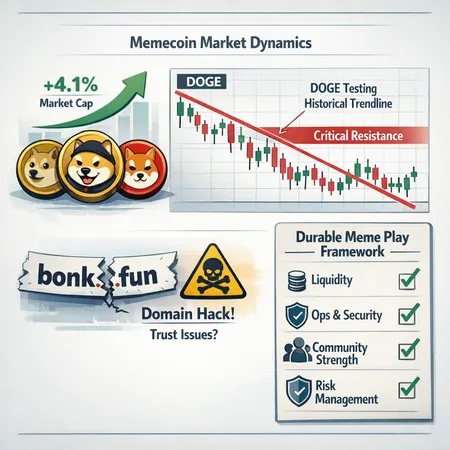
Memecoins’ aggregate market-cap recently jumped while individual tokens like DOGE face technical tests and BONK confronted a domain-hack that dented trust. This article explains the drivers behind the rise and gives a practical framework for spotting durable meme plays versus headline-driven traps.
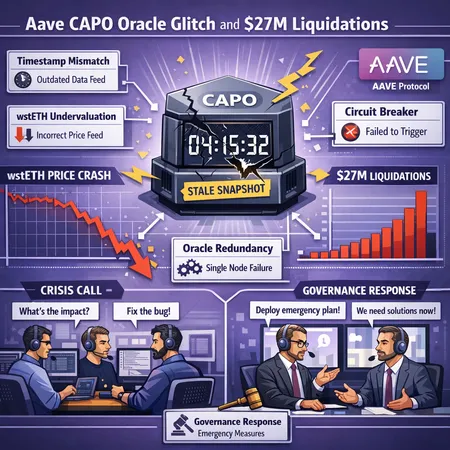
A configuration error in Aave’s CAPO oracle led to roughly $27M in liquidations after wstETH was undervalued. This post‑mortem unpacks what went wrong, how Aave responded, and concrete fixes for oracle design and DeFi governance.
DeFi
All DeFi posts- Solana Risk Assessment After the Drift $285M Exploit: Price Damage, Supports, and Actionable Trading & Validator Controls
- XRP's Split Personality: Institutional ETF Flows vs. Spot Price — Can Whales and XRPL Japan Trigger a Real Breakout?
- Preparing for the Quantum Era: Post-Quantum Security for Stablecoin Rails — Arc & Naoris Case Studies
Bitcoin
All Bitcoin postsSecurity
All Security postsStablecoins
All Stablecoins postsTrading
All Trading posts- Is Ethereum Completing a Multi‑Year Accumulation? Weekly TA, Derivatives Signals, and a Practical Trade Checklist
- TRUMP, DOGE, SHIB: How Social Rumors, Whale Moves and Broken Support Drive Weekend Meme Token Volatility
- Has Bitcoin Found a Durable Bottom After the $70k Slide? An Evidence-Based Playbook