XRP’s Institutional Moment: XRPL Payment Engine, VivoPower Moves, and XRP IRAs

Summary
Executive summary
The XRP Ledger (XRPL) is moving from niche payments experiment to something that institutions are forced to reckon with. Three converging signals matter: the new XRPL Payment Engine specification pitched with military-grade security characteristics, corporate balance-sheet exposure proposals like VivoPower’s planned $300M Ripple position, and the arrival of Arch-powered algorithmic strategies that route XRP into qualified IRAs. Taken together, these developments enlarge both the technical and economic on-ramps to XRPL, but they also expose gaps — custody, compliance, and regulatory clarity — which allocators and infrastructure builders must evaluate.
Why institutionalization needs both rails and rules
Institutional adoption is not just about scalability or token price. Institutions require: secure custody, predictable settlement semantics, composable infrastructure, and regulatory defensibility. The XRPL Payment Engine specification aims at the infrastructure side by standardizing how payment validators and settlement services interoperate. Meanwhile, corporate buys and IRA products are market signals that create the demand side of the ledger: balance-sheet utility, client-facing products, and taxable/tax-advantaged channels.
For many macro allocators who primarily watch Bitcoin, XRPL looks different — faster finality, lower fees, and a design centered on payment primitives rather than smart-contract complexity. That difference is exactly what infrastructure teams should benchmark.
The XRPL Payment Engine specification: security claims and reality
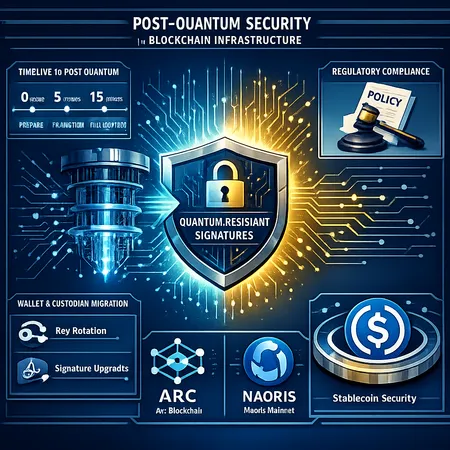
The new XRPL Payment Engine spec has been positioned as a security-focused upgrade that tightens protocol-level guarantees around message integrity, replay protection, and validator interactions. Reporting around the spec emphasizes "military-grade" security attributes designed to harden node communication and reduce attack surface for high-value settlement flows (Bitcoinist coverage).
What this practically means:
- Stronger validator authentication and message signing: reduces risk of spoofing or MITM attacks between settlement endpoints.
- Deterministic payment routing and clearer failure semantics: institutions can model settlement risk more reliably when a payment fails or partially settles.
- Integration hooks for enterprise KMS/HSMs: the spec anticipates hardware-based key management that custodians already deploy.
Caveats and open questions:
- Specs are only as strong as implementations. Validators, client libraries, and custodial stacks must adopt the changes consistently.
- Security-focused messaging raises expectations: audits, formal verification, and real-world red-team exercises will be necessary before large institutions rely on XRPL flows for material value transfer.
For infrastructure builders, the Payment Engine spec is a positive signal: it lowers the incremental engineering cost to build compliant rails on XRPL — provided the ecosystem converges on hardened implementations.
VivoPower’s $300M Ripple exposure: corporate demand and signaling effects
VivoPower’s plan to acquire up to $300 million of Ripple-linked exposure is noteworthy because it reframes corporate treasury activity around XRPL-linked assets as a deliberate allocation decision (Cryptopolitan coverage). Whether VivoPower is acquiring equity, token exposure, or structured instruments tied to Ripple/XRP, the move has three implications:
- Balance-sheet precedent: Corporates moving capital toward Ripple-related instruments create a reference point for peers evaluating either strategic partnerships or treasury diversification.
- Market depth pressure-test: A $300M corporate-sized position requires depth in execution, custody arrangements, and settlement assurances that the market — and custodians — must be ready to provide.
- Governance optics: Corporate exposure can trigger increased scrutiny from regulators and counterparties; firms will insist on demonstrable custody and AML controls.
If other firms replicate VivoPower’s approach, the XRPL ecosystem will need to show institutional-grade corridors for trading, cold storage, and reporting. That creates demand for third-party custodians and enterprise integrations.
Digital Wealth Partners, Arch and the IRA on-ramp: tax-advantaged distribution
Digital Wealth Partners (DWP) launching an Arch-powered XRP algorithm for qualified IRAs marks an important distribution milestone: it routes XRP exposure through tax-advantaged retirement channels that are familiar to allocators and advisors (Crypto.News coverage).
Why this matters:
- IRAs and retirement accounts aggregate long-duration capital. Enabling XRP in these vehicles increases the potential pool of patient assets.
- An algo product reduces frictions for advisors who otherwise avoid direct custody complexities; DWP and Arch handle execution and strategy adherence.
- Tax-advantaged channels often spur retail and RIA adoption that feeds institutional products: more stable order flow, predictable liquidity windows, and clearer tax reporting demand.
Operational implications for infrastructure:
- Custodians certified for retirement accounts must support required reporting, segregation, and fiduciary standards.
- Execution should be integrated into broker-dealer rails, not just crypto-native venues.
- Compliance automation — proof of reserves, tax lots, and provenance tracking — becomes a product requirement, not an afterthought.
This IRA channel complements corporate buys like VivoPower’s: one brings long-duration retail capital, the other brings headline corporate demand. Together they create a diversified on-ramp to XRPL.
Regulatory and custody considerations
Adoption at scale hinges on custody and regulatory clarity. Key areas to evaluate:
- Custody model: multi-sig vs. institutional MPC vs. HSM-backed single-signer solutions. The XRPL Payment Engine spec acknowledges integration with hardware KMS, but custodians must publish service-level agreements, proof-of-reserves methodologies, and attestation reports.
- Regulatory classification: jurisdictions still differ on whether XRP is a security or currency. Institutional allocators will be sensitive to legal opinions, historical enforcement actions, and jurisdiction-specific precedents.
- AML/KYC and transaction monitoring: on‑ledger transparency helps but also demands advanced analytics to detect layering, sanctioned addresses, and wash trading.
- Insurance and operational risk transfer: carriers need loss histories and vetted custody procedures before underwriting meaningful policies.
Custodians and service providers who want to win institutional flows should prioritize SOC 2/SOC 1 reports, independent audits of key management, and clear client SLAs. Infrastructure builders must also plan for cross-custody reconciliation and robust settlement windows.
Investment thesis scenarios: realistic forks in the road
Below are three concise scenarios institutions can model when considering XRPL allocations.
- Base case — Gradual institutional integration
- The Payment Engine achieves incremental adoption; custodians and exchanges implement hardened clients.
- IRA and corporate channels provide steady, predictable demand; XRP becomes a payments-first institutional asset.
- Price and flows are driven by utility and settlement volume, not purely speculative narratives.
- Bull case — Network effects and composability
- Major custodians certify XRPL custody; several corporates follow VivoPower’s lead for strategic reserves.
- Arch/IRA products scale, and a subset of asset managers build XRPL-native products (ETFs, structured notes). XRPL sees broad settlement adoption for cross-border micropayments.
- Liquidity deepens, volatility dampens; XRPL becomes an institutional-grade rail with programmatic demand.
- Bear case — Regulatory or operational stall
- Fragmented implementations of the Payment Engine lead to interoperability and security incidents.
- Adverse regulatory rulings or slow custody insurance markets curtail institutional appetite.
- IRA and corporate products fail to scale; XRPL remains a niche payments ledger with limited institutional uptake.
Risk management framework for allocators:
- Start with small, instrumented allocations via custodial partners that offer clear segregation and reporting.
- Use dollar-cost-averaging and execution algorithms designed for on‑chain liquidity patterns, not off-chain order books.
- Require operational due diligence: penetration testing, disaster recovery playbooks, and legal opinions.
Practical steps for infrastructure builders and allocators
For builders:
- Prioritize implementing the XRPL Payment Engine spec fully and publishing security audits.
- Offer modular custody options (cold storage + MPC) that integrate with retirement-account custodians.
- Build monitoring dashboards that translate ledger events into compliance signals for AML teams.
For allocators:
- Open dialogues with custodians about attestation, insurance limits, and SLA uptime guarantees.
- Evaluate execution partners who can route flows across both crypto-native and institutional venues.
- Consider allocation sizing rules tied to liquidity thresholds and custody insurance coverage.
Bitlet.app and other platforms that sit at the cross-section of retail access and institutional rails will likely find product-market fit by offering compliant custody and simplified on-ramps.
Final take: what to watch next
Three things will decide whether XRPL graduates to institutional-grade infrastructure:
- Adoption of the XRPL Payment Engine by major validators and custodians (implementation, audits, and red-team reports).
- More corporate balance-sheet actions beyond VivoPower; repeatable, publicized treasury deployments signal durable demand.
- Scale of tax-advantaged channels like the DWP/Arch IRA product — if retirement accounts meaningfully increase inflows, the demand profile changes from speculative to allocative.
If these trends converge, XRPL can become a specialized institutional rail — not a direct substitute for general-purpose smart-contract chains, but a high-throughput, low-latency settlement layer for payments and treasury operations.
Sources
- Announcement and analysis of the XRPL Payment Engine security positioning: Bitcoinist: XRPL Payment Engine military-grade security.
- VivoPower’s plan on corporate exposure to Ripple/XRP: Cryptopolitan: VivoPower targets $300M Ripple share.
- DWP’s Arch-powered XRP algo for IRAs and retirement plans: Crypto.News: XRP on-ramp via IRAs.