Custody
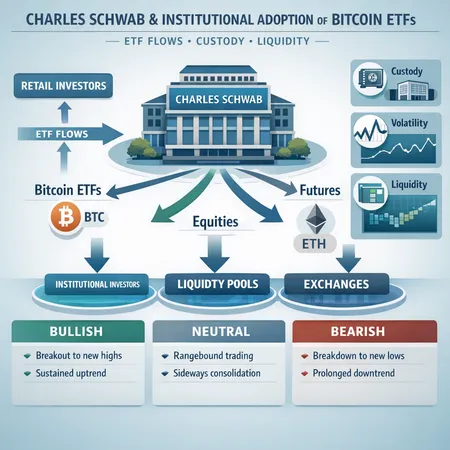
As Charles Schwab widens crypto access via ETFs, futures and equities, institutional flow dynamics and market microstructure for BTC and ETH may change materially—impacting liquidity, custody choices and volatility. This explainer lays out the mechanics, likely market effects, and 6–12 month scenario analysis for allocators.
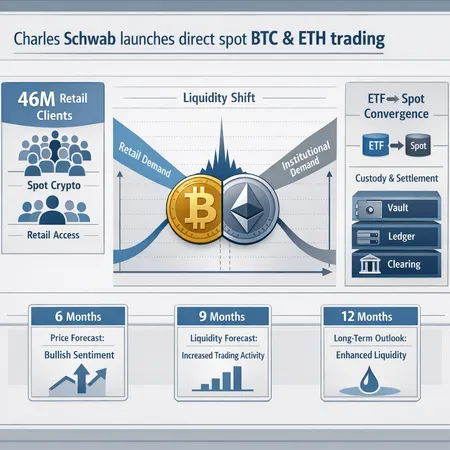
Charles Schwab’s planned H1 2026 launch of direct spot Bitcoin and Ether trading could reshape retail demand, concentrate liquidity into U.S. hours, and accelerate ETF–spot convergence. Wealth managers should prepare for custody, settlement complexities and new competitive dynamics across brokerages and exchanges.
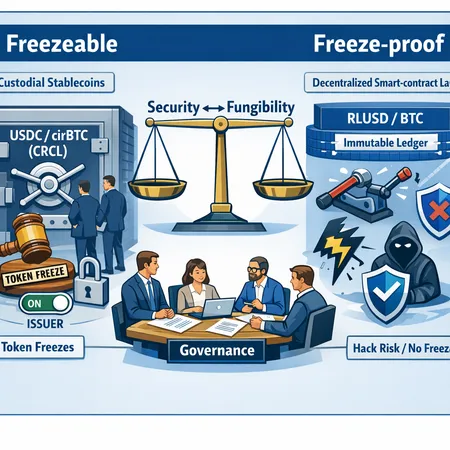
Circle’s cirBTC launch and recent protocol hacks have reignited the debate between freezeable and freeze‑proof stablecoins. This article breaks down the technical trade‑offs, custody realities, market signals like RLUSD listings and CRCL reactions, and concrete governance patterns that protect users without destroying fungibility.
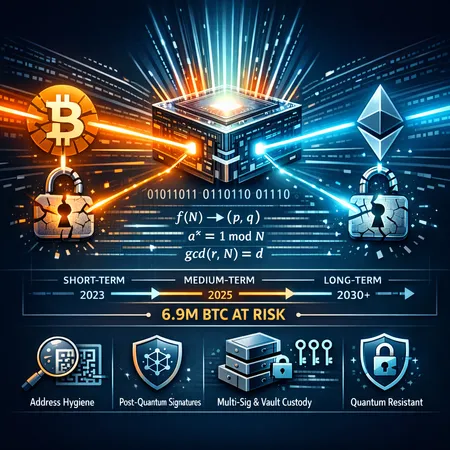
Quantum advances are starting to put real pressure on the ECC foundations of Bitcoin and Ethereum. This article parses the technical attack vectors, timelines from researchers and Google, and a practical roadmap for custodians and holders to harden assets now.
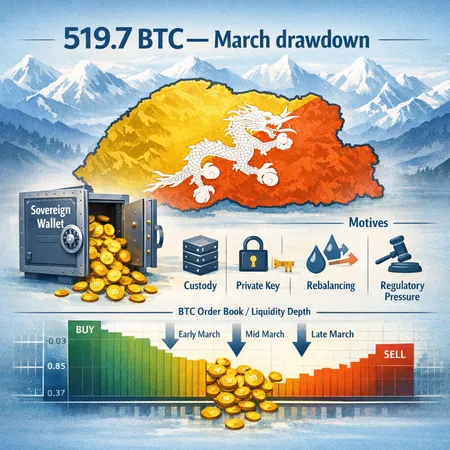
Bhutan’s March move of 519.7 BTC reignited debate about how small sovereign holders should manage digital reserves. This article parses the timeline, probable motives, market absorption dynamics, and custody/treasury models policymakers should consider.
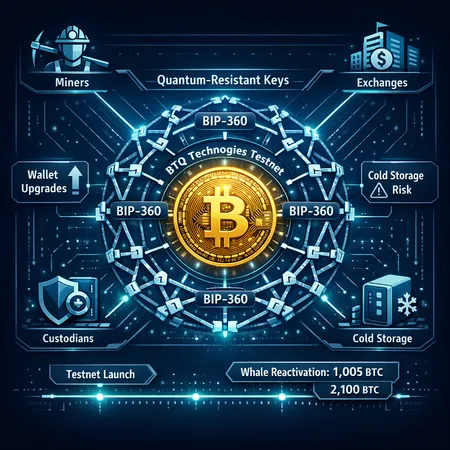
BTQ Technologies’ BIP-360 testnet is shifting a long-discussed cryptographic problem into operational reality. With multiple multi-year dormant wallets waking and moving thousands of BTC, custodians and engineers must treat quantum-resistant wallet upgrades as an urgent, practical program — not a distant theoretical risk.
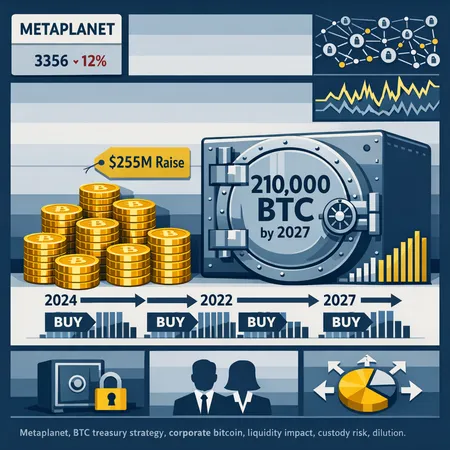
Metaplanet’s $255M raise and headline goal to amass 210,000 BTC by 2027 grabbed headlines — but the math, market effects, and execution risks tell a more complex story. This piece models purchase cadences, liquidity impact, dilution concerns, and custody/regulatory pitfalls for investors assessing large corporate BTC treasuries.
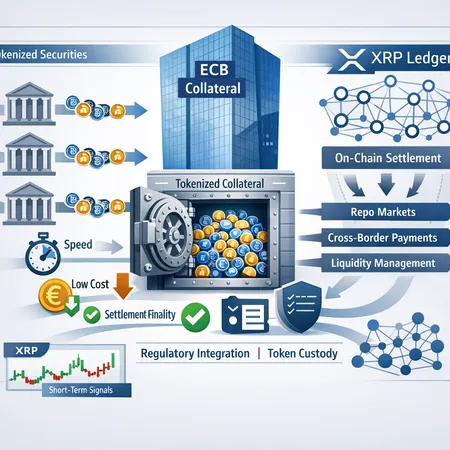
The ECB moving to accept tokenized securities as collateral changes how banks think about settlement, liquidity and custody. The inclusion of the XRP Ledger in the discussion highlights a practical on‑chain option for fast, low‑cost settlement and new plumbing for repo, cross‑border and liquidity operations.
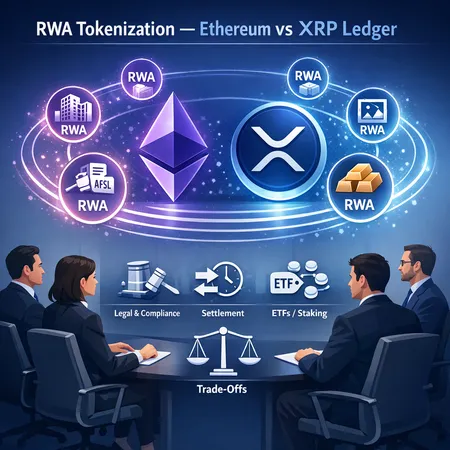
Real-world asset (RWA) tokenization is moving from pilots to production, and both Ethereum and the XRP Ledger are emerging as institutional rails. This article explains technical and regulatory trade-offs, custody and staking implications, and practical steps for institutions planning RWA pilots.
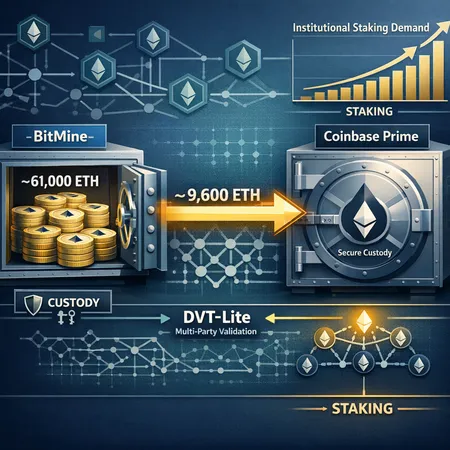
BitMine Immersion Technologies' reported acquisition of roughly 61,000 ETH and a follow-up on‑chain transfer of ~9,600 ETH to Coinbase Prime are a clear signal of evolving institutional staking preferences. This piece examines the on‑chain evidence, treasury tradeoffs between custody and staking, and how Vitalik's DVT‑lite could reshape institutional participation in Ethereum staking.
DeFi
All DeFi postsBitcoin
All Bitcoin postsSecurity
All Security posts- Solana Risk Assessment After the Drift $285M Exploit: Price Damage, Supports, and Actionable Trading & Validator Controls
- Preparing for the Quantum Era: Post-Quantum Security for Stablecoin Rails — Arc & Naoris Case Studies
- Inside the April 1 Drift Protocol Hack: Reconstruction, North Korea Links, and a DeFi Security Playbook