Bitcoin
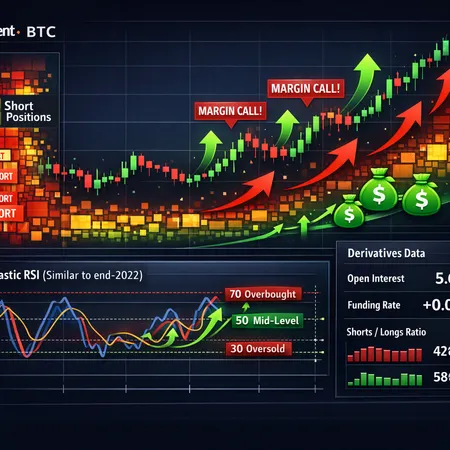
A technical deep-dive into Bitcoin's current stochastic RSI setup, derivatives positioning that could fuel a short squeeze, and how recent ETF inflows change the risk equation. Includes a tactical framework for sizing and risk-managing trades if volatility spikes.

A deep look at why a public company reported a $14.5B unrealized Q1 loss yet continued buying Bitcoin, and what corporate treasuries should learn about accumulation, accounting, and risk controls. Practical guidance for CFOs, CEOs and treasury teams on staged deployment, investor communications and market impact.
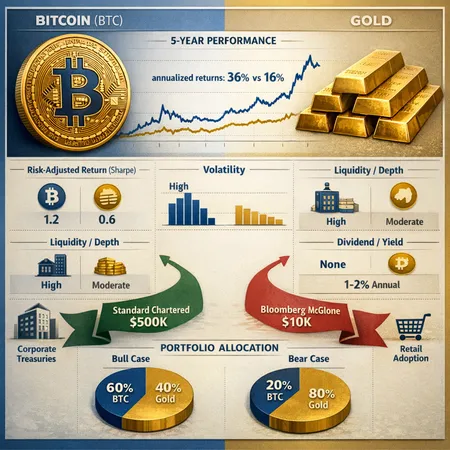
Michael Saylor reignited the Bitcoin vs gold debate by citing 36% annualized returns for BTC versus 16% for gold — a claim that demands careful unpacking. This article adjudicates what each camp is actually measuring, reconciles five‑year scorecards, and translates extreme $500k/$10k scenarios into practical allocation guidance.

An investigative look at investor skepticism around Tether’s planned $500B fundraising and what surging USDT reserves on Binance reveal about institutional flows, risk-off behavior, and systemic implications for markets.

Google Quantum AI's recent research rekindled debate about quantum threats to Bitcoin cryptography. Coinbase's leadership response has shifted the conversation toward concrete mitigation: post-quantum schemes, wallet upgrades, and coordinated migration plans.
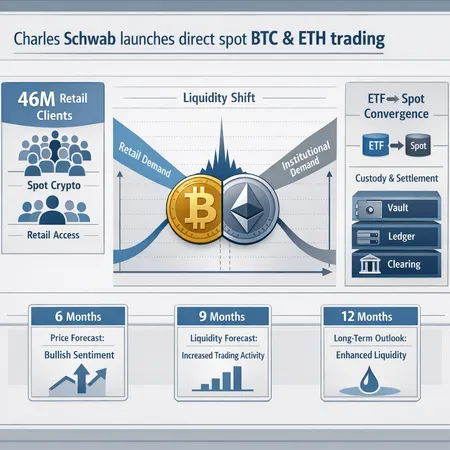
Charles Schwab’s planned H1 2026 launch of direct spot Bitcoin and Ether trading could reshape retail demand, concentrate liquidity into U.S. hours, and accelerate ETF–spot convergence. Wealth managers should prepare for custody, settlement complexities and new competitive dynamics across brokerages and exchanges.
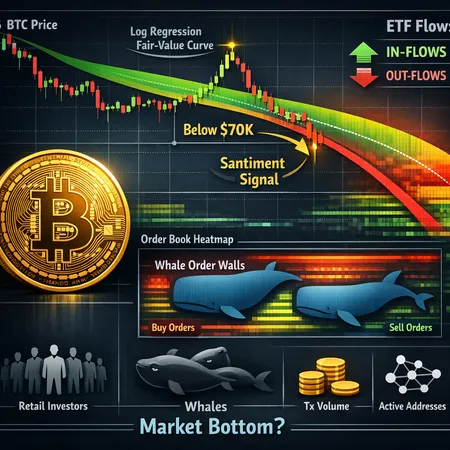
Bitcoin fell below $70k amid a spike in bearish chatter and renewed whale activity. This article weighs on-chain signals, analyst views, ETF flows and offers a practical trading playbook for intermediate traders and investors.
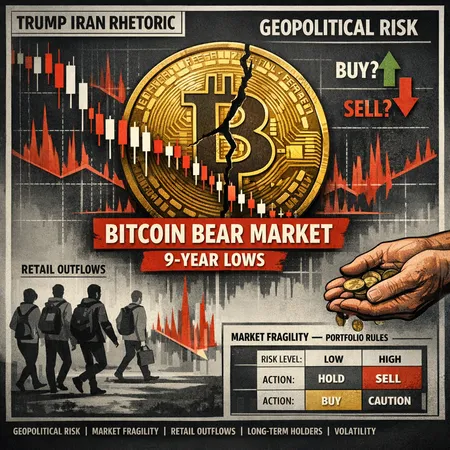
This article dissects the current Bitcoin fragility narrative—geopolitical headline risk, collapsing retail inflows, and long‑term holder selling—and translates those signals into scenario‑based allocation and stress‑test rules for macro traders and portfolio managers.
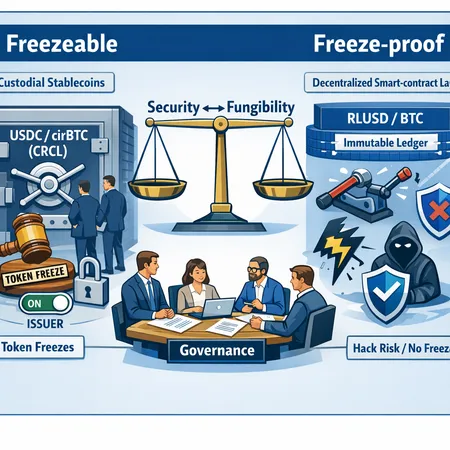
Circle’s cirBTC launch and recent protocol hacks have reignited the debate between freezeable and freeze‑proof stablecoins. This article breaks down the technical trade‑offs, custody realities, market signals like RLUSD listings and CRCL reactions, and concrete governance patterns that protect users without destroying fungibility.

Riot Platforms liquidated 3,778 BTC in Q1 2026, generating roughly $289.5M to fund data‑center and AI/HPC expansion. This move highlights a broader tension between miner treasury management and market supply dynamics.
DeFi
All DeFi postsBitcoin
All Bitcoin postsSecurity
All Security posts- Solana Risk Assessment After the Drift $285M Exploit: Price Damage, Supports, and Actionable Trading & Validator Controls
- Preparing for the Quantum Era: Post-Quantum Security for Stablecoin Rails — Arc & Naoris Case Studies
- Inside the April 1 Drift Protocol Hack: Reconstruction, North Korea Links, and a DeFi Security Playbook