Institutional Bitcoin in Late 2025: Fear, ADRs, Custody and the New Market Layer

Summary
Executive snapshot
Institutional allocation to Bitcoin in late 2025 looks different than it did five years ago. What once was a mix of speculative allocations and venture-style positioning is increasingly blended with flight-to-safety behavior, new corporate-structure rails (like ADRs), and deeper partnerships between crypto firms and regulated broker-dealers. For many allocators, the decision is not purely “buy the dip” — it’s about portfolio insurance, access, and custody risk management.
Why institutions are buying Bitcoin “out of fear” (and why that matters)
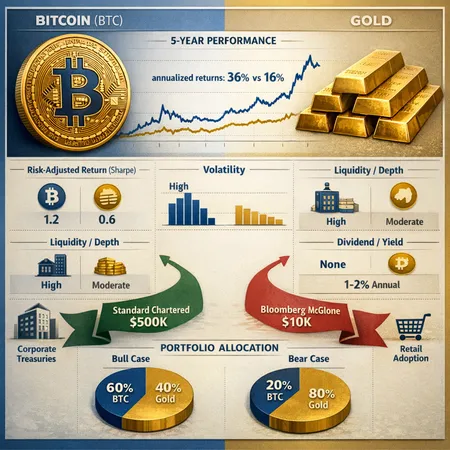
Institutional flows today are often explained as a macro hedge: when bonds and equities look vulnerable, allocators reweight to assets perceived as non-correlated or scarce. Recent reporting lays out the psychological and tactical mechanics behind this shift — institutions buy Bitcoin not just for upside but to protect balance sheets against inflation, currency debasement, or concentrated equity risk. A useful read that frames institutions’ purchases as motivated by fear and macro dynamics is available here.
That ‘‘fear’’ component has two practical consequences. First, it makes demand more defensive and sticky: corporations and funds may allocate for downside protection and hold through short-term noise. Second, defensive buying compresses liquidity at on-chain and secondary levels during stress events because many buyers are long-term or position-insensitive, which can amplify price moves when sellers do appear.
For many traders, Bitcoin remains the primary market bellwether; when institutional balance sheets start building BTC, it signals a structural shift in how capital markets value scarcity and monetary alternatives.
New institutional entry routes: ADRs, ETFs, and broker-dealer partnerships
ADRs and corporate-treasury access
American Depositary Receipts (ADRs) historically made foreign equities accessible to U.S. investors; now they're doing the same for corporate treasuries that hold BTC. A notable example in 2025 is Metaplanet (ticker MPJPY) — its ADR arrangement to trade in the U.S. is a concrete step that lowers legal and operational friction for institutions wanting indirect exposure to corporate Bitcoin holdings. That listing expands the menu of allocators who can express a Bitcoin position through regulated equity-like instruments rather than direct spot purchases. See the announcement here.
ETF flows and synthetic access
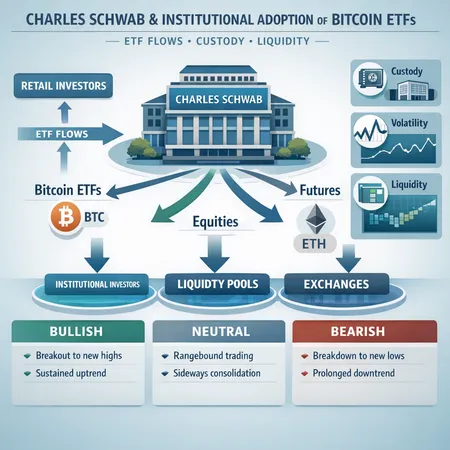
ETF products — both spot and futures-based — remain central to institutional adoption. Spot ETFs reduce settlement friction and custody risk for managers who cannot or will not custody spot coins on their own books. ETF flows are now a visible part of capital markets reporting and are frequently used in allocation decision trees for wealth managers assessing liquidity windows and entry points.
Broker-dealer and regulated-rail partnerships
Beyond ETFs and ADRs, we’re seeing more regulated crypto-to-traditional market bridges. For example, strategic partnerships that deepen institutional trading capacity and regulated intermediation are becoming more common. Ripple’s institutional push with partners focused on regulated intermediaries highlights how firms are building rails tailored to institutional needs — credit lines, regulated custody, and prime-brokerage-like services are emerging as standard offering components. That development matters because it reduces counterparty and execution risk for large block trades.
Custody evolution: from single-key wallets to institutional stacks
Institutional custody is now a multi-dimensional problem — not just key storage. Allocators care about governance, proof-of-reserves, insurance, operational recovery, and regulatory compliance. Custodians now offer layered solutions: multi-party computation (MPC), hardware security modules (HSM), federated signers, and regulated trustee models. Those options allow institutions to tune their custody posture according to counterparty appetite and regulatory constraints.
Better custody changes behavior. When custody risk falls, more institutions are willing to increase direct spot exposure, which shifts volume from synthetic products (ETFs, derivatives) to the spot market and on-chain flows. Conversely, some allocators will prefer hybrid strategies — custody via a regulated custodian while keeping incremental liquidity in ETF or ADR-like wrappers for ease of accounting and distribution.
On-chain liquidity and secondary markets: how institutional demand reshapes mechanics
Institutional entry affects liquidity in distinct ways:
- Concentration of long-term holdings: Corporate treasuries and long-duration institutional positions reduce circulating supply, tightening the free float and raising realized volatility for the tradable supply.
- Block trade execution friction: Large institutional orders require specialized desks and OTC counterparties. Improved broker-dealer partnerships reduce slippage, but during stress events, OTC liquidity can dry up rapidly.
- Price discovery migration: With more volume executed through regulated exchanges, ETFs, and brokered OTC, the locus of price discovery can shift away from pure on-chain metrics toward composite views combining on-chain flows with exchange and ETF NAV adjustments.
A practical effect is that on-chain liquidity metrics (e.g., supply in active addresses, exchange reserves) must be interpreted alongside ETF flows and ADR activity. For example, a steady decline in exchange reserves may coincide with rising ETF inflows and ADR listings — all pointing to structurally less supply available to margin-driven selling.
Implications for BTC price discovery and volatility
The mix of instruments and custody models has several implications for price formation:
- Smoother nominal volatility but higher tail risk: Sticky institutional holders may damp intraday moves, but in large deleveraging events the reduced floating supply can create outsized price moves.
- NAV and ETF arbitrage: As spot ETFs scale, ETF NAV spreads and authorized participant activity will become a more consistent component of delta in price discovery. Large ETF flows can move the spot market via authorized participant creation/redemption processes.
- ADR and equity-market cross-currents: When corporate treasuries are accessed via ADRs like MPJPY, BTC price sensitivity to equity-market news increases; a company-specific equity sell-off could propagate to BTC exposure embedded in ADR valuations.
These dynamics mean allocators must watch a broader set of indicators: ETF flows, custodian net inflows/outflows, ADR trading volumes, on-chain exchange reserves, and large OTC block activity.
Risk management: building an institutional allocation framework
For wealth managers and institutional allocators the decision tree should include:
- Objective alignment: Is BTC a hedge, diversifier, or return-seeking allocation?
- Instrument selection: Choose among spot custody, spot ETFs, ADRs, or futures based on regulatory, accounting, and tax constraints.
- Counterparty and custody risk: Define acceptable custodians, insurance levels, and recovery processes.
- Execution plan: Use algorithmic execution, block trades with prime brokers, or ETF-based entry to minimize market impact.
- Monitoring and rebalancing: Track ETF flows, ADR activity (e.g., MPJPY volume), and on-chain liquidity as part of rebalancing triggers.
A pragmatic example: a pension fund with low operational appetite may allocate to a spot ETF for 70% of its target exposure and maintain 30% via a regulated custodian for long-term holding — balancing liquidity with custody confidence.
What allocators should watch next
- Regulatory shifts: Clarifications around custody, trustee rules, and balance-sheet treatment will change product viability rapidly.
- ADR proliferation: More corporate treasury ADR listings will create equity-market contagion channels that require cross-asset risk models.
- Institutional rail partnerships: Watch partnerships that enable broker-dealer custody and prime-broker-like services; these reduce slippage for large trades and make OTC markets more efficient.
For wealth managers building theses today, platforms like Bitlet.app will increasingly appear in the toolkit ecosystem as firms seek integrated rails for installment buying, P2P exchange, and managed custody — but any vendor choice must be tested against custody and operational criteria.
Conclusion
Late 2025’s institutional layer is defined by a duality: defensive demand driven by macro fear and insurance motives, and structural innovation driven by ADRs, ETFs, and regulated intermediation. Together these forces shift liquidity, alter price discovery mechanics, and force a re-think of custody and execution. For allocators, the task is less about whether to own Bitcoin and more about how to own it — through which instruments, under which custodial regime, and with what contingency plans for liquidity stress.