Spot XRP ETFs + XRPL Lending: Rewiring Institutional Liquidity and On‑Chain Payments

Summary
Why this moment matters
The crypto ecosystem rarely lines up so many institutional primitives at once: spot ETFs that package a liquid asset for regulated investors, a protocol-level lending system that promises fixed-rate, predictable credit denominated in XRP, and on‑chain payment activity spiking after ETF launches. Together these elements can change how institutions view XRP — not just as a speculative token but as a short-term funding instrument and a rails layer for payments.
For product managers and institutional analysts, the key question is less “will price go up?” and more “will markets and infrastructure make XRP a reliable instrument for liquidity management and payments?” This piece walks through the ETF flow mechanics that set XRP apart from Bitcoin and Ethereum, explains the design and market implications of the XRPL Lending Protocol, reviews the evidence of rising on‑chain payments, and lays out realistic 12–36 month scenarios.
How XRP ETF flows differ from BTC/ETH ETF flows
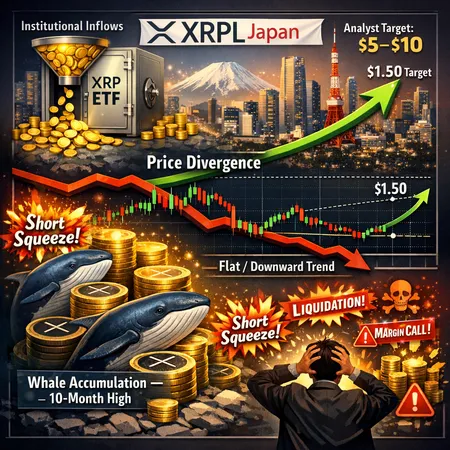
When Bitcoin and Ethereum spot ETFs launched, much of the inflow was driven by allocation and passive demand: pension funds, wealth managers and ETF wrappers created sustained buy pressure as core portfolio allocations grew. With XRP, flows are behaving differently. Analysts note that XRP ETFs are drawing cash in ways that reflect trading and arbitrage behavior as much as long-term allocation, because XRP has a distinct microstructure and liquidity profile in secondary markets compared with BTC/ETH. See the analysis detailing why XRP ETF mechanics diverge from prior ETF episodes for more detail.
The practical implication: ETF flows into XRP may be more episodic and concentrated around trading windows, market-making, and institutional clients seeking exposure to a liquid on‑chain payment token, rather than only buy-and-hold allocation. That makes the use-case dynamics — payments, settlement speed, and interest-bearing repo-like structures — far more relevant than with store-of-value narratives.
What the XRPL Lending Protocol changes: mechanics and intent
The XRPL Lending Protocol introduces protocol-level fixed-rate credit, meaning lending and borrowing markets can be instantiated as on‑ledger primitives rather than solely through smart-contract markets built on top. The goal is to create predictable, institutional-grade credit facilities denominated in XRP that behave like short-term repo or term-funding products.
Key mechanics to watch:
- Fixed-rate term facilities: institutions can lock in a borrowing cost in XRP for defined maturities, converting volatile short-term funding into predictable lines. This reduces basis risk for treasury desks and payment providers.
- Protocol-level settlement: credit events and amortization are recorded on XRPL, improving auditability and reducing counterparty frictions compared with off‑chain bilateral repos.
- Integration points for custodians and exchanges: if custodial providers and custodial wallets integrate native support for XRPL Lending positions, market liquidity becomes more usable for regulated entities.
The protocol’s intended outcome is straightforward: make XRP a short-term, interest-earning instrument that institutions can rely on for intraday and term funding, improving the token’s utility as a liquidity asset.
Why protocol-level credit matters to institutional liquidity
Fixed-rate, on‑ledger credit transforms the economics of holding a token. Instead of merely speculating on price appreciation, an institution can earn a predictable yield while using XRP as collateral or as the borrowed asset for payments and market making. That creates three interlinked effects:
- Usable float: custodians and treasuries can hold XRP and deploy it into short-term credit facilities without needing complex off‑chain repo documentation. That creates usable liquidity instead of idle balance-sheet exposure.
- Tighter market plumbing: predictable funding costs allow market makers to quote narrower spreads, improving on‑chain liquidity and reducing slippage for large payments.
- Arbitrage and yield optimization: multi-venue arbitrage involving spot ETFs, lending yields, and payment flows creates demand for physical XRP, not just synthetic exposure.
If these effects materialize, XRP’s turnover could rise meaningfully — not purely due to speculative flows but as part of everyday liquidity management.
Recent on‑chain payment spikes and what they imply
The ledger is already showing signs of changing behavior. After ETF announcements and launches, researchers reported dramatic increases in on-chain payment activity, including record single-day transfers. These spikes are not just noise — they indicate more entities are using XRP for high-volume transfers and settlement, sometimes at institutional scale. One report documented that 300% spikes in payment activity became possible after ETF momentum, highlighting the correlation between regulated access and payments volume.
Higher payment throughput has two practical consequences for institutions: first, it validates XRPL’s capacity to handle bulk settlement use cases; second, it raises the demand for short-term XRP working capital, which dovetails directly with XRPL Lending. In short: ETFs can concentrate capital, spikes in payments create demand for intraday funding, and protocol-level lending supplies that funding in a predictable way.
The legal backdrop: SEC appeal dropped and risk re‑pricing
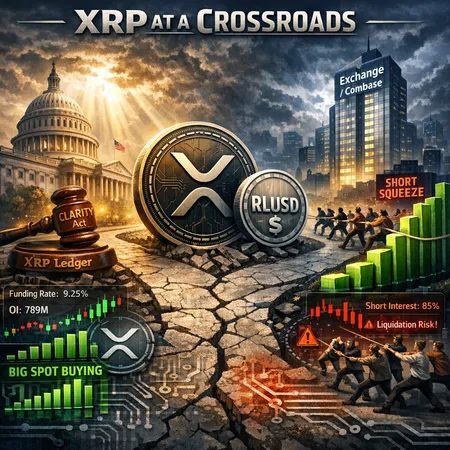
Legal clarity matters for large allocators. The U.S. SEC’s choice to drop its appeal against Ripple materially reduces the legal tail risk that previously constrained some institutional actors. With that overhang diminished, compliance and risk teams have fewer existential legal questions to answer when evaluating XRP exposure on behalf of clients.
This change doesn’t remove all regulatory work — custody, KYC/AML, and bilateral counterparty policies still require diligence — but it does shift XRP from a high‑tail‑risk asset to one with a more predictable regulatory profile. That re‑pricing of legal risk is a necessary condition for many insurers, custodians and asset managers to scale exposure, and it complements the development of ETFs and XRPL Lending as institutional primitives.
12–36 month scenarios: price, liquidity and adoption
Below are three realistic pathways that combine ETF flow behavior, XRPL Lending adoption, payment activity, and regulatory clarity.
Base case (12–18 months): Measured infrastructural adoption
- Price: Moderately higher volatility but no runaway appreciation. Price benefits from episodic ETF flows and rising utility demand; expect broad trading ranges with occasional spikes tied to on‑chain payment events.
- Liquidity: Improved intraday liquidity on XRPL; market makers tighten spreads when lending facilities are available. ETF arbitrage and lending create modestly higher turnover.
- Adoption: Payment providers trial XRPL Lending for operational float; a handful of custodians add support for on‑ledger lending positions. Bitlet.app and other product teams will pilot custody + lending integrations for institutional clients.
This scenario assumes custodial integrations and regulatory comfort progress but full-scale composability and integration across custodians/exchanges is gradual.
Optimistic case (18–36 months): Deep liquidity transformation
- Price: Meaningful appreciation as XRP evolves from a payments token into a high‑velocity funding asset; ETF inflows are complemented by persistent on‑chain demand for settlement capital.
- Liquidity: XRPL markets behave more like short-term money markets. Fixed-rate credit becomes a staple for treasuries and exchanges, producing robust repo-type liquidity and lower funding volatility.
- Adoption: Widespread custodian and exchange support for XRPL Lending; payment networks and payroll/FX rails use XRP for settlements; structured products and cash-management solutions integrate XRP-denominated yields.
In this path, ETF flows become a permanent part of institutional allocations, and XRPL Lending is accepted as a core liquidity tool in treasury operations.
Pessimistic case (12–36 months): Slow take-up and episodic demand
- Price: Rangebound or modestly negative drift if ETF flows are short-lived and trading dominates holdings. Without broad custodian and custodial-lending adoption, speculative selling pressures re-emerge.
- Liquidity: On‑chain payment spikes persist but are driven by non-institutional actors; lending volumes remain niche due to compliance or custodian risk limits.
- Adoption: Use-cases remain pilot-stage; full integration stalls because of operational complexity or competing rails.
Even here, pockets of institutional demand will exist, but the systemic transformation of liquidity management on XRPL will be limited.
Practical implications for institutional product teams and analysts
If you manage institutional products or advise buy-side clients, these are the operational priorities to consider:
- Custody + lending integrations: Ensure custodial partners can hold XRP and represent XRPL Lending positions on client statements and risk systems. This is the short list for product readiness.
- Risk frameworks: Model basis risk between ETF NAV mechanics and on‑ledger XRP liquidity; simulate how fixed-rate XRPL Lending affects cash and collateral flows under stress.
- Settlement flows: Re-evaluate treasury and payment factories to see if XRP-denominated term funding could displace or complement existing FX/FX-forward hedges and intraday funding lines.
For market strategists, the interplay between ETF flows and lending yields will create new arbitrage strategies. Trading desks should prepare for episodic liquidity windows around ETF inflows and settlement cycles.
Conclusion: A plumbing story more than a price story
The combination of spot XRP ETFs, rising on‑chain payments and the XRPL Lending Protocol is less about a speculative rerating and more about building new plumbing for institutional liquidity. ETFs concentrate capital and regulatory access; on‑chain payment spikes prove demand; and protocol-level fixed-rate credit supplies the predictable funding institutions need to deploy XRP at scale. With the SEC appeal dropped, the legal calculus for many institutions is now more favourable, making the plumbing’s adoption path more likely.
For institutions and product teams, the near-term focus should be on operational readiness: custody, compliance, and integration with XRPL Lending. If these pieces fall into place, the next 12–36 months could see XRP transition from an occasionally-used payment token into a durable element of institutional liquidity stacks.
Sources