Institutional Flows
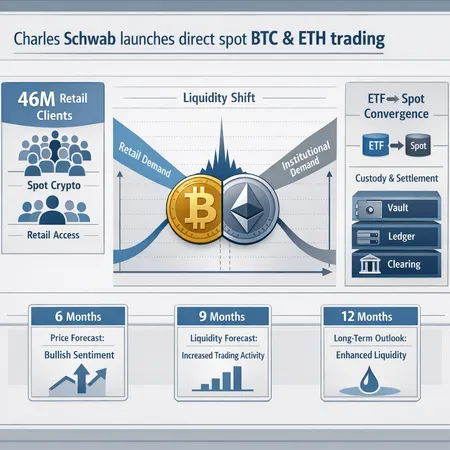
Charles Schwab’s planned H1 2026 launch of direct spot Bitcoin and Ether trading could reshape retail demand, concentrate liquidity into U.S. hours, and accelerate ETF–spot convergence. Wealth managers should prepare for custody, settlement complexities and new competitive dynamics across brokerages and exchanges.

As spot Bitcoin ETFs like BlackRock’s IBIT match exchange volumes, institutional flows and Latin America’s rapid ETF uptake are reshaping where BTC price discovery happens. This analysis compares IBIT vs exchange liquidity, the Coinbase premium flip, retail outflows and practical execution implications for asset managers.
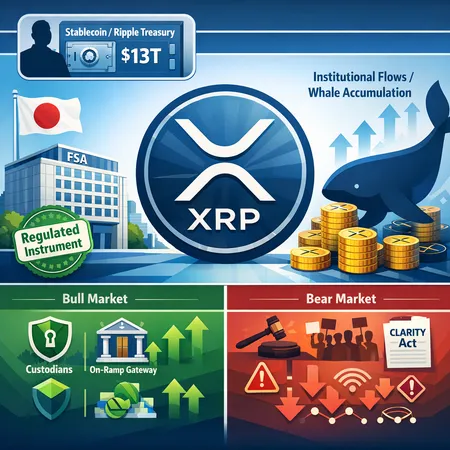
Japan’s FSA reclassification, renewed whale accumulation and Ripple’s $13T stablecoin/treasury pitch together reshape the institutional calculus for XRP. This article breaks down what each development means for price, product adoption and regulatory risk.

BlackRock’s iShares Staked Ethereum Trust (ETHB) launches a new channel for institutional staking demand. This article dissects ETHB’s structure, early inflows and whale buying, and how staked Ethereum ETFs may shift staking yield, liquidity and ETH/BTC dynamics.

2026 has opened with a sharp divergence: physical gold rallying while BTC lags. This piece evaluates whether Bitcoin can still cement the 'digital gold' narrative or if tokenized gold and traditional bullion will keep the safe‑haven crown.
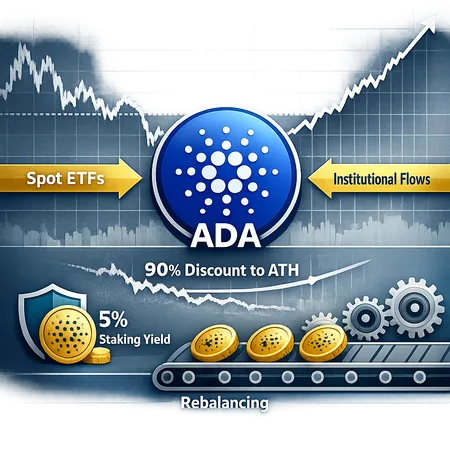
Cardano’s current valuation gap, staking utility, and improving market structure create a plausible pathway for ADA to attract institutional flows as spot ETFs broaden altcoin exposure. This article examines the mechanics behind that thesis, realistic upside, timeline, and a practical checklist for investors.
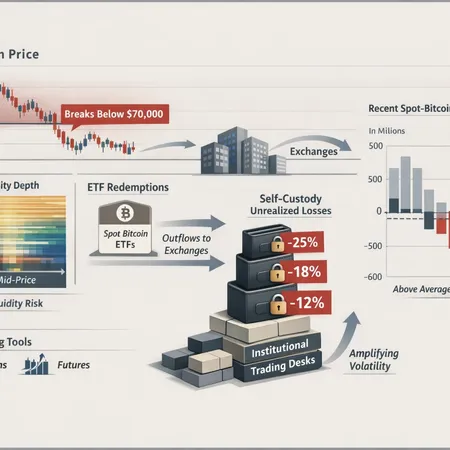
Recent large spot-BTC ETF outflows have pressured prices and driven heavy unrealized losses in self-custody wallets. This article explains the mechanics, why slipping below $70k matters for market structure, and actionable hedges and liquidity rules for allocators and traders.
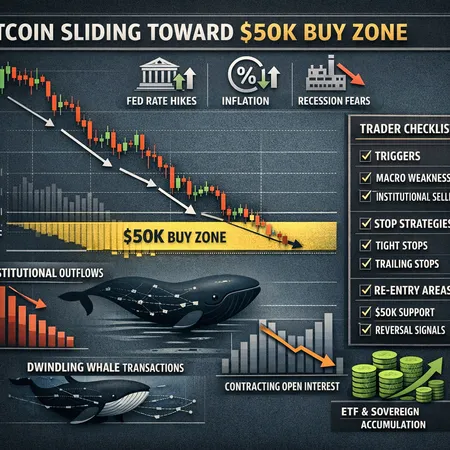
A run-through of macro, on‑chain and derivatives signals that could drive BTC toward the $50K zone, with a balanced checklist for traders on triggers, stops and re‑entry areas.
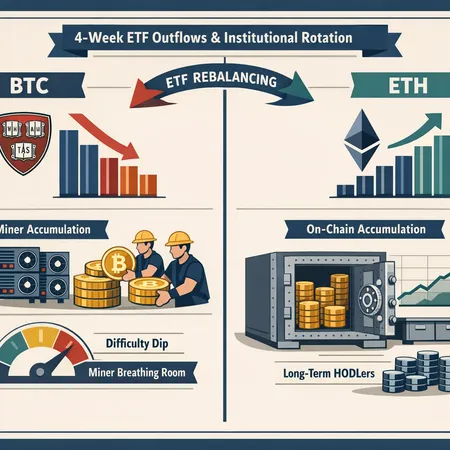
Universities and funds appear to be rebalancing away from BTC while miners and long‑term holders accumulate on‑chain. That divergence changes the effective supply curve — and should influence how allocators weight BTC vs ETH.
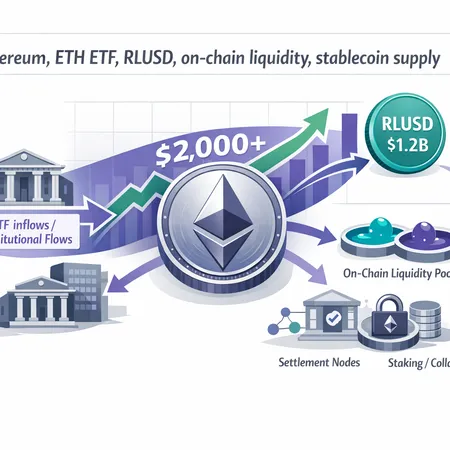
Renewed ETH spot‑ETF inflows helped ETH reclaim $2,000, while Ripple’s RLUSD expansion to ~$1.2B on Ethereum is shifting settlement and collateral dynamics. Together these forces are increasing on‑chain liquidity and altering medium‑term price scenarios for ETH.