XRP's Paradox: Why the U.S. Spot ETF Crashed While Institutions Pile In
Summary
Executive summary — the paradox laid out
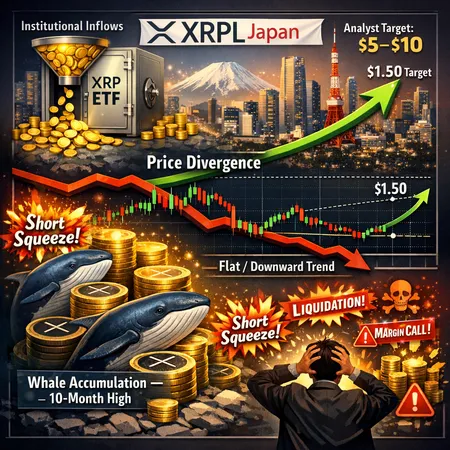
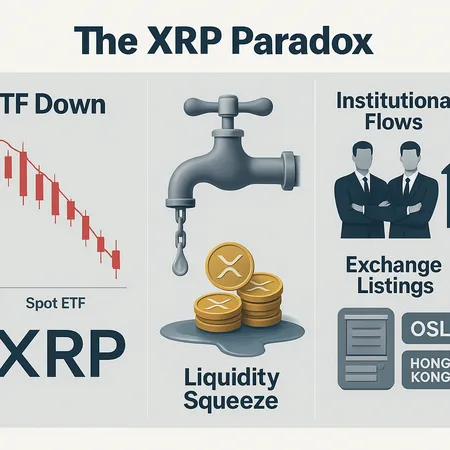
The headline is stark: the U.S. spot XRP ETF has posted a sharp post‑launch decline, yet multiple signals point to increasing institutional interest — from family‑office accumulation to regulated exchange listings and large treasury movements. Reconciling those facts requires separating short‑term market microstructure and ETF mechanics from the slower, fundamental shifts that broaden institutional access and potentially tighten free float.
This investigation assesses the drivers behind the ETF’s early crash, the evidence for continued institutional accumulation, the role of new regulated listings (notably OSL Hong Kong), and how major on‑chain transfers from Ripple and related treasury flows could create a liquidity squeeze that will shape price discovery in the coming months.
Why the spot XRP ETF cratered at launch
The ETF’s ~20% drop since launch isn’t just a headline — it reflects a combination of execution frictions and selling pressure common to new product listings. Early reporting showed a steep retreat after debut, with one summary noting a roughly 20% decline since launch Finbold. Several mechanisms help explain that initial move:
- Creation/redemption mechanics and market‑maker behavior. Authorized participants (APs) and market makers bridge ETF share creation with spot XRP liquidity. When APs face tight inventory or adverse spreads, they may sell spot XRP into the market to hedge ETF exposure, creating downward pressure.
- Retail rotation and profit taking. Launch hype often draws retail traders who buy early and realize gains quickly, then flip into other memecoins or cash, amplifying volatility.
- NAV vs. intraday price divergence. ETFs can trade away from NAV during thin periods; given XRP’s still‑emerging liquidity profile in U.S. regulated market structures, intraday deviations can be large and painful.
- Structural selling from short-term holders. Some traders use ETF listings to realize arbitrage or tax strategies that produce net selling initially.
Put simply: short‑term ETF issuance and hedging flows can create a negative overlay on price even when long‑term buyers are accumulating off‑exchange.
Institutional interest: inflows, family offices and a different narrative
Despite the ETF’s weak start, other data points show institutional demand is real and growing.
- Wealthy family offices and private allocators have reportedly been rapidly buying XRP off‑exchange, a move that signals private accumulation independent of ETF price action (NewsBTC). These buyers commonly prefer OTC and custody setups rather than immediate public market exposure.
- ETF flows — while volatile — have not stopped. Coverage indicates inflows into the ETF structure are still occurring and have helped establish a price structure around notable levels (coverage suggests support near the $2 area from ETF activity) (FXEmpire).
- The coexistence of public ETF flows and private OTC accumulation is not mutually exclusive: institutions often accumulate into OTC liquidity while ETFs reorganize supply on exchanges.
For allocators, this split matters: visible ETF performance can diverge from the underlying demand being built by off‑exchange professional buyers who are more focused on settlement use cases, counterparty relationships, and custody arrangements.
Regulated exchange listings: the OSL Hong Kong effect
Regulated access expands the buyer universe. The recent listing of XRP on OSL Hong Kong — an exchange focused on professional and regulated investors — formalizes a channel for qualified institutions in APAC to access XRP through a regulated venue (Coinpedia).
Why that matters:
- Broader institutional participation. Listings on regulated venues reduce compliance friction for pension funds, family offices and regulated asset managers who need counterparty oversight.
- Regional diversification of demand. APAC buyers can now participate in regulated order books rather than rely solely on OTC desks.
- Price discovery improvement. More regulated venues increase the chance of deeper, more continuous order books across time zones — which should reduce some intraday ETF dislocations.
This pattern resembles how Bitcoin matured: public ETFs and regulated trading venues plus OTC accumulation combined to produce deeper liquidity over time. For XRP, OSL Hong Kong is one more step in that same direction.
XRP supply dynamics and the liquidity squeeze risk
Perhaps the most under‑appreciated piece of the puzzle is supply: big on‑chain transfers and corporate treasury behavior can materially change the free float. Recent reports that Ripple moved 250 million XRP have raised questions about how company flows — historically labeled under various programs, including Xpring and treasury disbursements — influence market liquidity and price sensitivity (Ambcrypto).
Key implications of large transfers:
- Temporary liquidity withdrawal. If large parcels are moved off exchanges or into custody, available sell liquidity drops, raising the odds of volatile upward moves when demand hits.
- Directional signaling. Large transfers can be interpreted as either positioning for sell programs or for staking/custody; context matters. Some transfers precede lockups or OTC arrangements that reduce circulating supply.
- Interaction with ETF creation. If spot supply is thin, APs struggle to source XRP for ETF creations without paying premium prices — a dynamic that can push spot higher and widen ETF/NAV gaps.
Historically, Ripple and related corporate flows (including Xpring‑era movements and treasury operations) have been a recurring influence on price. Institutions should not treat supply as static; instead, monitor exchange reserves, large transfers, and known treasury schedules.
Reconciling the paradox: how a crash and accumulation co‑exist
Putting the pieces together: the ETF’s early crash reflects short‑term market plumbing — hedges, AP behavior, retail flips and NAV dislocations. Simultaneously, institutional accumulation (OTC, family offices), new regulated listings and targeted treasury moves are slowly reshaping the supply/demand balance in directions that could support higher prices once ETF mechanics and liquidity normalize.
This leads to two important observations:
- Timing mismatch. Public ETFs price in instantaneous liquidity and intraday sentiment; private institutional accumulation often has a longer horizon and uses OTC channels that don’t show up in exchange order books.
- Liquidity amplification. If supply is tightened through large off‑exchange buys or treasury lockups while ETF demand continues, the market can move quickly and nonlinearly — a classic liquidity squeeze.
So volatility today is not proof of weak institutional conviction. It can be the byproduct of competing timeframes and market structures.
What this means for short‑to‑medium term price discovery
Expect choppiness and occasional violent moves. Practical scenarios to model:
- Bear‑to‑range: ETF selling + ample exchange reserves = prolonged consolidation and weak price discovery. This is the base case if regulated inflows don’t outpace sell pressure.
- Squeeze‑up rally: Continued private accumulation + reduced exchange reserves (via treasury transfers or OTC absorption) + steady ETF inflows = sharp, short‑lived rallies as liquidity thins.
- Gradual appreciation: If regulated listings (OSL Hong Kong and others) steadily onboard professional demand and ETF structures optimize hedging costs, price discovery can shift upward more smoothly over months.
Signals to monitor in real time:
- ETF creation/redemption prints and net flows (are inflows persistent or episodic?).
- Exchange XRP reserves and large wallet transfers (on‑chain analytics). Large declines in exchange holdings often precede squeezes.
- OTC desk feedback and premiums to spot (indicates private buying pressure).
- Corporate treasury movements and any disclosed lockups or schedule changes — including Xpring/treasury style operations.
Tactical guidance for institutional allocators
For allocators weighing short‑term ETF volatility against longer‑term adoption and settlement use cases, a clear framework helps:
- Size thoughtfully and stage entries. Start with small allocations to capture long‑term exposure, then scale as evidence of sustained flows and reduced exchange reserves accumulates.
- Use blended execution. Combine ETF exposure (for regulatory simplicity and tradability) with OTC fills when market depth is available to avoid paying intraday premiums.
- Hedge selectively. Options or delta‑hedged structures can protect against violent short‑term swings while keeping upside optionality.
- Watch custody and settlement pathways. Regulated listings like OSL Hong Kong reduce counterparty risk for APAC investors; reliable custody is crucial for fiduciary compliance.
- Monitor the right metrics. ETF flows, AP activity, exchange reserves, and large treasury transfers (Xpring/treasury flows) should be part of your ongoing dashboard.
Services like Bitlet.app and regulated OTC desks can help with staged buy programs and custody arrangements, but choose counterparties that provide clear reporting and settlement guarantees.
Conclusion — reconcile, then act
The apparent contradiction between a plunging spot ETF and rising institutional interest is resolvable: the fall reflects short‑term market mechanics while the accumulation and regulated listings reflect longer‑term demand growth. For institutional allocators, the opportunity is to translate that asymmetry into a disciplined investment program — one that respects the ETF’s intraday volatility but also positions for a future where regulated access and potentially tighter free float make XRP a more mature institutional asset.
Keep the focus on flows and liquidity: ETF creation/redemption patterns, exchange reserve trends, OTC premiums, and treasuries’ movement will be the clearest early indicators of how price discovery will evolve.
Sources
- Report on the U.S. spot XRP ETF crash (Finbold): https://finbold.com/u-s-first-ever-spot-xrp-etf-crashes-20/?utm_source=snapi
- OSL Hong Kong listing coverage (Coinpedia): https://coinpedia.org/news/ripple-news-xrp-officially-listed-on-regulated-exchange-osl-hong-kong/
- Family offices and private accumulation report (NewsBTC): https://www.newsbtc.com/altcoin/forget-bitcoin-the-uber-wealthy-are-now-rapidly-buying-xrp-ceo/
- Ripple moved 250M XRP and supply implications (Ambcrypto): https://ambcrypto.com/ripple-moves-250m-xrp-can-supply-crunch-trigger-a-2-50-move/
- ETF inflows and price structure coverage (FXEmpire): https://www.fxempire.com/forecasts/article/xrp-news-today-etf-streak-extends-as-price-battles-2-0-floor-1566043