If Arthur Hayes Is Right: Dollar-Liquidity, BTC, ZEC and Multi-Asset Crypto Allocation
Summary
Executive summary
Arthur Hayes’s dollar-liquidity thesis flips the common “crypto narrative failed” story on its head: he argues that a tighter dollar/credit environment in 2025 suppressed risk appetite and liquidity, which weighed on BTC and correlated crypto. If dollar liquidity loosens, Hayes expects a rapid re-rate in assets that behave like liquid dollar substitutes or equity-like crypto exposure—think BTC, ZEC, MicroStrategy (MSTR) and Japan’s Metaplanet. This piece explains his argument, traces the channels from U.S. liquidity to crypto prices, and gives practical allocation and risk-management templates for macro crypto investors.
What Hayes is actually saying
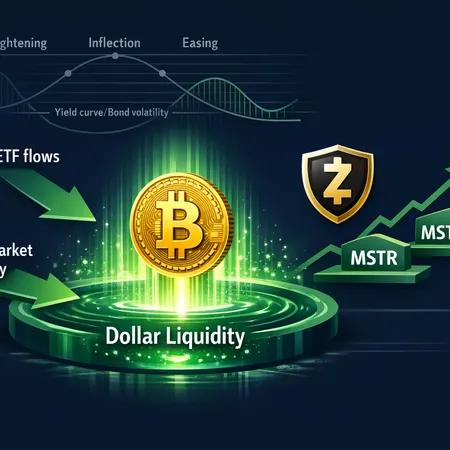
Arthur Hayes lays out a simple macro causal chain: U.S. dollar liquidity (funding availability and the behavior of dollar-denominated credit markets) materially affects risk assets, including crypto. When liquidity tightens—higher funding costs, rising real yields, and volatile bond markets—risk assets are sold to cover margin, deleveraging happens, and even strong narratives get repriced lower. Hayes lays out specific trades and names (MSTR, Metaplanet, ZEC) as examples of assets that benefit from a liquidity inflection; his original notes set out those positions and the reasoning in detail (Hayes’s essay). Coverage of this view summarized the claim that BTC’s 2025 weakness was liquidity-driven, not narrative-death (CoinSpeaker).
Hayes’s core points, condensed:
- 2025 real weakness in BTC was driven by a dollar-credit squeeze rather than rejection of store-of-value or blockchain-use stories.
- When dollar liquidity inflects (lower term premia, easier funding), buyers—especially large institutions and treasury managers—can redeploy capital into crypto, favoring liquid, dollar-like, or equity-correlated plays.
- Certain assets act as leveraged proxies: BTC as the macro bellwether, ZEC as a narrative-driven privacy/demand play, and listed equity proxies like MSTR and Metaplanet that provide concentrated exposure.
Why a liquidity story fits 2025 better than an ideological collapse
A liquidity explanation is attractive because it reconciles two facts: (1) institutional infrastructure—custody, ETFs, prime brokers—continued to build out; (2) price action remained highly correlated with global funding and rate dynamics. A useful frame is: narratives change slowly; liquidity moves fast.
Empirically, risk appetite closely tracked U.S. bond-market behavior and funding conditions. Recent reporting shows that falling bond-market volatility and calmer term-premia can support risk flows back into crypto and ETFs, a necessary precondition for Hayes’s thesis to play out on a large scale (Coindesk analysis on bond volatility and ETF flows). In short: cheap, stable dollar liquidity resurrects the same buyers who sat out 2025.
The transmission channels: how dollar liquidity becomes crypto price action
Think of liquidity as a pipeline that feeds three major demand channels into crypto:
1) Spot ETF flows and institutional allocation
Spot BTC ETF flows are a primary conduit. Lower U.S. term-premia and easier funding reduce the cost of holding dollar-denominated risk, encouraging institutions and asset managers to increase allocations to digital assets. Spot ETF inflows create direct spot buying pressure on BTC, and second-order effects lift correlated assets. ETFs also ease the on-ramps for institutional capital and sovereign wealth funds.
2) Sovereign and institutional reserve reallocation
When dollar funding is ample and the FX outlook stabilizes, sovereign treasuries and large corporates may be more willing to experiment with non-traditional reserves or strategic allocations. That’s a slower channel—months rather than weeks—but persistent liquidity can enable reserve-based purchases or pilot allocations into BTC and liquid tokens.
3) Bond-market volatility and risk-premia compression
Bond-market volatility acts like a gatekeeper for risk assets. High volatility raises the cost of hedging and forces deleveraging; low volatility compresses risk premia and makes re-risking more attractive. As Coindesk observed, recent declines in bond-market volatility are one of the macro inputs that can expand capacity for risk-on flows into crypto.
All three channels tend to be complementary: ETF flows deliver the fastest price response; reserve moves create durable demand; and a calm bond market lowers the friction for large allocators and private funds to trade into size.
Which assets are most likely to benefit (and why)
Hayes points to three archetypes: the macro bellwether (BTC), a privacy/protocol narrative (ZEC), and equity-like concentrated exposure (MSTR, Metaplanet). Here’s how to think about each.
Bitcoin (BTC): the primary liquidity beneficiary
BTC is the deepest, most liquid digital asset and the natural recipient of broad-based institutional flows. Spot ETF flows buy BTC directly; custodial growth and productisation continue to lower trading friction. For many allocators, increasing a core position in Bitcoin is the primary lever to express a dollar-liquidity reflation call.
Zcash (ZEC): narrative + scarcity + privacy demand
ZEC is an example of a protocol that benefits if risk-on flows chase higher-beta crypto narratives again. Privacy demand, on-chain utility, and relatively concentrated supply dynamics mean ZEC could amplify directional moves. It’s higher beta—so position sizing and liquidity management are essential.
Equity-like plays (MSTR, Metaplanet): leveraged exposure to BTC and adoption
Companies like MicroStrategy (MSTR) that hold sizeable BTC on their balance sheet or companies marketed as crypto-first (Metaplanet in Japan) act like equity proxies for the BTC story. They can outperform on the upside due to operating leverage or share-price optionality, but they also add corporate and jurisdictional risks. Hayes argues these names offer an efficient way to get equity-like beta if liquidity returns, but they are not substitutes for spot BTC—rather, complements in a multi-asset sleeve.
Portfolio construction frameworks for a dollar-liquidity rebound
Below are three practical frameworks depending on risk tolerance and investment horizon. Each assumes Hayes’s premise is plausible but not guaranteed; allocations include explicit guards for drawdown.
Conservative allocator: crypto as tactical satellite (total portfolio crypto 3–7%)
- Core: 60–75% of crypto sleeve in BTC. Use spot or ETFs for liquidity and custody simplicity.
- Opportunistic: 15–25% in equity-like plays (MSTR, Metaplanet), sized small relative to core.
- Tactical/high-beta: 5–10% in selective alt or narrative plays like ZEC, rebalanced quarterly.
- Risk rules: Max drawdown budget 40% on crypto sleeve; scale into positions using DCA across 3–6 months if liquidity cues are mixed.
Balanced allocator: medium conviction (total portfolio crypto 8–20%)
- Core: 50–65% BTC exposure.
- Diversified: 15–25% in non-BTC chains/protocols (including a tilt to ZEC if privacy demand is a thesis).
- Equity-like: 15–20% in MSTR/Metaplanet-sized positions; consider using equity options or covered-call overlays to manage downside.
- Risk rules: Volatility-adjusted sizing (target similar risk contribution from each sleeve); rebalancing triggers at ±20% drift.
Aggressive allocator/trader: high conviction (total portfolio crypto 25%+)
- Core: 40–50% BTC, with futures/spot mix for tactical leverage.
- Growth: 20–30% concentrated in high-conviction protocol bets (ZEC included).
- Equity-like: up to 20% in MSTR/Metaplanet; hedge corporate risk with options when possible.
- Risk rules: Tight liquidity management, pre-funded margin buffers, and explicit lines for deleveraging if bond yields or funding costs spike.
Sizing heuristics and timing signals
- Start small on narrative plays: treat ZEC and MSTR as conditional exposures that increase if ETF flows are persistently positive (weekly net inflows) and bond-market implied vol falls.
- Use a volatility parity approach: size positions so that each exposure contributes roughly equal portfolio volatility, not equal dollar amounts.
- Momentum-confirmation: Prefer entry when BTC clears short-term resistance on significant ETF inflows or when U.S. 10y term premium compresses for >4 weeks.
Risk management: what can go wrong and mitigations
Hayes’s thesis can be wrong or partially right. Key risks and mitigations:
- Liquidity re-tightening: if a macro shock re-raises term premia, risk assets can gap lower. Maintain cash/stablecoin buffers and avoid financed positions without ample margin.
- Correlation blow-ups: in crisis, correlations converge to 1. Hedge tail risk with options (long-dated puts) or allocate to non-correlated assets outside crypto.
- Exchange and custody risk: favor institutional-grade custody for core positions. Use regulated ETFs for some exposure to reduce counterparty operational risk.
- Corporate/operational risk in equity-like plays: MSTR and Metaplanet have balance-sheet and management risks. Size them as satellite holdings and use equity derivatives to limit downside.
- Liquidity mismatch: ZEC and other smaller tokens can have thin order books. Use limit orders, staggered entries/exits, and maintain exit plans.
Scenario planning: build decision trees for three outcomes—no liquidity rebound, transient rebound, persistent reflation. For each, predefine rebalancing rules, stop-loss levels and when to shift from tactical to strategic allocations.
Practical trade ideas and execution mechanics
- Core ETF + Spot: Establish a core BTC position through spot ETFs or custody for simplicity; consider synthetic exposure via futures if you need leverage for short windows.
- Conditional buys into ZEC: Use tranche-based DCA (e.g., 4 tranches over 60 days) tied to liquidity signals (ETF flows, term-premia, bond vol).
- Equity-like exposure via MSTR/Metaplanet: Buy outright equity for longer-term optionality or use call spreads to cap cost; hedge with put protection if balance-sheet leverage is high.
- Options and tail hedges: Buy long-dated BTC puts sized to cover the portfolio’s largest expected drawdown; sell shorter-dated premium if you believe drawdowns are temporary.
Implementation notes and operational checklist
- Custody: Use institutional custodians for large BTC holdings. For smaller allocators, regulated spot ETFs may be a better route.
- Reporting: Track position-level liquidity and on-chain indicators for ZEC (active addresses, fee rate) and ETF flows weekly.
- Rebalancing cadence: Monthly for most allocators; weekly monitoring of macro triggers (ETF flows, 10y term-premia, bond vol).
- Counterparty due diligence: For derivative hedges, prefer cleared venues and counterparties with transparency on margining.
Conclusion: a conditional, actionable framework
Hayes offers a compelling conditional hypothesis: if dollar-liquidity inflects higher, BTC and select high-beta or equity-like crypto exposures should materially outperform. That outcome is neither guaranteed nor immediate—timing depends on ETF flows, sovereign/institutional willingness to allocate, and the stability of the bond market. But for allocators who want a framework to size exposure ahead of a potential liquidity rebound, the orthodoxies are clear: favor liquidity (BTC/ETFs), size narrative bets conservatively (ZEC), and treat equity-like names (MSTR, Metaplanet) as satellite, optionality-rich positions.
Risk controls, tranche entries, volatility parity sizing and hedging are essential. Thoughtful implementation—custody, pre-funded margins, and clear stop and rebalancing rules—lets investors participate if Hayes is right while limiting the damage if the macro backdrop turns again. For allocators using platforms or structuring products, Bitlet.app and institutional-grade infrastructure help manage custody and execution risks as liquidity regimes change.
Sources
- Arthur Hayes's essay and trade outline: https://www.newsbtc.com/bitcoin-news/arthur-hayes-mstr-metaplanet-zcash-bitcoin-liquidity/
- Coverage summarizing Hayes’s dollar-liquidity thesis: https://www.coinspeaker.com/arthur-hayes-dollar-liquidity-will-drive-btc-higher-in-2026/
- Macro drivers and bond-market volatility context: https://www.coindesk.com/markets/2026/01/15/bitcoin-bull-case-grows-as-u-s-bond-market-volatility-sinks-to-lowest-since-2021