Compliance
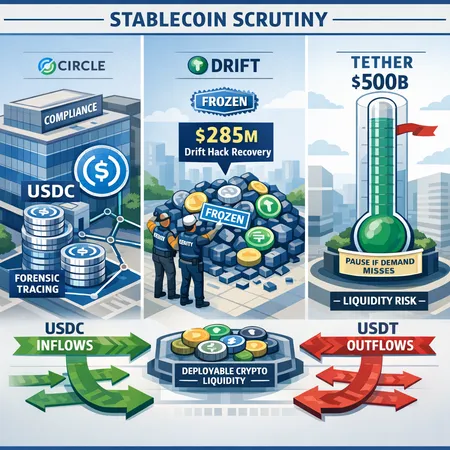
Recent high‑profile incidents involving USDC and Tether have reignited questions about stablecoin compliance, forensic tracing and the liquidity risks institutions must manage. This article reconstructs the events and outlines implications for compliance officers, risk managers and treasuries.
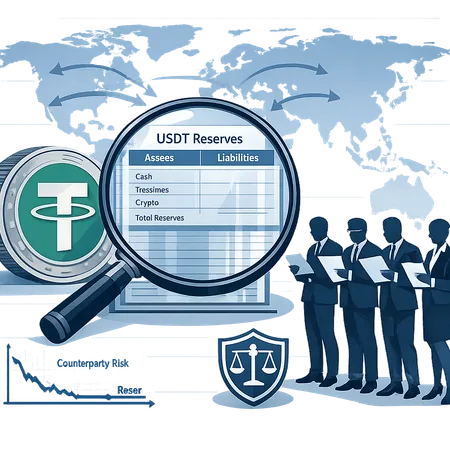
Tether's move to retain a Big Four auditor marks a potential turning point for stablecoin transparency and market structure. For institutional allocators and compliance officers, a formal audit of USDT reserves could reshape counterparty-risk pricing and force peers to adopt stricter disclosure practices.

A 10-year-dormant wallet tied to Irish criminal Clifton Collins moved roughly 500 BTC to Coinbase, triggering on-chain scrutiny and fresh questions about how custodians and markets absorb legacy tainted coins. This piece dissects the forensic signals, custodial AML paths, short-term market impact and how traders should price sudden supply shocks in a highly leveraged BTC market.

Real-world asset (RWA) tokenization is moving from pilots to production, and both Ethereum and the XRP Ledger are emerging as institutional rails. This article explains technical and regulatory trade-offs, custody and staking implications, and practical steps for institutions planning RWA pilots.
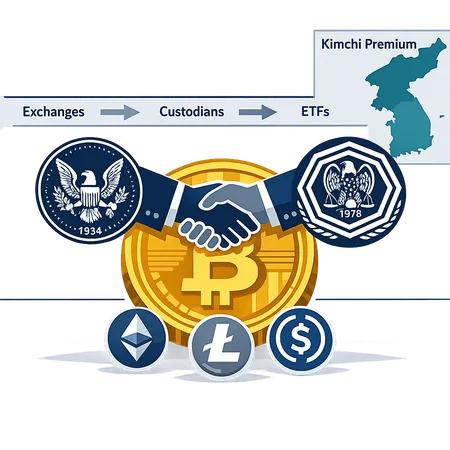
The SEC–CFTC memorandum of understanding signals a new phase of coordinated oversight that will reshape exchange behavior, venue concentration, and institutional flows across BTC and altcoins. This article breaks down the MOU specifics, near-term winners and losers, and practical steps compliance officers and traders should take now.
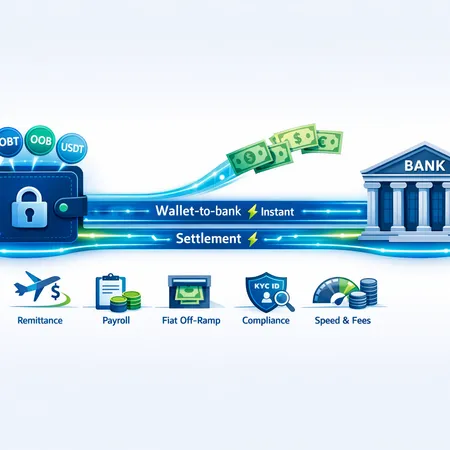
Oobit's wallet-to-bank stablecoin settlement promises instant conversion of self-custody stablecoins into local fiat bank deposits, potentially bypassing traditional exchange rails. This analysis covers the tech, compliance tradeoffs, settlement rails, and commercial implications for remittances, payroll, and fiat on/off‑ramps.
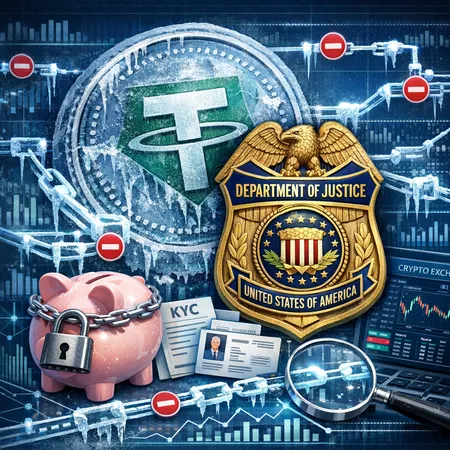
The US Department of Justice seized more than $61 million in USDT tied to pig‑butchering scams — a case that underscores how traceability of stablecoins changes enforcement, raises new AML questions for Tether, and will push exchanges and remittance rails to tighten monitoring. This article explains how the funds were traced, what it means for custodial vs DEX flows, and practical steps compliance teams should expect.
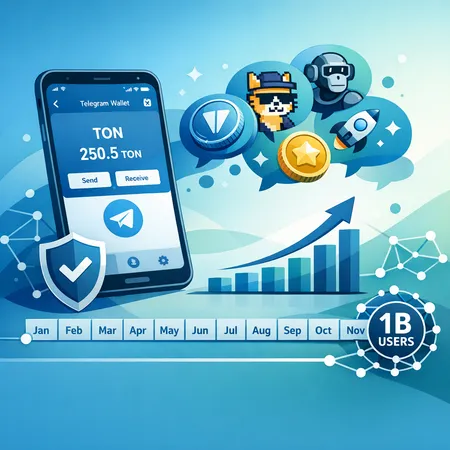
A practical guide for builders and growth teams to harness TON and Telegram’s massive user base to scale consumer Web3 apps—covering product hooks, onboarding UX, monetization, developer tools, compliance pitfalls and a month-by-month growth playbook.
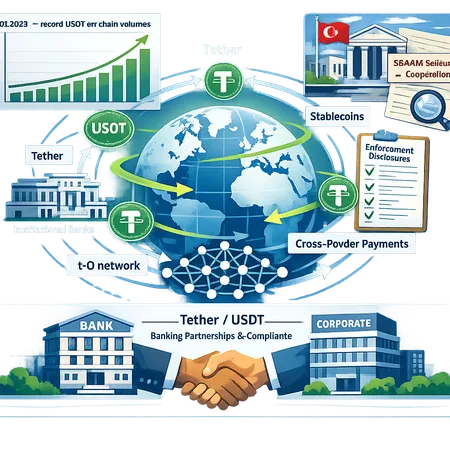
Tether is shifting from a pure liquidity provider to an active participant in enforcement cooperation and institutional settlement. This primer reviews its role in a $544M Turkish seizure, record USDT on-chain flows in Q4 2025, and its bet on the t-0 settlement network — and what that means for stablecoin adoption, banks, and regulators.
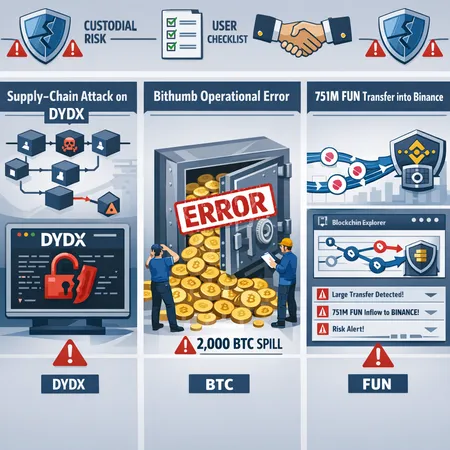
Three recent security incidents — malicious packages targeting dYdX users, Bithumb’s accidental 2,000 BTC distribution, and a 751M FUN transfer to Binance — illustrate different faces of custody and protocol risk. This feature breaks down technical mechanics, trader signals from large on‑chain deposits, mitigation checklists, and policy implications for regulators and exchanges.
DeFi
All DeFi postsBitcoin
All Bitcoin postsSecurity
All Security posts- Solana Risk Assessment After the Drift $285M Exploit: Price Damage, Supports, and Actionable Trading & Validator Controls
- Preparing for the Quantum Era: Post-Quantum Security for Stablecoin Rails — Arc & Naoris Case Studies
- Inside the April 1 Drift Protocol Hack: Reconstruction, North Korea Links, and a DeFi Security Playbook