Institutional Adoption
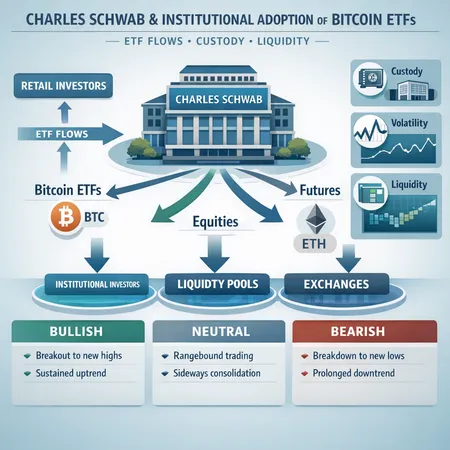
As Charles Schwab widens crypto access via ETFs, futures and equities, institutional flow dynamics and market microstructure for BTC and ETH may change materially—impacting liquidity, custody choices and volatility. This explainer lays out the mechanics, likely market effects, and 6–12 month scenario analysis for allocators.
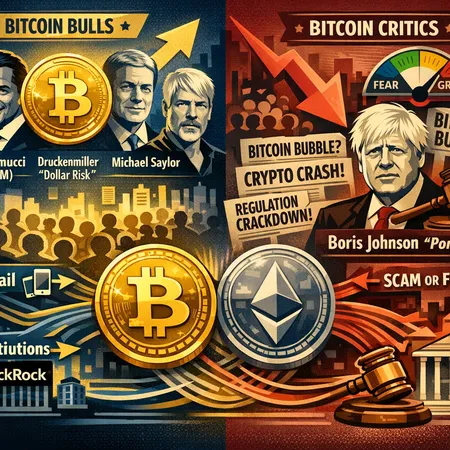
High-profile endorsements and public attacks on Bitcoin move more than headlines — they tilt flows, shape regulatory conversations, and tweak price psychology for both institutions and retail. This article dissects recent celebrity takes, the rebuttals, and practical rules for long-term investors to separate signal from noise.

Metaplanet announced a ¥4bn venture initiative and new subsidiaries to expand from large BTC holdings into capital markets and venture investing. The pivot highlights why corporates are building crypto infrastructure — and why that expansion can unsettle investors.

In 2026 the Bitcoin narrative is a tug‑of‑war: banks publicly pivot to BTC even as high‑profile skeptics and media critiques question the 'digital gold' story. This article maps the competing stories, the evidence behind them, and what narrative momentum means for institutional flows, retail sentiment and BTC volatility.
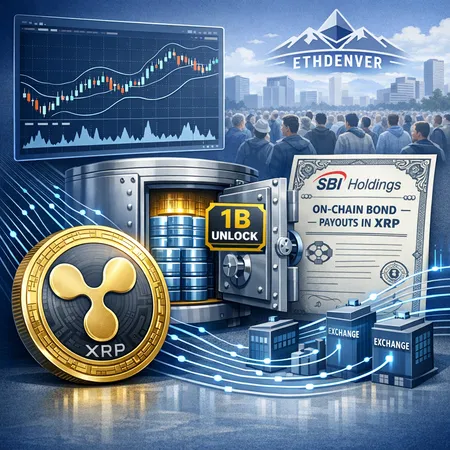
SBI Holdings’ new $64.5M on‑chain bond that pays investors in XRP adds a credible institutional use-case even as Ripple’s routine 1B monthly escrow unlocks introduce recurring supply risk. Asset managers should weigh settlement efficiency against short‑term technical pressure and plan hedges accordingly.
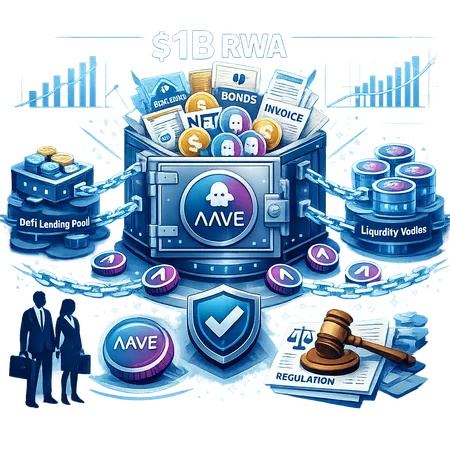
Aave surpassing $1 billion in tokenized real‑world asset deposits signals a structural shift for DeFi, moving lending markets toward hybrid on‑chain/off‑chain capital and new counterparty models. This analysis explains tokenization mechanics, the risk and liquidity implications, regulatory considerations, AAVE token dynamics, and plausible 3–5 year adoption scenarios.
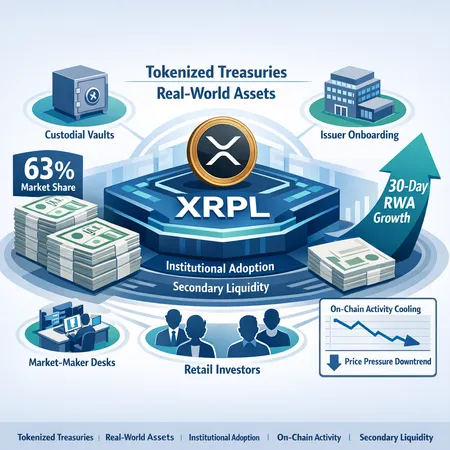
The XRP Ledger has become the primary rails for tokenized U.S. Treasuries and is posting rapid short‑term RWA growth, but issuance metrics mask weaker on‑chain activity and price pressure. Institutional product teams should separate custody and issuance flows from secondary liquidity when evaluating XRPL as an RWA backbone.
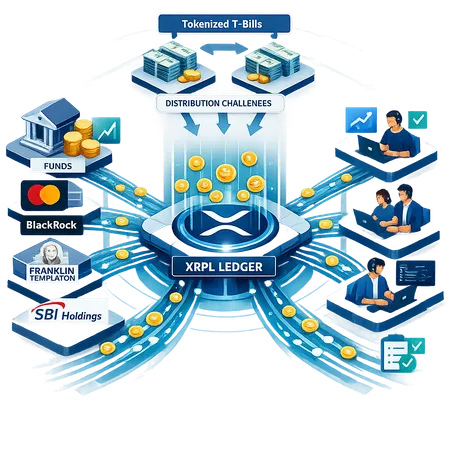
A convergence of protocol upgrades, rising Wall Street interest and renewed token‑economics scrutiny suggests XRPL could see a fresh wave of institutional and developer activity. For product and compliance teams, the shift raises opportunity — and new questions about liquidity, custody and counterparty transparency.
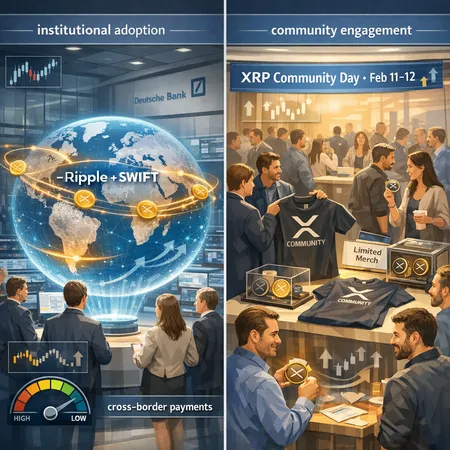
Deutsche Bank’s tests with Ripple+SWIFT and Ripple’s community push highlight a tension: institutional rails are advancing, but XRP’s price and on-chain flows often react to community events and market fear. This article separates partnership headlines from product exposure and offers a practical checklist for payments strategists.
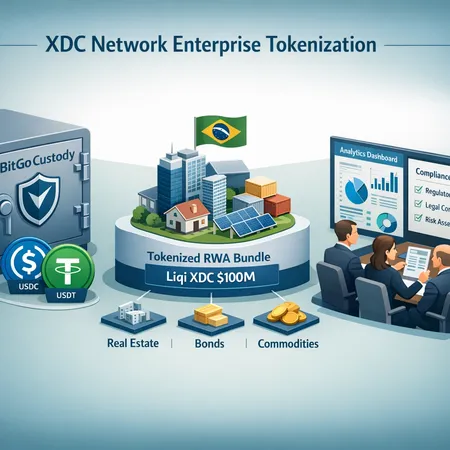
XDC Network’s integration with BitGo brings regulated custody and institutional-grade controls to token issuers; Brazil’s Liqi $100M RWA deal shows how that plumbing enables large-scale, regional tokenization. This guide explains what custody enables, how USDC/USDT custody shifts counterparty risk, and an operational/legal checklist for launching tokenized assets on XDC.
DeFi
All DeFi postsBitcoin
All Bitcoin postsSecurity
All Security posts- Solana Risk Assessment After the Drift $285M Exploit: Price Damage, Supports, and Actionable Trading & Validator Controls
- Preparing for the Quantum Era: Post-Quantum Security for Stablecoin Rails — Arc & Naoris Case Studies
- Inside the April 1 Drift Protocol Hack: Reconstruction, North Korea Links, and a DeFi Security Playbook