Tether

An investigative look at investor skepticism around Tether’s planned $500B fundraising and what surging USDT reserves on Binance reveal about institutional flows, risk-off behavior, and systemic implications for markets.
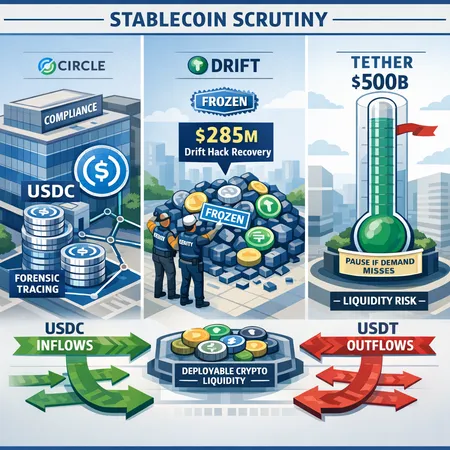
Recent high‑profile incidents involving USDC and Tether have reignited questions about stablecoin compliance, forensic tracing and the liquidity risks institutions must manage. This article reconstructs the events and outlines implications for compliance officers, risk managers and treasuries.

Regulatory friction and market shifts are splintering the stablecoin landscape. Tether’s public rebuke of Coinbase, fresh data signaling USDT weakness, and Ripple’s institutional playpoint point to a near-term liquidity bifurcation.
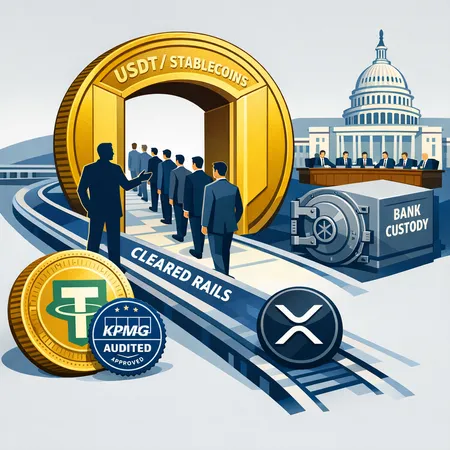
Stablecoins are poised to unlock enterprise crypto adoption by bridging banking rails, custody and regulatory expectations. Recent moves—from Brad Garlinghouse's framing to Tether's KPMG audit—signal a shift toward institutional readiness and policy debate over cleared payment rails.
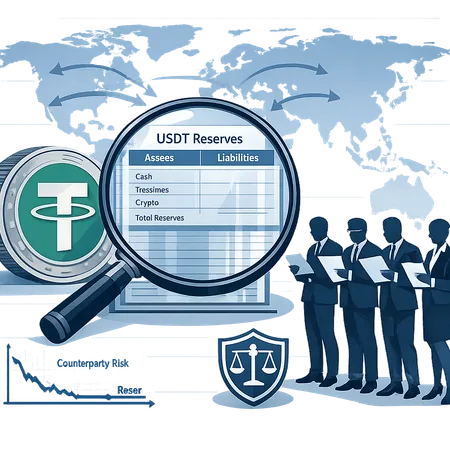
Tether's move to retain a Big Four auditor marks a potential turning point for stablecoin transparency and market structure. For institutional allocators and compliance officers, a formal audit of USDT reserves could reshape counterparty-risk pricing and force peers to adopt stricter disclosure practices.
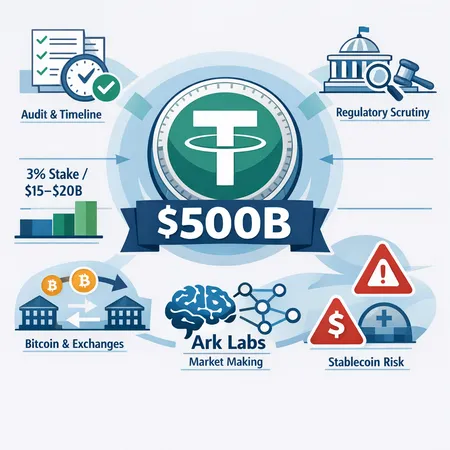
Recent market chatter about a $500B-plus private valuation for Tether and reports of a $15–$20B fundraise for a 3% stake have reignited questions about USDT’s dominance, audit transparency, and systemic risk. This article evaluates what those numbers mean, how strategic bets like Ark Labs involvement could move BTC flows, and practical steps exchanges and funds should take to manage stablecoin risk.
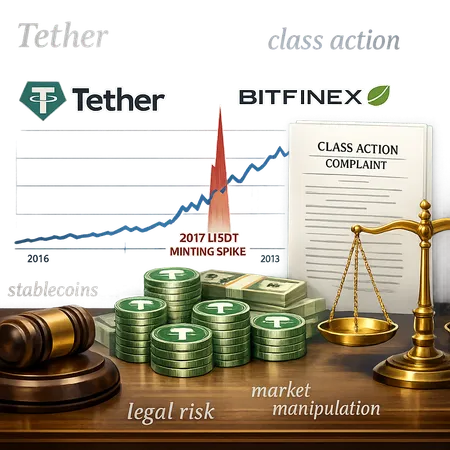
A U.S. federal court has allowed the Tether–Bitfinex dispute to proceed as a class action, raising fresh questions about USDT minting, alleged 2017 price manipulation, and systemic stablecoin risk. Compliance officers, treasury teams, and investors should reassess counterparty exposure and liquidity plans now.
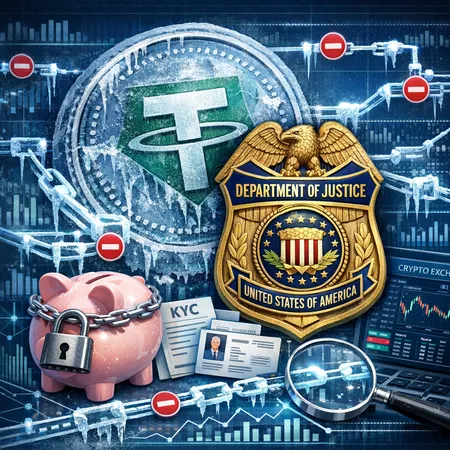
The US Department of Justice seized more than $61 million in USDT tied to pig‑butchering scams — a case that underscores how traceability of stablecoins changes enforcement, raises new AML questions for Tether, and will push exchanges and remittance rails to tighten monitoring. This article explains how the funds were traced, what it means for custodial vs DEX flows, and practical steps compliance teams should expect.
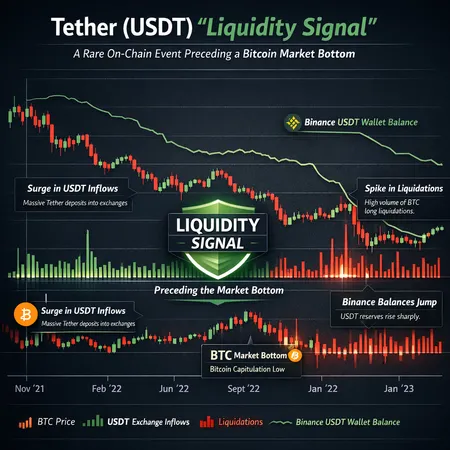
A rare on-chain USDT liquidity signal has reappeared amid a volatile Bitcoin sell-off. This article explains how the signal is measured, its lone historical precedent, how it interacts with liquidations and Binance balances, and practical risk steps traders and portfolio managers should take.
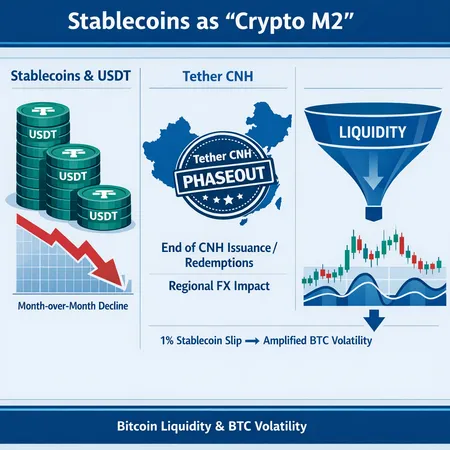
Stablecoins function as crypto’s deployable cash — a small shrink in supply or a regional issuance change can meaningfully reduce on‑ramp liquidity and amplify Bitcoin volatility. This piece investigates the mechanics behind a 1% stablecoin slip and Tether’s CNH phaseout, and models plausible stress scenarios for BTC markets.
DeFi
All DeFi postsBitcoin
All Bitcoin postsSecurity
All Security posts- Solana Risk Assessment After the Drift $285M Exploit: Price Damage, Supports, and Actionable Trading & Validator Controls
- Preparing for the Quantum Era: Post-Quantum Security for Stablecoin Rails — Arc & Naoris Case Studies
- Inside the April 1 Drift Protocol Hack: Reconstruction, North Korea Links, and a DeFi Security Playbook