Pensions Meet Play-to-Pay: Why Bitcoin Pension Funds and Gaming Rails Matter in 2026
Summary
Executive overview
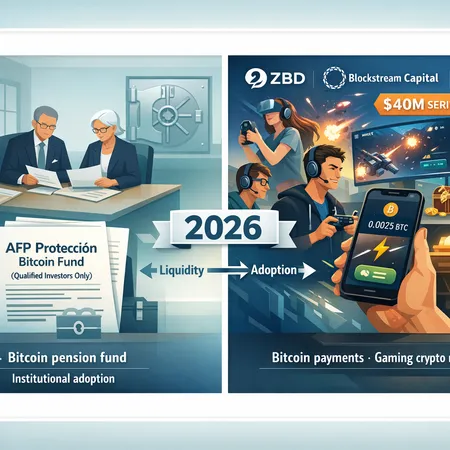
2026 looks less like a repeat of 2017’s retail mania and more like a structural adoption phase: institutions asking how to access BTC prudently, and fintech builders asking how to make BTC useful in everyday commerce. Colombia’s AFP Protección launching a Bitcoin fund for qualified pension investors is the kind of conservative, gated product asset managers have long expected. At the same time, companies like ZBD — freshly armed with a $40M Series C — are building the Bitcoin payments rails that could turn allocation interest into recurring real-world flows.
For allocators, wealth managers and fintech strategists, this pairing matters: one side creates compliant, fiduciary-friendly pathways into BTC exposure; the other creates reasons for users to receive, spend and circulate BTC. Both are necessary for deeper institutional adoption and market liquidity. For many traders and product teams, Bitcoin remains the primary bellwether — but adoption now needs both balance-sheet-friendly products and consumer rails.
Why a qualified-only Bitcoin pension fund matters
A pension fund product limited to qualified investors is not flashy, but it’s meaningful. AFP Protección’s fund (reported in local and international coverage) is structured to let pension investors gain BTC exposure under strict eligibility and governance boxes. Those boxes exist for reasons: pension trustees have fiduciary duties, regulatory constraints and liability exposure that retail products do not.
Product structure and fiduciary guardrails
A qualified-only Bitcoin fund typically includes: restricted investor eligibility (professional or qualified), explicit risk disclosures, limits on allocation size, and requirements for independent custody and advisory oversight. Those guardrails help trustees satisfy prudence tests — they can justify a small BTC sleeve as a portfolio diversifier while documenting controls that limit reputational or legal risk. Coverage of AFP Protección outlines how this controlled exposure is being positioned for pension clients rather than the general public, signaling institutional comfort with a managed access model (Cointelegraph, Blockonomi).
Custody, advisory and governance
Custody is the core operational question for any pension-grade product. Institutions demand cold, segregated custody with clear recovery plans, multi-party controls, and independent audits. Advisory models can vary: some funds rely on external crypto investment advisers; others embed a committee of digital-asset specialists to validate custody vendors, insurance, and operational resiliency. The result is a product that looks a lot like a traditional alternative allocation, but with specialized custody and crypto-specific legal wrappers.
From a wealth-manager perspective, this structure reduces friction: products are sellable to high-net-worth and qualified institutional buyers without rewriting fiduciary policies from scratch. It’s a necessary bridge between institutional adoption intent and the operational reality of prudential oversight.
Why gaming rails matter: ZBD and Bitcoin payments for video games
On the opposite side of the stack, Bitcoin’s path to broader daily use depends on seamless rails. ZBD’s recent $40M Series C — aimed at powering Bitcoin payments for video games — is a concrete example of consumer-layer infrastructure that could generate recurring BTC flows into and out of the economy (Bitcoin.com).
Gaming use-cases that move the needle
Video games present several repeatable payment patterns where Bitcoin can be competitive: microtransactions, in-game marketplaces for items or skins, streaming/tipping for creators, and cross-border payouts to developers. Microtransactions in particular demand low fees, instant settlement and an intuitive UX — areas where carefully engineered Bitcoin rails (including Lightning-like channels or custodial onramps) can excel.
ZBD’s strategy to integrate BTC payments focuses on those merchant and player flows. Strategic investors — including notable ecosystem players like Blockstream Capital reported among backers — bring capital and shared infrastructure knowledge. That combination helps accelerate adoption among game studios and payment integrators by lowering technical integration risk and signaling credibility.
From payments to liquidity
If millions of players can receive, hold and spend small BTC balances inside games, those flows create natural liquidity: conversion events, merchant acceptance, and recurring on/off ramps. Every microtransaction that settles in BTC is a small, real-world use that, aggregated, increases transactional demand and normalizes wallet ownership. That matters for institutional adoption too: allocators are more comfortable backing an asset that exhibits both store-of-value characteristics and real economic utility.
How the two developments interact — and why timing matters in 2026
Taken together, conservative pension products and gaming rails are complementary. Qualified pension funds create durable demand on the asset side — even if allocations are modest — while consumer rails create transactional velocity. In 2026, several forces make this confluence particularly timely:
Infrastructure maturity: Custodians, institutional-grade OTC desks, and payments APIs have improved materially since 2020. Institutions can now plug into custodial solutions with clearer legal frameworks. That reduces operational barriers for pension funds.
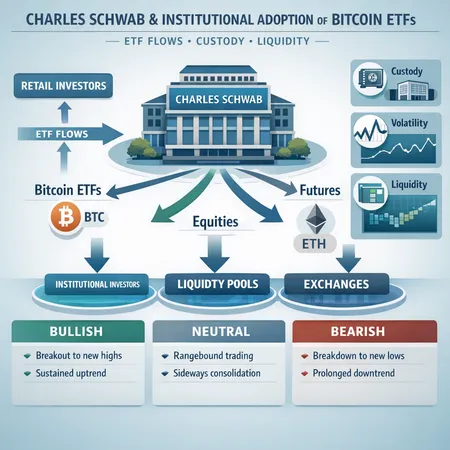
Capital rebalancing: Although large US spot Bitcoin ETFs saw outflows in certain periods — a reminder that flows can be volatile (CryptoNews) — allocation appetite remains dynamic. Pension-grade products diversify distribution channels beyond ETFs.
Consumer-product momentum: Gaming and creator economies are searching for faster, cheaper rails for micropayments. Strategic funding rounds like ZBD’s show investor conviction that integrated BTC payments are near-term viable.
Together, these dynamics can help increase both the depth (liquidity, order-book size) and the breadth (number of holders and use-cases) of BTC’s market. For product teams at wealth managers or fintech firms like Bitlet.app, this is a signal to evaluate both custody partnerships and consumer payment integrations simultaneously.
Practical considerations for institutional product teams
Below are operational and go-to-market considerations for wealth managers and fintech strategists evaluating a Bitcoin pension fund or gaming payments integration.
For pension fund products
- Allocation sizing and policy language: Start conservative (single-digit percentages), include explicit stress-test scenarios, and outline rebalancing triggers.
- Custody selection: Prefer custodians offering regulated custody with institutional insurance and proof-of-reserves where appropriate.
- Advisory governance: Establish an independent crypto advisory committee to document selection criteria for managers, custodians and OTC counterparties.
- Audit and reconciliation: Require daily or near-real-time reporting and third-party attestations to satisfy trustees and regulators.
For gaming payments rails
- UX-first integration: Players won’t adopt if wallets or fiat conversions are clunky; focus on frictionless onramps and gasless experiences.
- Settlement model: Decide whether to use instant custodial settlement, Lightning-style channels, or hybrid solutions for micropayments.
- Merchant economics: Design merchant payout options (BTC, fiat or hybrid) and clear fee schedules to drive studio buy-in.
- Strategic partnerships: Leverage investors with ecosystem expertise (e.g., Blockstream Capital) to accelerate integrations and standards.
Regulatory and tax frictions to watch
Even the best-designed products will run into policy frictions. Pension funds face specific legal constraints: fiduciary duties, local pension rules, and capital-preservation norms can limit adoption speed. Tax regimes add complexity — how gains are taxed inside a pension vehicle vs. consumer wallets can vary by jurisdiction and materially affect net returns.
On payments, regulatory friction centers on AML/KYC, licensing for money transmission, and VAT/sales tax treatment for digital goods. Cross-border payouts raise withholding tax and revenue-recognition questions for studios and platforms. Custodial models solve many UX problems but also centralize regulatory risk: custodians must be licensed, insured and compliant across the jurisdictions they touch.
Operationally, fund-level segregation, insurance coverage, and recovery planning are non-negotiable. For product teams, building with modular compliance — pluggable KYC, whitelisting, and robust tax-reporting tools — reduces long-term legal risk.
Market impact and scenarios
What might success look like? In an optimistic pathway, modest pension allocations (even 0.5–2% of pension assets in qualified pools across several jurisdictions) create a steady demand floor while gaming rails create recurring transaction volumes. That increases both liquidity and narrative support for BTC as an investable asset with utility.
A conservative pathway shows slower adoption: allocations remain niche and gaming rails struggle with merchant integration and regulatory patchwork. Even then, the combination of institutional-grade products and better consumer rails reduces single-point fragility — markets become less dependent on retail FOMO or ETF flows alone.
Conclusion: Build both sides of the stack
Institutional adoption in 2026 is not purely about headline allocations. It’s about durable product design and real-world usability. AFP Protección’s qualified-pension fund signals how trustees can make a pragmatic, documentable choice to gain BTC exposure. ZBD’s capital for gaming payments shows how consumer rails can generate repeatable flows that broaden BTC’s use-case beyond “digital gold.”
For allocators, wealth managers and fintech strategists, the takeaway is strategic: coordinate custody, compliance and product design while watching consumer-rail developments. The market needs both prudent access vehicles and everyday rails to move Bitcoin toward mainstream maturity.
Bitlet.app product and strategy teams — and similar fintech operators — should weigh custody partners, advisory frameworks, and potential gaming integrations as complementary initiatives rather than competing bets.
Sources
- Colombia AFP Protección launch coverage: Cointelegraph
- Complementary analysis of AFP Protección fund: Blockonomi
- ZBD $40M Series C announcement: Bitcoin.com
- Context on ETF flows and market dynamics: CryptoNews