Tokenomics

Pi Network’s announcement of 526 million KYC verifications and over 1M validators, paired with PI’s recent stabilization above $0.17, is a rare live experiment in mobile-first crypto scale. This article evaluates the economic, security and product signals behind those numbers and what they mean for token utility and mainstream adoption.
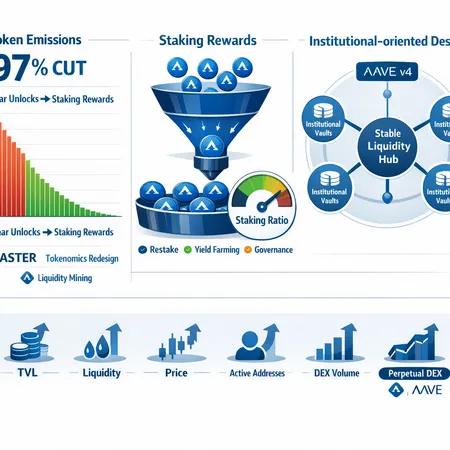
Aster’s move to slash monthly token emissions by ~97% and pivot to staking-based rewards is a test case for radical tokenomics redesign in DeFi. This piece analyzes the mechanics, expected on-chain effects, comparisons with institutional designs like Aave v4, and practical strategies for token holders and product teams.
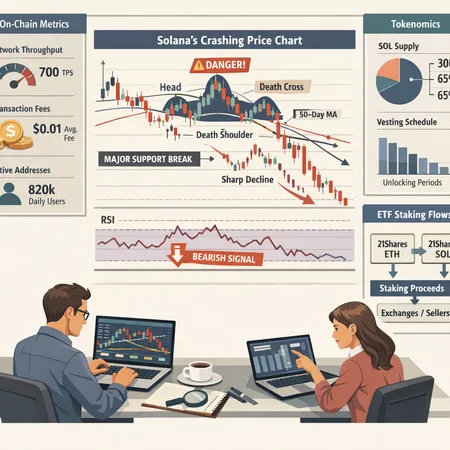
SOL’s on‑chain activity and new ETF staking distributions paint a mixed picture: strong throughput but weak price action. This article unpacks the drawdown, staking proceeds dynamics, and pragmatic trading scenarios for DeFi traders and on‑chain analysts.

TAO has ripped 57–160% in recent weeks as interest in decentralized AI compute surges. This article breaks down what Bittensor is, the drivers behind the move, technical reversal signals and a practical risk-management framework for traders.

Shibarium transactions have spiked more than 1,500%, yet SHIB’s price is stuck in limbo. The surge looks driven by automated/upgrades and large exchange inflows — a mix that raises both opportunity and risk for retail holders.

Balancer Labs’ decision to wind down after a $110M exploit exposes fault lines in DeFi revenue models, treasury design, and corporate-professional liability. This explainer reconstructs the timeline, analyzes why the corporate arm stopped while the protocol lives on under DAO governance, and lays out concrete safeguards for AMMs and DAOs.

Pi Network launched its Token Launchpad testnet on March 20, 2026, opening minting and token deployment tools to developers and nontechnical users. This article breaks down what the feature does, why a testnet-first rollout matters for tokenomics and trust, how liquidity and price discovery could shift, and practical steps to test safely.

High‑profile praise—from Nvidia’s Jensen Huang to Chamath Palihapitiya—sent Bittensor’s TAO surging in March 2026. This article unpacks the sequence, the tokenomics that amplified the move, and a disciplined framework for separating hype from durable adoption.
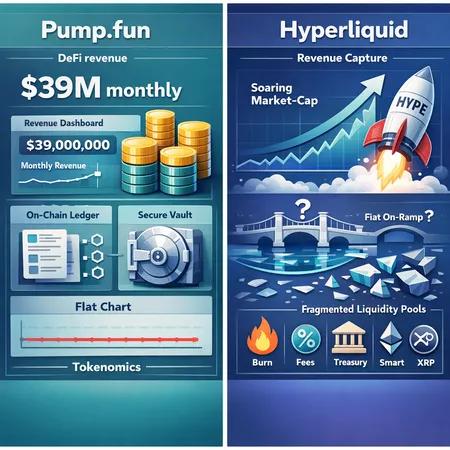
High protocol revenue no longer guarantees token rallies. This article dissects why Pump.fun generated ~$39M in monthly revenue while PUMP stayed flat and contrasts that with Hyperliquid’s market‑cap surge, offering a practical framework to evaluate revenue capture in DeFi.
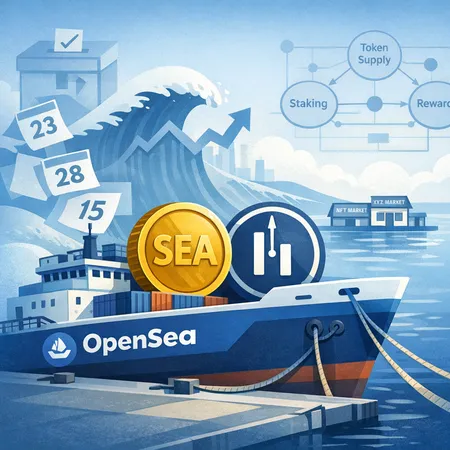
OpenSea’s indefinite postponement of the SEA token underscores a broader lesson: timing and token design matter as much as marketing. This feature unpacks the rationale, the risks that likely drove the decision, competitive fallout for NFT marketplaces, and a practical launch playbook for web3 teams navigating volatile markets.
DeFi
All DeFi posts- Solana Risk Assessment After the Drift $285M Exploit: Price Damage, Supports, and Actionable Trading & Validator Controls
- XRP's Split Personality: Institutional ETF Flows vs. Spot Price — Can Whales and XRPL Japan Trigger a Real Breakout?
- Preparing for the Quantum Era: Post-Quantum Security for Stablecoin Rails — Arc & Naoris Case Studies
Bitcoin
All Bitcoin postsSecurity
All Security postsStablecoins
All Stablecoins postsTrading
All Trading posts- Is Ethereum Completing a Multi‑Year Accumulation? Weekly TA, Derivatives Signals, and a Practical Trade Checklist
- TRUMP, DOGE, SHIB: How Social Rumors, Whale Moves and Broken Support Drive Weekend Meme Token Volatility
- Has Bitcoin Found a Durable Bottom After the $70k Slide? An Evidence-Based Playbook