Governance
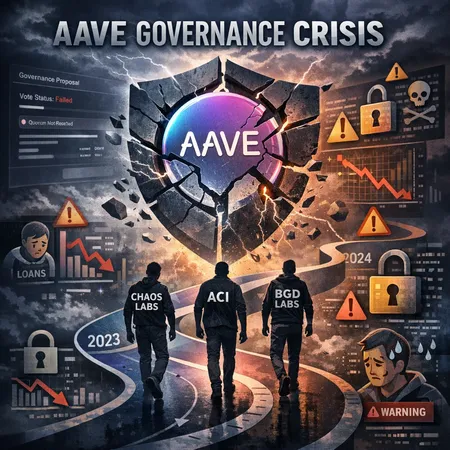
Aave is facing a governance and operational stress test after its primary risk manager and other contributors stepped back. This feature explains the timeline, why risk-manager loss matters, immediate lender/borrower risks, and a practical playbook for DAOs and institutional risk teams to stabilize risk operations.
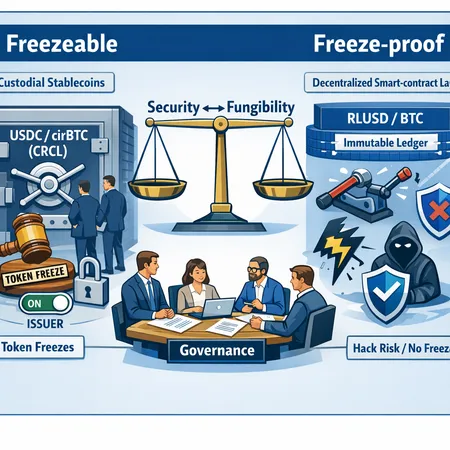
Circle’s cirBTC launch and recent protocol hacks have reignited the debate between freezeable and freeze‑proof stablecoins. This article breaks down the technical trade‑offs, custody realities, market signals like RLUSD listings and CRCL reactions, and concrete governance patterns that protect users without destroying fungibility.
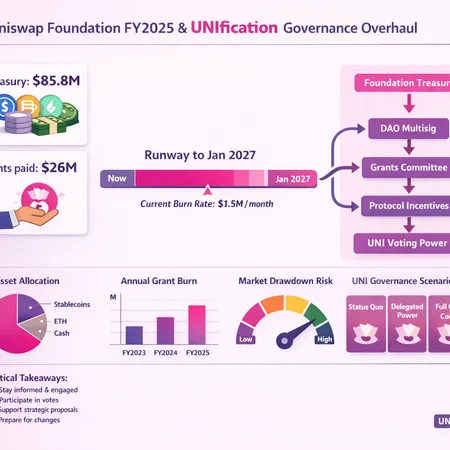
The Uniswap Foundation disclosed $85.8M in year-end assets and $26M committed in grants for FY2025 alongside the UNIfication governance overhaul. This analysis breaks down the numbers, outlines governance changes, models treasury risk scenarios, and gives tactical takeaways for DAO participants and UNI holders.
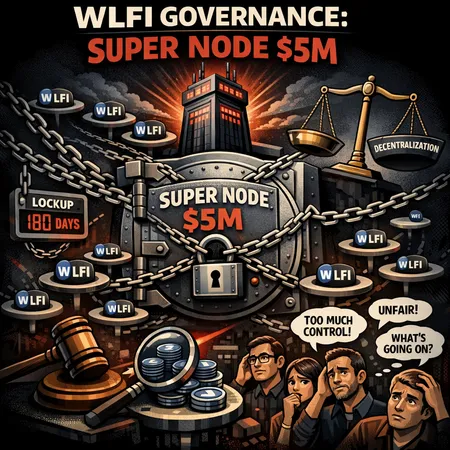
WLFI's recent governance vote approved a $5 million "Super Node" access tier and a six-month lockup rule, prompting debates about pay-to-play governance and centralization risk. This investigative piece explains the mechanics, community reaction, regulatory optics, and defensive governance practices projects should adopt.

A pivotal Cardano community vote on withdrawing 50 million ADA from the treasury has re-ignited debates about on-chain governance, treasury stewardship, and community incentives. This article unpacks the proposal, use-case scenarios, comparisons with other layer‑1 treasuries, and what it means for long-term ADA holders.
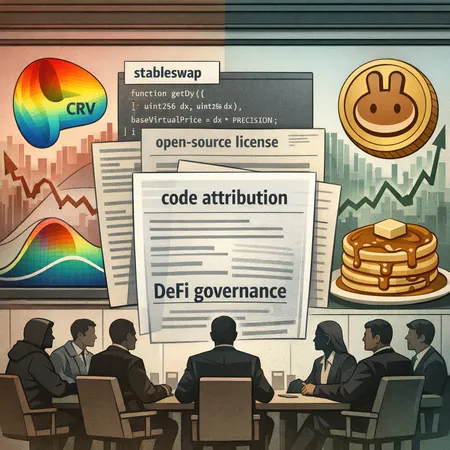
The public spat between Curve Finance and PancakeSwap over alleged reuse of Curve's stableswap code spotlights unresolved legal and governance risks in commercial DeFi forks. This article breaks down the technical claims, likely outcomes (license, alliance, or escalation), and practical guidance for developers and governance bodies.
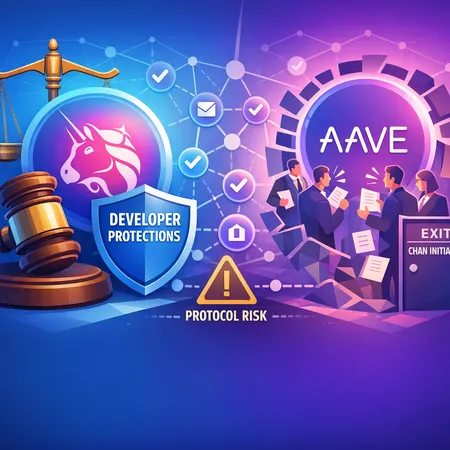
The recent dismissal of the amended class action against Uniswap and the Aave Chan Initiative's exit together highlight how legal outcomes and delegate dynamics shape DeFi governance risk. Builders and governance teams should rethink developer protections, delegation models, and on‑chain safety nets to reduce protocol risk.
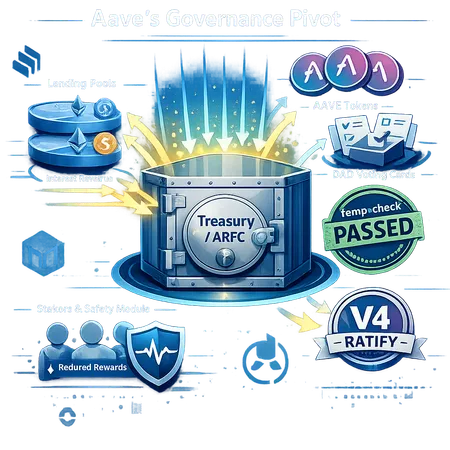
Aave’s recent temp‑check cleared a pathway toward routing more protocol revenue into a treasury and refocusing governance around token incentives. This explainer walks through the governance timeline, proposed mechanics, and likely effects on AAVE tokenomics, stakers, and competition in lending markets.

WLFI proposes a 180‑day staking lock that ties voting power to locked tokens and supports a USD1 stablecoin peg with ~2% APR. This article breaks down the math, incentive alignment, gaming vectors, and practical recommendations for governance participants and DAO treasurers.
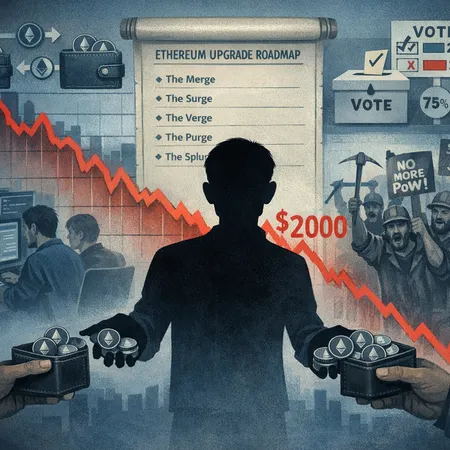
Vitalik Buterin’s recent ETH disposals arrive amid a contentious developer-led upgrade and miner resistance. This article unpacks the timing and scale of the sales, the upgrade roadmap and controversy, short-term market effects, and practical ways investors should interpret founder on‑chain activity.
DeFi
All DeFi postsBitcoin
All Bitcoin postsSecurity
All Security posts- Solana Risk Assessment After the Drift $285M Exploit: Price Damage, Supports, and Actionable Trading & Validator Controls
- Preparing for the Quantum Era: Post-Quantum Security for Stablecoin Rails — Arc & Naoris Case Studies
- Inside the April 1 Drift Protocol Hack: Reconstruction, North Korea Links, and a DeFi Security Playbook