Perpetuals
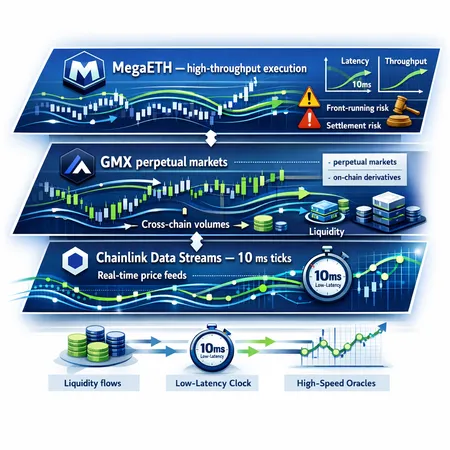
GMX’s launch of Chainlink Data Streams-powered perpetual markets on MegaETH combines 10-millisecond block times with high-frequency oracle feeds to change execution economics for on-chain derivatives. This explainer covers architecture, market-maker ramifications, cross-chain volume effects, and operational trade-offs for product teams and quants.
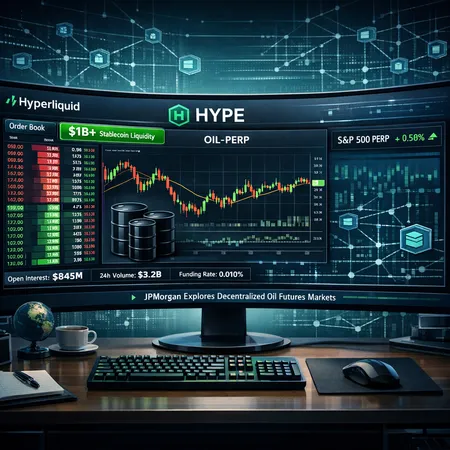
Hyperliquid’s leap past $1B in stablecoin liquidity and a surge of oil-driven trading have pushed its perpetuals into institutional view. But liquidity depth, counterparty risk, and regulatory clarity will determine whether HYPE can truly host professional commodity flow.

New stablecoin primitives — from Tether’s USDT0-backed perpetuals to Ripple’s RLUSD surge on Ethereum — are changing how perpetuals are collateralized, settled and liquidated. This article breaks down mechanics, liquidity benefits, cross-market risks and regulatory questions for DeFi product leads and derivatives traders.

Binance’s launch of 5x perpetuals on Aztec marks a turning point for privacy-layer assets, accelerating derivatives liquidity but also exposing sharp market-structure risks seen in coins like Monero. Traders and risk teams must weigh funding dynamics, mark-price sensitivity, order-book depth and surveillance tensions when sizing positions.
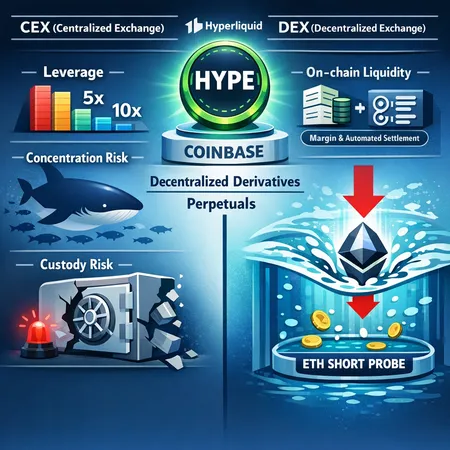
Hyperliquid recently overtook Coinbase in notional perpetual trading volume, marking a watershed moment for decentralized derivatives. This article explains the mechanics that enabled that shift, examines systemic risks through an ETH short probe, and outlines what traders and protocol designers should weigh when moving perp flow on‑chain.
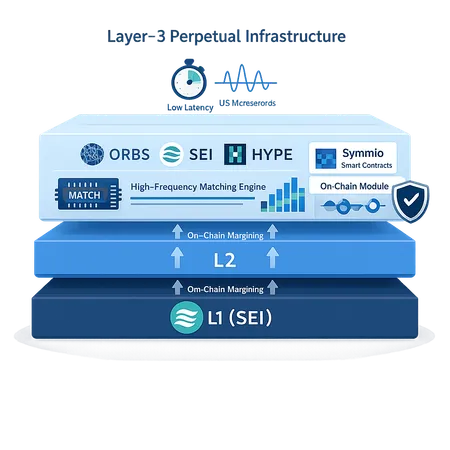
Orbs and Gryps’ Perpetual Hub Ultra on Sei demonstrates why Layer‑3 architectures are becoming the logical home for institutional perpetual futures — lowering latency, refining margining, and concentrating liquidity without sacrificing the composability of L1/L2 ecosystems.

Binance Wallet's integration with Aster ushers in wallet-native leveraged and perpetual trading, moving self-custody derivatives from concept to live UX. This feature explores how the integration works technically, the custody and UX trade-offs versus centralized platforms, and what traders and product teams must know about risks, liquidity and regulation.
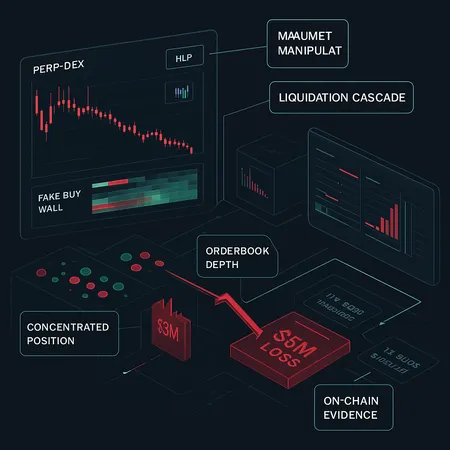
An investigative post-mortem of the coordinated attack on Hyperliquid that paid ~$3M to force a multi-million-dollar perpetuals loss and the related POPCAT crash. We reconstruct plausible on-chain signals, explain perp-DEX mechanics that amplify contagion, and give practical mitigations for traders and protocol designers.