Mining

Riot Platforms liquidated 3,778 BTC in Q1 2026, generating roughly $289.5M to fund data‑center and AI/HPC expansion. This move highlights a broader tension between miner treasury management and market supply dynamics.
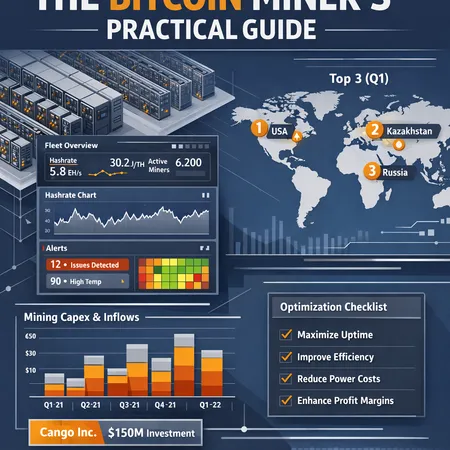
A practical guide for mining operators and investors on using fleet-management tools like Luxor Commander, understanding Q1 hashrate concentration, and structuring capex for higher margins.

Listed miners moving into AI cloud services and the rise of AI-native tokens like TAO and HYPE are changing where investors allocate capital in crypto. Understanding which pivots are durable vs. hype-driven rallies requires a new mix of operational and on-chain metrics.
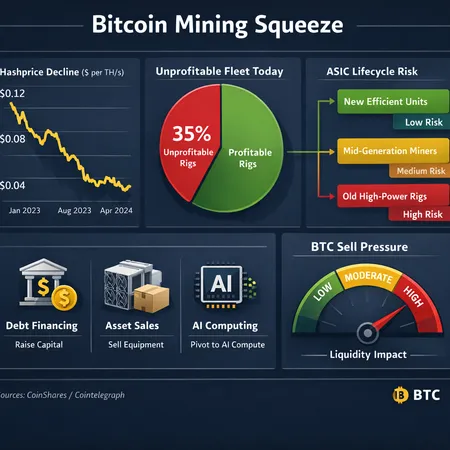
A data-driven look at the current squeeze on bitcoin mining: how much of the fleet may be unprofitable at today’s hashprices, which operators are most exposed, and what miner strategies mean for BTC liquidity and price.

A near-8% difficulty drop and volatile hash-rate have pushed many miners into operating losses, while AI demand for data-center resources is reshaping the economics. This investigative piece models production costs, explains miner responses, and maps risks to network security and BTC price.

Starcloud’s 2026 plan to run ASICs in orbit has reignited debate: could orbital mining materially change Bitcoin mining economics, or is it mostly a marketing play? This article evaluates the engineering, energy logistics, legal and market implications for miners and infrastructure execs.
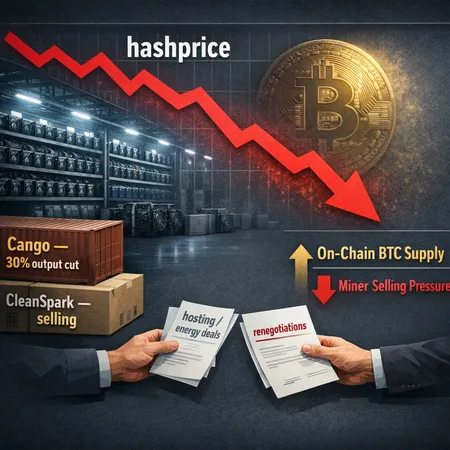
Bitcoin mining economics are under renewed pressure as hashprice falls, hosting deals are renegotiated, and large operators cut output. This piece unpacks Cango’s 30% reduction, evidence of miner selling from firms like CleanSpark, and what the next 6–12 months could mean for BTC and miner survivability.
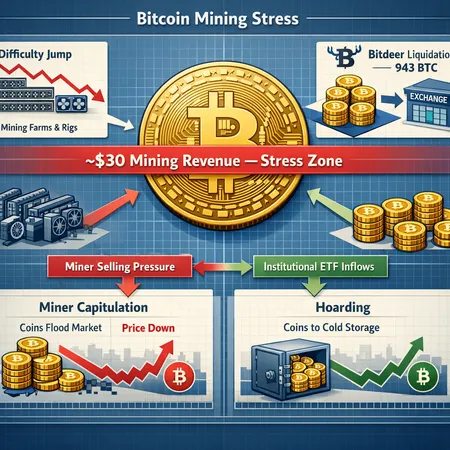
Early‑2026 mining stress—rising difficulty, falling hashrate and compressed miner revenue—has pushed some operators to liquidate reserves, but the same dynamics can also set the stage for a sustained BTC rebound. This analysis explains the mechanics and outlines price scenarios depending on miner behavior.
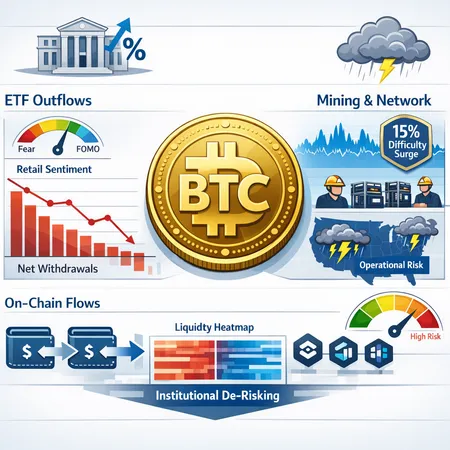
Sustained US spot Bitcoin ETF outflows are coinciding with macro shocks and network-level volatility (hashrate swings and a 15% difficulty jump), raising new liquidity and price-support risks for BTC. This piece integrates ETF flow data, on-chain signals, miner operational stress, and sentiment indicators into an actionable risk framework for institutional allocators.

A rapid, record-setting jump in Bitcoin mining difficulty and a V‑shaped hashrate rebound signal shifting miner economics and stronger network security — but consequences for short‑term supply and price dynamics are nuanced. This explainer breaks down technical causes, miner behavior, on‑chain signals to watch, and practical trading/hedging takeaways.
DeFi
All DeFi postsBitcoin
All Bitcoin postsDerivatives
All Derivatives posts- Uncovering XRP’s Hidden Bull Case: Futures Surge, Ichimoku Flip, Reserve Decline and Institutional Signals
- Privacy‑Coin Resurgence: Why ZEC, XMR, DASH and DCR Ripped Higher in April 2026 — Risks & Trade Rules
- XRP’s Quiet Buildup: Do Derivatives, On‑Chain Flows and Ledger Resilience Signal a Real Breakout?