How US–Israel Strikes, an Oil Shock, and Strait of Hormuz Risk Are Roiling Bitcoin — What Traders Should Watch
Published at 2026-03-02 12:14:19
Summary
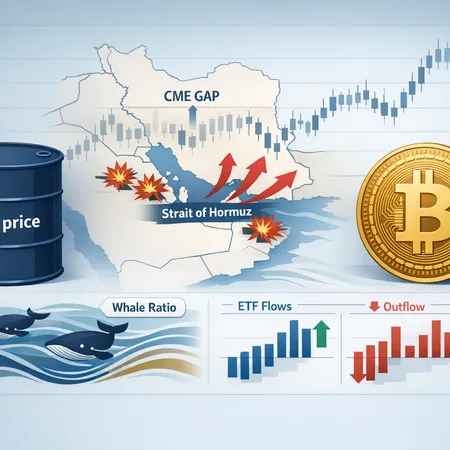
The US–Israel strikes on Iran pushed oil prices sharply higher and reintroduced Strait of Hormuz risk into the crypto market's risk matrix, creating a cross-asset shock that affected liquidity and risk appetite worldwide. Bitcoin has shown resilience because of structural demand (spot buyers, long-term holders, ETFs) but also recorded sharp intraday volatility driven by liquidity flight, whale moves, and exchange flows. Key short-term drivers include exchange inflows/outflows, a spike in the whale ratio, and open interest dynamics including CME gaps; institutional signals such as sustained ETF redemptions amplify downside risk. Traders should monitor oil price action, on-chain liquidity metrics (exchange balances, whale ratio), ETF and fund flows, funding rates, and event risk around the Strait of Hormuz to navigate 1–3 month scenarios ranging from temporary risk-off pullbacks to sustained macro-driven re-pricing.
content":"## Executive summary\n\nGeopolitical escalation after the US–Israel strikes on Iran triggered a material oil-price shock and put the Strait of Hormuz back into the market’s headlines. That shock traveled into crypto via classic macro channels: liquidity flight, portfolio rebalancing, and risk‑off flows. Yet Bitcoin (BTC) has shown an odd blend of resilience and episodic volatility this week — cushioning larger drawdowns while still producing sharp intraday moves.\n\nBelow I map the transmission mechanisms from oil to BTC, unpack the short‑term price drivers (exchange flows, whales, CME gaps), read the institutional tape (ETF flows and fund redemptions), and lay out 1–3 month scenarios with concrete indicators traders and allocators should watch. For many traders, [Bitcoin](/en/blog/Bitcoin) remains the primary market bellwether even as macro shocks reverberate.\n\n## How oil-price shocks transmit to crypto: the mechanics\n\nThe oil market and crypto may feel like different worlds, but they connect through several well‑trodden macro pathways. A few mechanisms matter most right now:\n\n- *Strait of Hormuz risk and physical supply fears.* The Strait is a chokepoint; when tensions rise, oil volatility spikes because traders price in potential supply disruptions. The 13% intraday oil jump after strikes is a stark reminder that physical‑market risk can shift global risk premia quickly (see coverage of the oil move).\n\n- *Risk‑off / liquidity flight.* When oil spikes suddenly, heavily levered macro players and cross‑asset funds often de‑risk. That can force liquidation of risk assets, including crypto, or at least pause fresh inflows. This is particularly acute when safe‑haven flows go to cash or Treasuries, draining marginal liquidity from speculative markets.\n\n- *Funding and margin channels.* Sharp cross‑asset moves lift volatility, push funding rates negative or positive depending on the squeeze, and trigger margin calls. Crypto is especially sensitive because retail and professional leverage is concentrated on centralized exchanges.\n\n- *Real‑economy feedbacks.* Higher oil feeds through inflation and growth expectations, which can alter tactical allocations for macro allocators and commodity‑sensitive funds — some of which hold or distribute crypto exposures.\n\nTaken together, these channels explain why oil and BTC moved in concert during the initial shock: oil shocked the macro plumbing, forcing transient liquidity adjustments that impacted BTC prices. For a deeper look at how oil volatility re-entered crypto’s risk matrix via the Strait of Hormuz, see this analysis.\n\n## Why Bitcoin has been both resilient and volatile\n\nThere are competing forces at work: structural demand versus short‑term liquidity stress.\n\n- *Resilience drivers.* Over the past few years, spot demand and long‑term holders have strengthened Bitcoin’s floor. Institutional access via spot ETFs and growing retail adoption means large sell‑offs now require deeper liquidity vacuums to move BTC the way they did in prior cycles. Also, some allocators treat BTC as a differentiated macro hedge — that sticky demand can absorb transient shocks.\n\n- *Volatility drivers.* That said, the market structure still amplifies shocks: exchange inflows spike during risk‑off episodes, whales reposition, and derivatives expiries and CME gaps create path‑dependent price moves. We saw a jump in the Bitcoin whale ratio as geopolitical risk escalated, a classic sign that a few large players are shifting position and that liquidity is concentrating. Short‑term traders and algorithmic systems respond quickly to these signals, producing big intraday swings (as reported here).\n\nSo the story is not contradictory: Bitcoin is more resilient structurally than in past years, but the plumbing that transmits stress is still fragile enough to create sharp volatility spikes.\n\n## Short‑term price drivers to watch now\n\nA focused checklist for tactical traders:\n\n### Exchange flows and balances\n\nExchange inflows are a primary short‑term selling pressure signal. Sudden spikes in deposits to centralized exchanges suggest upcoming sell pressure as traders prepare to liquidate or margin. Conversely, sustained withdrawals to cold storage correlate with price support. Track exchange balances and watch for reversal in these flows before assuming the move is over.\n\n### Whale ratio and concentrated liquidity\n\nA rising whale ratio — more BTC held by large wallets or a concentration of funds on a few addresses — indicates higher systemic tail‑risk because a smaller set of actors can create outsized moves. Crypto.news documented a spike in the whale ratio as the conflict escalated; when that indicator rises in tandem with exchange inflows, downside risk increases materially.\n\n### CME gaps, open interest, and funding rates\n\nCME gaps (the difference between CME futures settlement and spot price after weekends) can act as magnet levels; with elevated volatility, those gaps often get filled quickly. Watch open interest and funding rates: compressed funding rates with rising open interest can indicate a crowded directional trade that is vulnerable to a squeeze.\n\n### Options skew and implied volatility\n\nPay attention to the put/call skew and short‑dated implied volatility. A sudden demand for puts or a blowout in short‑dated IV suggests professional hedging and may precede larger spot declines.\n\n### Institutional flow data (ETF flows, fund redemptions)\n\nInstitutional signals are critical because they represent sustained, higher‑ticket flows rather than retail whipsaws. Cryptoslate noted five straight weeks of net redemptions from crypto funds — a powerful tailwind for lower prices if it continues. ETF flows can stem losses or become a moat of support, but persistent redemptions increase the chance of multi‑week downside.\n\n## Reading the institutional tape: what ETF flows and redemptions tell us\n\nInstitutional flows are less noisy than exchange tweeter chatter. Two practical takeaways:\n\n1) Persistent net redemptions from funds are a liquidity leak that magnifies price moves as asset managers liquidate positions to meet redemptions. Cryptoslate’s report on continued net outflows is a red flag for near‑term sellers.\n\n2) ETF flows can anchor price if they turn positive and sustained. But in a high‑stress macro event, ETFs can see outflows too, weakening that anchor. Monitor daily and weekly ETF flows as an early confirmation of whether the structural buyer is pausing or staying invested.\n\nInstitutional flow signals therefore provide a medium‑term view of whether current price action is an overreaction or a genuine repricing. Blockonomi’s market‑turbulence roundup is useful context for understanding cross‑asset stress following strikes.\n\n## Scenario planning: 1–3 month outcomes and indicators to watch\n\nBelow are three plausible scenarios — with indicators that would confirm each — to help traders and allocators plan risk and position size.\n\n### Scenario A — Temporary risk‑off, quick recovery (30–40% probability)\n\nWhat happens: Oil spikes but then stabilizes as diplomatic de‑escalation and insurance premium adjustments calm markets. Liquidity returns to risk assets; BTC recovers lost ground within weeks.\n\nConfirming indicators: oil price reversion, falling implied volatility, declining exchange inflows, renewed spot ETF buying, whale ratio normalizing.\n\nTrader playbook: reduce directional leverage during the knee of the move; add size on confirmed recovery signals (sustained withdrawals from exchanges, positive ETF flows).\n\n### Scenario B — Prolonged elevated volatility and rangebound BTC (35–45% probability)\n\nWhat happens: The conflict remains intermittent; oil stays elevated and macro allocators trim exposures, but no full systemic crisis occurs. BTC trades in a wider range with repeated tests of support and resistance.\n\nConfirming indicators: sustained fund redemptions (Cryptoslate), persistent but not explosive oil premiums, cyclical fills of CME gaps, and elevated funding/future basis volatility.\n\nTrader playbook: favor mean‑reversion strategies and harvest volatility with options, reduce net directional exposure, and use smaller position sizes with disciplined stop placement.\n\n### Scenario C — Deep macro repricing and coordinated risk‑off (20–30% probability)\n\nWhat happens: A broader escalation or supply disruption pushes oil sharply higher for an extended period, forcing cross‑asset liquidations and heavy outflows from crypto funds. BTC suffers a multi‑week drawdown as liquidity becomes scarce.\n\nConfirming indicators: oil continues to rally (sustained above key levels), whale ratio stays elevated or grows, major spikes in exchange inflows, large ETF and fund redemptions persist (as covered by Cryptoslate), and forced deleveraging events in derivatives markets.\n\nTrader playbook: prioritize capital preservation — reduce leverage, move to hedged exposures, use protective puts, and watch on‑chain signals for capitulation. Longer‑term allocators should consider tranching buys into withdrawals to rebuild exposure opportunistically.\n\n## Practical, actionable checklist for the next 30–90 days\n\n- Monitor oil price and newsflow around the Strait of Hormuz; a new disruption or insurance‑cost shock materially raises tail risk. See reporting on the oil jump after strikes for the scale of moves that can be expected.\n- Watch exchange inflows/withdrawals daily and the whale ratio weekly; coordinated spikes are an early warning. Crypto.news’ coverage of whale activity is a useful proximate read.\n- Track ETF flows and fund redemptions — continued outflows will keep downside pressure. Cryptoslate’s reporting on net redemptions is a must‑watch signal for allocators.\n- Use derivatives signals: funding rates, open interest, CME gaps, and options skew to time tactical hedges or entries.\n- Keep position sizing conservative and reserve dry powder for tactical accumulation if the market confirms a washout. Bitlet.app users, like other allocators, should consider liquidity and counterparty risk when rebalancing during such episodes.\n\n## Final thoughts\n\nGeopolitical shocks remind traders of an uncomfortable truth: crypto is no longer an isolated market. The oil price spike after the US–Israel strikes on Iran reintroduced Strait of Hormuz risk into the global narrative, and that transmission occurred through liquidity, whale behavior, and institutional flows. Bitcoin’s structural resilience provides a useful buffer, but the plumbing — derivatives, exchanges, and concentrated holders — still amplifies short‑term volatility.\n\nFor traders and macro investors, the advantage comes from watching the right signals: oil dynamics, exchange and whale activity, ETF and fund flows, and derivatives markets. Those inputs will tell you whether this is a transient stress event or the start of a broader macro repricing.\n\n---\n\n## Sources\n\n- [How oil price volatility re-entered crypto’s risk matrix after Strait of Hormuz tensions](https://beincrypto.com/oil-price-volatility-crypto-market-middle-east/)\n- [Markets tumble as Middle East conflict escalates — cross-asset stress coverage](https://blockonomi.com/markets-tumble-as-middle-east-conflict-escalates-btc-oil-and-equities-under-pressure/)\n- [Bitcoin whale ratio spikes as US–Iran conflict escalates](https://crypto.news/bitcoin-whale-ratio-spikes-us-iran-conflict-escalate/)\n- [Bitcoin price at risk as oil jumps 13% after U.S.–Israel strikes on Iran](https://coinpedia.org/news/bitcoin-price-at-risk-as-oil-jumps-13-after-u-s-israel-strikes-iran/)\n- [Europe buys the dip as US funds keep bleeding — who is buying Bitcoin right now? (ETF flows and redemptions)](https://cryptoslate.com/europe-buys-the-dip-as-us-funds-keep-bleeding-who-is-buying-bitcoin-right-now/)\n"} PMID:0} क्या... Invalid JSON?}{
INVALID
Share on: