AI
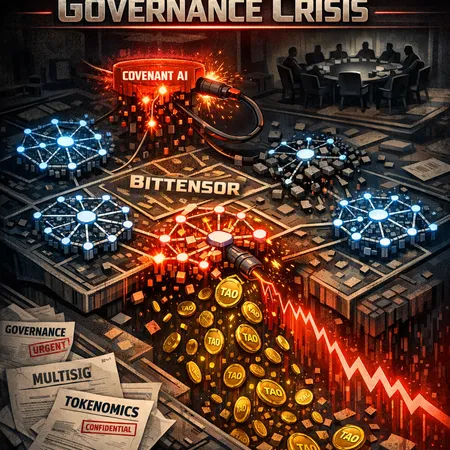
A top subnet operator’s exit sparked a sharp TAO sell‑off that exposed governance gaps in Bittensor and broader risks for tokenized AI projects. This piece reconstructs the Covenant AI departure, traces market fallout, and lays out governance and tokenomic lessons for builders and investors.
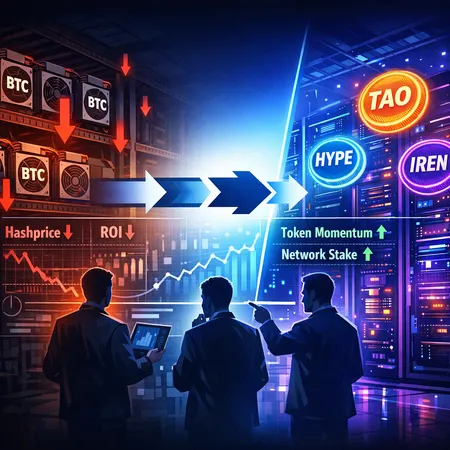
Listed miners moving into AI cloud services and the rise of AI-native tokens like TAO and HYPE are changing where investors allocate capital in crypto. Understanding which pivots are durable vs. hype-driven rallies requires a new mix of operational and on-chain metrics.
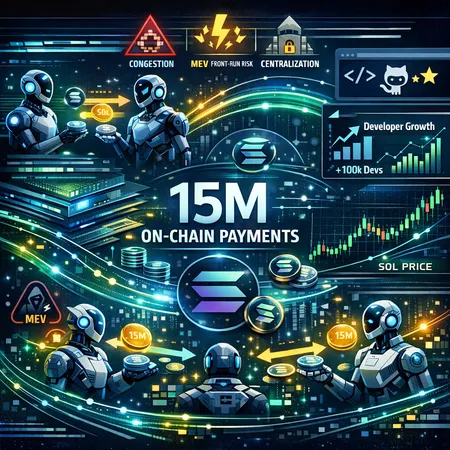
The Solana Foundation’s report of 15 million on-chain AI-agent payments reframes Solana as an early backbone for an agentic internet built on microtransactions. This feature explains what AI agents are, why Solana’s throughput and fee model matters, the economics that will power agent-to-agent commerce, and the attendant technical and market risks for SOL and developers.
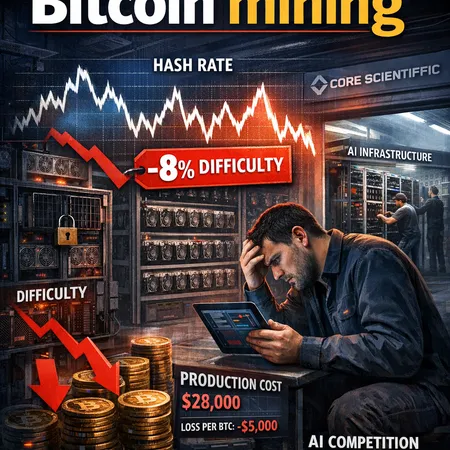
A near-8% difficulty drop and volatile hash-rate have pushed many miners into operating losses, while AI demand for data-center resources is reshaping the economics. This investigative piece models production costs, explains miner responses, and maps risks to network security and BTC price.
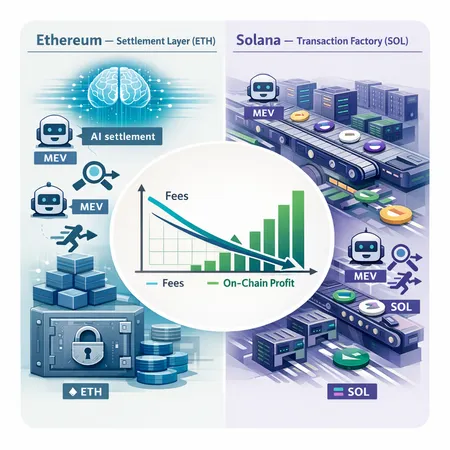
A comparative deep-dive into how Ethereum and Solana capture value as competing economic systems — and whether Ethereum’s push to become an AI settlement layer meaningfully alters fees, MEV, and developer calculus. This is aimed at architects and investors choosing long-term platforms.
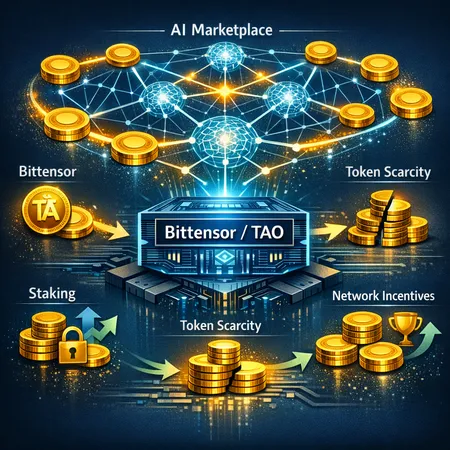
Bittensor positions TAO as a token for an open AI marketplace that pays models and compute providers; its designers borrow Bitcoin-style scarcity to shape long-term token economics. This explainer walks through how the protocol works, why TAO’s scarcity matters, use cases and risks, and tactical entry considerations for investors and developers.
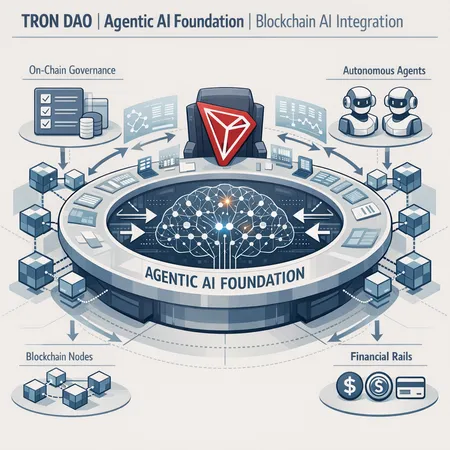
TRON DAO securing a governing seat on the Linux Foundation’s Agentic AI Foundation is a strategic pivot toward blockchain–AI interoperability. This analysis explains the foundation’s goals, practical on-chain use cases, implications for TRX and developer adoption, and the risks of centralization and standards capture.
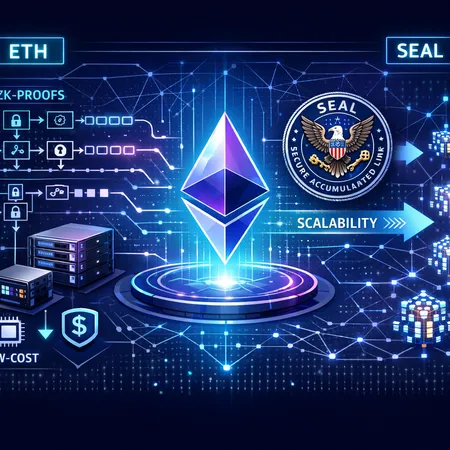
Ethereum's push to embed zero‑knowledge proofs at the base layer aims to shrink validator workloads, improve scalability and create new trust primitives; the L1‑zkEVM workshop and EIP‑8025 preview show concrete design choices, while SEAL addresses the security tradeoffs. This article breaks down the technical case, validator economics, workshop takeaways and implications for decentralization and AI on Ethereum.
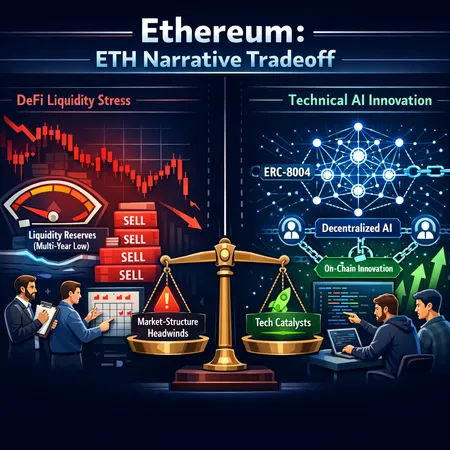
Ethereum faces a tug-of-war between DeFi liquidity stress and technical innovation from on‑chain AI standards like ERC‑8004. This deep-dive assesses reserve trends, price dynamics, and how decentralized AI could reshape Ethereum’s developer and economic moat.
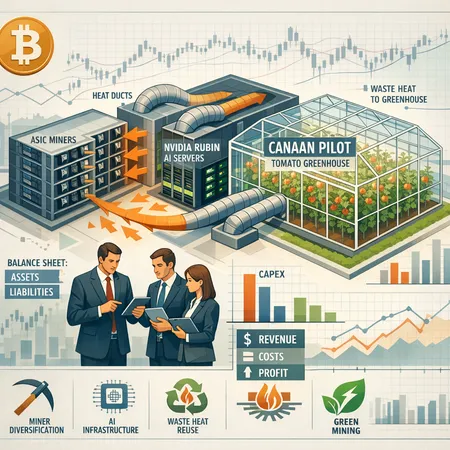
Miners are expanding beyond block validation by entering AI infrastructure and capturing waste heat for industrial uses. These moves reshape CAPEX/OPEX dynamics, improve ESG profiles, and reduce long‑term BTC sell pressure.
DeFi
All DeFi postsBitcoin
All Bitcoin postsDerivatives
All Derivatives posts- Uncovering XRP’s Hidden Bull Case: Futures Surge, Ichimoku Flip, Reserve Decline and Institutional Signals
- Privacy‑Coin Resurgence: Why ZEC, XMR, DASH and DCR Ripped Higher in April 2026 — Risks & Trade Rules
- XRP’s Quiet Buildup: Do Derivatives, On‑Chain Flows and Ledger Resilience Signal a Real Breakout?