Why Tether Is Exiting Uruguay: Energy, Ratings, and Stablecoin Operational Risk
Summary
Executive snapshot
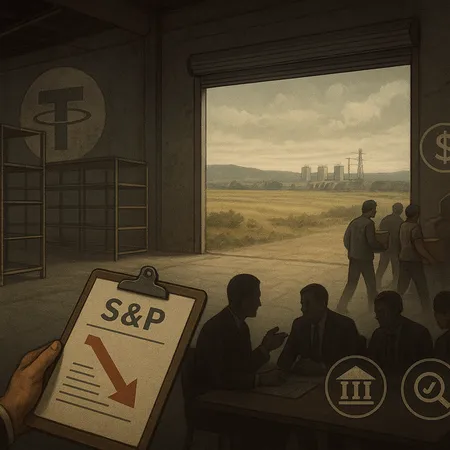
Tether’s recent decision to halt Bitcoin mining operations in Uruguay is not just a local corporate retrenchment — it’s an event that ties together energy economics, operational concentration risk, and reputational friction stemming from recent rating tensions with S&P Global. Reports confirm the shutdown and widespread layoffs, and public comments from Tether’s leadership have underscored how reputational and rating disputes can amplify operational stress. For anyone responsible for stablecoin oversight or counterparty risk, this episode is worth a close read.
Why Uruguay in the first place?
Tether’s investment in Uruguayan mining followed a familiar pattern: look for jurisdictions with attractive power economics, political stability, and a friendly operational environment for hardware deployment. Early on, Uruguay presented a compelling mix of relatively inexpensive renewable-heavy supply and a stable regulatory framework that allowed miners to contract for large, steady loads.
That calculus has a precedent: many crypto operators initially prioritized regions where grid access and favorable rates reduced marginal mining costs. But local conditions change — energy contracts expire, spot prices fluctuate, and capacity that seemed plentiful can quickly become contested as other demand (industrial, residential, or new data centres) grows.
The operational and cost drivers behind the shutdown
Multiple outlets reported that Tether will cease mining activities in Uruguay and lay off most of its local staff, citing sharply rising electricity costs as the proximate cause. See the confirmation in national coverage Cryptonomist and broader reporting at Crypto.News. Together these accounts point to three intertwined drivers:
- Power price sensitivity: Large-scale proof-of-work mining is extremely elastic to electricity prices. When wholesale or contracted power becomes more expensive, previously marginal operations can flip from profitable to loss-making within a few months.
- Contract and capacity risk: Many mining projects rely on long-term offtake agreements or behind-the-meter arrangements. If those contracts are renegotiated, curtailed, or offset by grid stress, miners face rapid margin compression.
- Operational fixed costs and labor: Even when electricity is the lion’s share of costs, fixed overheads (maintenance, security, staffing) mean that partial production cuts don’t proportionally reduce cost — often the only option is a full shutdown.
For a stablecoin issuer running mining operations, the economics are more nuanced than for a pure mining firm. A stablecoin issuer’s reputational calculus and treasury function can make it less willing to operate loss-making infrastructure that offers limited strategic upside.
What the Uruguay exit says about mining economics for stablecoin issuers
Tether’s infrastructure choices expose a paradox: stablecoin issuers may pursue mining for diversified revenue or treasury purposes, yet they lack the singular focus of a dedicated mining company. That difference matters in three ways:
- Lower tolerance for persistent losses: A mining-only firm might accept temporary losses to maintain hash rate or geopolitical positioning; an issuer tied to a widely used stablecoin such as USDT is less likely to tolerate headline risk or balance-sheet drag.
- Concentration and operational tail risk: Running substantial mining capacity in one jurisdiction — even if initially cost-effective — creates single-point-of-failure scenarios. Power-policy shifts, grid constraints, or public relations incidents can force abrupt exits.
- Governance and capital allocation optics: Stakeholders and counterparties scrutinize how stablecoin issuers allocate reserves and capital. Losses or largescale layoffs tied to mining invite questions about corporate governance and strategic priorities.
These dynamics suggest that stablecoin issuers thinking about mining must model scenario-based energy prices, incorporate early-exit clauses in local contracts, and adopt governance transparency practices to manage counterparty trust.
The S&P downgrade, the public spat, and reputational contagion
The mining shutdown happened against the backdrop of a public exchange of blows between Tether and rating agencies. Coverage from Benzinga highlights public criticism by Tether’s CTO/CEO-level executives after S&P applied a stability-related downgrade, and commentary outlets such as TokenPost frame the interaction as an escalating public war of words between S&P Global and Tether (Benzinga report; TokenPost analysis).
Why does a rating event matter operationally? Two mechanisms are important:
- Counterparty trust and conditional access: Even absent formal credit exposure, banks, custodians, and exchanges use ratings and public narratives as inputs to risk frameworks. A downgrade or amplified dispute can tighten banking lines or increase settlement friction.
- Market signalling and investor behaviour: Ratings influence not only formal counterparties but also the broader market’s perception of stability. For a systemically important instrument like USDT, negative signals can accelerate redemption pressure or strategic de-risking by large holders.
When a stablecoin issuer simultaneously faces operational strain (e.g., unprofitable mining) and reputational pressure from ratings disputes, the two feedback loops can make otherwise manageable problems much harder to contain.
Broader implications for stablecoin resilience and regional energy policy
This episode has lessons at multiple levels:
For compliance officers and risk analysts: Layer operational-runway analysis into counterparty due diligence. Ask whether issuers have contingency plans for energy shocks and require transparency on non-core ventures that could affect reserves or governance.
For policymakers: Mining-related economic activity is sensitive to local power markets. Regulators should consider how sudden exits affect grid stability, labor markets, and environmental commitments. Clear permitting and disclosure regimes reduce the chance of stranded assets.
For the crypto ecosystem: The Uruguay exit reinforces the benefit of diversified, resilient operational footprints and conservative treasury governance. Stablecoin issuers pursuing ancillary businesses — from mining to lending — should treat those activities as potentially correlated risks rather than independent revenue streams.
These implications extend into the design of supervision frameworks. Authorities evaluating systemic stablecoins should include operational concentration metrics (e.g., geographic distribution of mining, custody, or treasury holdings) in their stress-testing protocols.
Practical steps for stakeholders
- Compliance and risk teams should demand scenario analyses on energy-price shocks and ask for clear disclosure about any mining or commodity-linked operations in issuers’ public filings.
- Treasury teams at stablecoin issuers must weigh the marginal benefit of running energy-intensive operations against the reputational and counterparty risks that come with volatile commodity exposure.
- Policymakers should coordinate with grid operators to anticipate how large crypto exits or entries could create acute demand swings; predictable permitting and transparent contracts will reduce socialized costs.
Platforms and services that monitor stablecoin health — including market tools from Bitlet.app and analytics providers — will need to add operational concentration indicators to their dashboards to give compliance officers earlier warning of similar risks.
Final takeaways
Tether’s Uruguay exit is a reminder that the intersection of power markets, corporate governance, and market credibility matters profoundly for stablecoin resilience. For issuers, conservative capital allocation and transparent governance reduce the chance that a local operational issue becomes a global credibility problem. For regulators and counterparties, the lesson is clear: stability is not only about the peg; it is also about the operational backbone behind the peg.
Sources
- Tether mining exit confirmed in Uruguay — Cryptonomist
- Tether to shut down Bitcoin mining operations in Uruguay over high energy costs — Crypto.News
- Tether CEO Paolo Ardoino slams traditional rating agencies after S&P downgrades its dollar peg coverage — Benzinga
- Analysis: The public war of words between S&P Global and Tether — TokenPost
For broader context on market dynamics, many practitioners continue to track on-chain trends for Bitcoin and liquidity flows into DeFi protocols to understand how operational events feed into market behaviour.