DOJ Seizes $61M in USDT Linked to Pig‑Butchering Scams: Tracing, Risk, and Compliance Implications
Summary
Executive summary
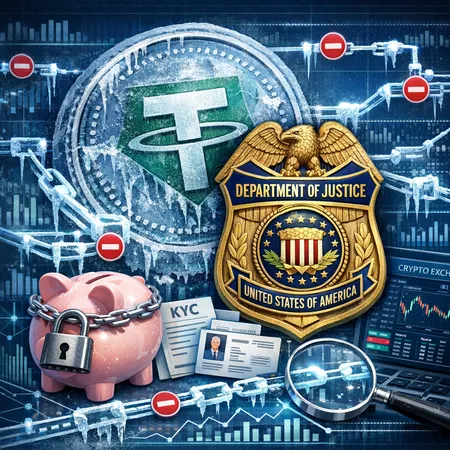
In late enforcement action the US Department of Justice seized more than $61 million in USDT linked to so‑called pig‑butchering romance and investment scams. The operation is notable not because it involved a novel technology, but because it showcased how traditional investigative tools coupled with on‑chain traceability and intermediary cooperation can follow stablecoin value from scam victims to cash‑out points and custody. For compliance teams and policy specialists, the case signals evolving AML expectations for stablecoins, custodial services, and remittance rails.
This explainer breaks the case into three parts: how investigators traced and froze the flows, what the seizure implies for Tether (USDT) and broader AML risk profiles, and practical changes exchanges, remittance providers, and compliance functions should expect.
What happened — the seizure in context
According to reporting on the US Department of Justice action, law enforcement identified wallet clusters and intermediary transfers that tied a network of addresses to pig‑butchering schemes, ultimately seizing over $61 million denominated in Tether (USDT) held in blockchain addresses and correspondent accounts.US DOJ seizure coverage The public summaries emphasize that the funds were moved through a combination of on‑chain stablecoin transfers and off‑chain cashout conduits before arrests and forfeiture were executed.
Cointelegraph’s coverage highlighted the practical visibility that stablecoin flows offer investigators: because USDT moves on transparent ledgers, large transfers and cash‑out points create observable trails that can be matched to exchange accounts and fiat rails when intermediaries cooperate.Tracing and law‑enforcement implications
Taken together, the public reports show a conventional enforcement playbook updated for crypto: chain analytics → exchange/rail identification → legal process → seizure/forfeiture.
How law enforcement traced and froze stablecoin flows
The technical and procedural steps in this seizure reflect mature blockchain forensics and traditional investigative work working in tandem.
On‑chain transaction graphing: Investigators used transaction graph analysis to cluster addresses, identify hops, and spot patterning consistent with laundering strategies. Large USDT transfers, memo fields, timing, and reuse of withdrawing addresses provide signals that investigators use to prioritize leads.
Analytics firms and heuristics: Chain analytics tools (commercial products and in‑house tooling) label exchange deposit addresses, mixing service outputs, and known custodial wallets. Those labels allow investigators to rapidly map suspect transfers to likely off‑ramp destinations; this is the same approach frequently used across DeFi investigations.
Intermediary cooperation and legal process: Once funds are associated with custodial accounts at exchanges or with service providers who interface with fiat rails, subpoenas and criminal seizure warrants enable account freezes and cooperation from custodians. The public reporting suggests prosecutors obtained court authorization and worked with service providers to take control of assets and move toward forfeiture.
Cross‑jurisdictional coordination: Pig‑butchering scams are usually cross‑border operations. Investigators combine mutual legal assistance, foreign law enforcement partners, and financial intelligence units to follow the fiat conversion steps and identify the human actors.
Two messages are important here. First, stablecoins are not inherently invisible — USDT transfers leave an on‑chain trail. Second, the chain only becomes decisive when paired with off‑chain identity information provided by exchanges, remittance providers, or financial institutions.
What this means for Tether’s AML risk profile and custodial/DEX behavior
The seizure doesn't mean Tether as a token is ‘guilty’ of facilitating crime, but it does sharpen how regulators and compliance teams view USDT in AML risk modeling.
Token design vs. issuer responsibility: USDT is an on‑chain unit of value whose movement is visible; however, issuer‑level AML obligations focus on how and where Tether is minted, redeemed, and integrated with fiat rails. Enforcement attention will target the points where USDT touches KYC‑ed on/off ramps rather than the token protocol itself.
Custodial exposure: Centralized custodians and exchanges that accept large USDT inflows without robust monitoring or that delay responding to legal process create compliance risk. Investigators will increasingly expect prompt cooperation and proactive suspicious activity reporting when patterns mirror organised‑fraud behavior.
DEX and noncustodial risk signals: Although decentralized exchanges lack custodial accounts, they leave behavioral signals — large swaps, repeated routing, slippage patterns, and aggregator interactions. Analytics may attribute these patterns to wash trading or layering, and compliance teams monitoring DEX‑linked rails (for example, fiat‑to‑on‑ramp services) will need to incorporate DEX flows into risk engines.
AML scoring and stablecoins: Expect risk‑scoring models to treat certain stablecoins, including USDT, as higher‑sensitivity assets in certain contexts — for example, when incoming flows correlate with known scam clusters, or when routing bypasses on‑chain checks and goes straight to peer‑to‑peer cash‑out services.
Finally, the seizure signals that the relative traceability of USDT can be a double‑edged sword: it helps prosecutors, but it also creates compliance expectations for Tether and counterparties that can't be met solely by token design.
How exchanges, remittance rails, and custodians will likely change KYC and monitoring
This enforcement precedent encourages a set of practical changes in how intermediaries treat stablecoin flows.
Enhanced deposit and withdrawal monitoring: Exchanges will expand rules that flag large or structured USDT deposits coming from addresses with known scam tags. Real‑time alerts tied to chain analytics can trigger temporary holds and manual review.
Lower tolerance for delayed responses: Regulators and prosecutors will expect quick freezing actions after legal process. Firms that habitually stall cooperation risk enforcement and reputational harm. That leads to updated internal playbooks and legal readiness to handle cross‑border warrants.
Tighter KYC on fiat rails and remittance partners: Remittance providers and on/off ramps will raise KYC thresholds, require verifiable source‑of‑fund documentation for large stablecoin conversions, and introduce transaction‑flow attestations from partners.
Integration of on‑chain provenance into KYC records: Expect compliance teams to start retaining on‑chain provenance snapshots when clients deposit large stablecoins: wallet history, transaction graph snippets, and labels from analytics vendors stored in the customer file.
Sanctions and hit‑matching for stablecoins: Firms will expand screening to match not just account names but on‑chain patterns — for example, addresses that have previously interacted with sanctioned actors or high‑risk mixers. This aligns with wider legislative scrutiny highlighted in inquiries into exchange compliance practices.Senate and exchange scrutiny
Prudential limits and liquidity controls: Some platforms may set limits on certain stablecoin pairs or require manual AML sign‑offs for large USDT trades to reduce rapid cash‑out risk.
Taken together these steps increase operational costs for compliance but reduce legal exposure and heighten investor protections.
Broader implications for investor safety and stablecoin design
The seizure prompts a reassessment of how stablecoins should be built and regulated to balance privacy, fungibility, and enforceability.
Transparency vs. privacy tradeoff: On‑chain transparency was key to tracing USDT flows. Developers and policymakers must weigh privacy protections (which can help users) against the fact that too much opacity aids bad actors. Some privacy‑enhancing layers could be restricted or conditioned on compliance tooling.
Programmable compliance and privacy‑preserving AML: The industry is experimenting with technologies like selective disclosure, zero‑knowledge proofs for AML attestations, and privacy‑preserving identity frameworks. Those approaches could allow a stablecoin transfer to carry a verifiable compliance attestation without exposing all transaction details.
Reserve and issuer obligations: The case will likely accelerate calls for clearer issuer responsibilities — not just about reserves but about operational AML/CTF policies, transparency in redemptions, and cooperation mechanisms with law enforcement.
Market‑level effects: Investors and venues may shift liquidity toward stablecoins and issuers with stronger compliance reputations. Conversely, overly onerous restrictions could push activity into unregulated rails or peer‑to‑peer channels, complicating enforcement.
Practical checklist for compliance officers
Compliance teams should view this seizure as a prompt to shore up controls around stablecoins. Recommended actions:
Update risk models to incorporate stablecoin provenance indicators: include tags for known scam clusters, mixer exposure, and DEX routing anomalies.
Integrate chain analytics into transaction monitoring: ingest labeled address lists and automated risk scores from forensic providers and preserve provenance snapshots in customer files.
Strengthen KYC and source‑of‑fund requirements for large stablecoin conversions: require enhanced due diligence, attested declarations, and, where appropriate, escrowed redemptions.
Formalize legal response playbooks: ensure rapid coordination between compliance, legal, and operations for warrants, subpoenas, and cross‑border requests.
Train customer‑facing teams on scam typologies: pig‑butchering is social engineering first, technical second; customer education reduces victimization and AML risk.
Consider contractual controls with remittance partners: require counterparties to maintain AML proofs and to notify suspicious flows tied to stablecoins.
Explore privacy‑preserving compliance tech: pilot selective disclosure and attestations to enable both user privacy and regulatory cooperation.
Platforms offering on‑ramping services — including those similar to Bitlet.app — should specifically evaluate how they preserve on‑chain provenance and how quickly they can act on lawful process.
Enforcement precedent and policy outlook
This seizure signals that enforcement agencies regard stablecoins as fully subject to existing AML and forfeiture regimes. The practical implication is simple: where value can be tied to criminal conduct and then to an identifiable counterparty or fiat conversion point, prosecutors will seek forfeiture and expect cooperation.
Legislators and regulators will increasingly demand: clearer issuer accountability, mandatory cooperation standards for custodians, and technical standards for provenance and reporting. Exchanges under scrutiny — like those discussed in broader inquiries into exchange compliance — will face tougher disclosure and monitoring expectations.Exchange scrutiny context
Conclusion
The DOJ’s seizure of more than $61 million in USDT tied to pig‑butchering scams is a watershed moment for AML practice in crypto: it demonstrates the practical power of on‑chain traceability when combined with intermediary cooperation, and it raises the compliance bar for stablecoin issuers, custodians, and remittance rails. Compliance officers should treat stablecoin provenance as a first‑class risk signal, invest in forensic tooling and legal readiness, and collaborate with partners to ensure rapid response capability. At the policy level, this enforcement action will feed debates about issuer obligations, privacy‑preserving compliance technology, and how best to protect investors without driving activity into unmonitored channels.
Sources