XRP, Flare and MEV: On‑Chain Signals, Tokenomics Impact and Scenario-Based Trade Plans
Summary
Executive snapshot
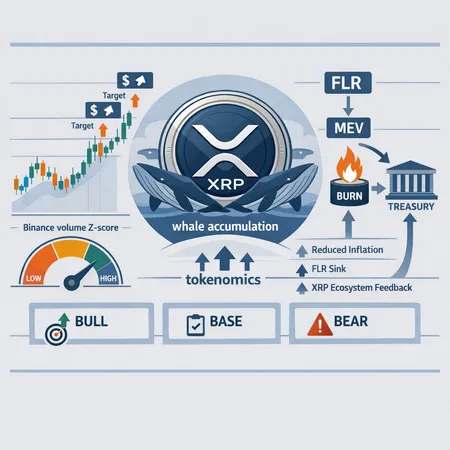
XRP currently shows two complementary on‑chain signals: whale accumulation and unusually low fiat-exchange liquidity (Binance volume Z‑score at rare lows). Those metrics alone don't guarantee a breakout, but they raise the odds that when a catalyst arrives the move could be amplified. At the same time, Flare has proposed protocol‑level MEV capture, a 40% inflation cut, and a centralized FLR revenue/burn vehicle — a set of changes that would reshape FLR tokenomics and, indirectly, the broader XRP ecosystem.
Below I unpack the on‑chain evidence, summarize Flare’s proposal and its possible tokenomic ripple effects, and lay out scenario-based trade and risk plans for intermediate traders and on‑chain analysts. For traders who use on‑chain signals as a thesis engine, this is intended to be practical, not prescriptive. Bitlet.app users and others can fold these checkpoints into dashboards or alerts.
Where we are: on‑chain and exchange signals
Whale accumulation and supply concentration
On‑chain analysis shows an increase in accumulation by large wallets in recent weeks. That pattern — a handful of addresses absorbing supply rather than broad retail accumulation — increases concentration risk but also raises the potential for larger, sharper moves when those addresses rotate holdings or distribute.
BeInCrypto’s on‑chain work highlights this whale accumulation trend for XRP, suggesting fewer hands now control a larger share of circulating supply. When supply concentrates, liquidity has to come from somewhere: either exchanges, spot sellers, or derivatives counterparties.
Exchange liquidity: Binance volume Z‑score at historical lows
CoinPaper reports that XRP trading volume on Binance has dipped to rare lows on a Z‑score basis. Low exchange volume — particularly on the largest venues — often precedes explosive moves because it reduces the depth required to move prices. In other words, thin order books magnify impact when a large buyer or seller acts.
These two metrics together — concentrated wallets on the buy side, and low on‑exchange volume — form a classic setup for outsized volatility. But remember: setup ≠ catalyst. The market can remain rangebound while participants wait for news, protocol changes, or macro events.
Price action and analyst sentiment
Technically, XRP has shown breakout dynamics around short‑term resistance levels that led to a measured‑move attempt. Market commentary frames this move between macro volatility and a growing bullish case — FXEmpire captures that tension, noting geopolitical and macro headlines that could swing risk appetite rapidly. Analysts’ targets remain heterogeneous: some peg higher measured moves if liquidity returns, while others warn of false breakouts without sustained flow.
For intermediate traders, the sensible read is: the structure looks constructive, but conviction should be proportional to volume and on‑chain transfer confirmation.
Flare’s proposal: protocol‑level MEV capture, inflation cut and an FLR burn/revenue entity
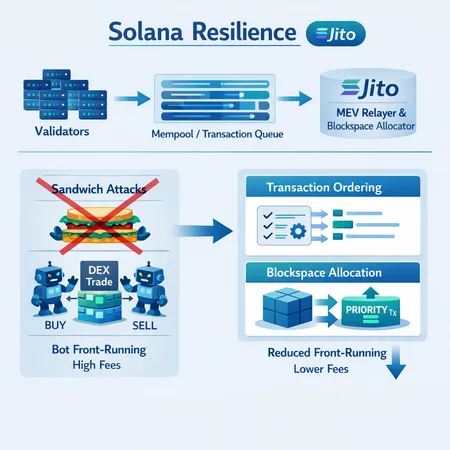
CoinDesk covered Flare’s public proposal for two interlocking changes: capture protocol‑level MEV (miner/maximum extractable value) for the chain and materially reduce inflation (reportedly a 40% cut), while channeling revenue through a new entity that would both allocate revenue and burn FLR to support deflationary pressure.
At a high level the proposal aims to:
- Create a mechanism to capture MEV at the protocol layer rather than leaving it to searchers/validators alone. Protocol capture can be organized to fund public goods or burns rather than end up as private extraction. (CoinDesk writes this up in detail.)
- Cut inflation by roughly 40%, reducing new supply pressure.
- Establish an FLR revenue/burn vehicle (described in the coverage as a FIRE‑style entity) that would route MEV proceeds and other revenue into either operational budgets and/or token burns, changing net issuance dynamics.
These are significant changes for a token that currently has inflationary issuance baked in. Combined, they would create new built‑in sinks for FLR and alter expected future supply growth.
How an FLR revenue/burn entity could affect tokenomics and the XRP ecosystem
Direct FLR effects
If MEV capture funnels predictable revenue to a burn or treasury, the immediate mechanical impact is a reduction in net inflation (possibly flipping to deflationary in stressed scenarios). The announced 40% inflation cut already reduces the flow of new tokens; adding persistent revenue and burns compounds scarcity pressure.
Price responds to expected future scarcity. For FLR holders, predictable demand (from staking, usage, or protocol revenue allocation) and lower supply growth improves the narrative for long‑term appreciation. That alters capital allocation across the ecosystem — more capital may chase FLR, which can pull liquidity away from adjacent markets.
Indirect and cross‑token effects (including XRP)
Flare sits adjacent to XRP in the broader ecosystem. Better economics for FLR could increase developer activity on Flare, drive cross‑chain bridges, and create new liquidity demands between XRP and FLR markets. That said, the channels are indirect: XRP’s price moves will depend on how the market perceives Flare’s changes as a demand driver for XRP liquidity (e.g., bridging operations, custody flows) and on whether a stronger FLR token encourages new on‑chain products that require XRP liquidity.
There are also governance and centralization considerations. Protocol‑level MEV capture often requires design choices that can centralize extraction logic (who controls the revenue distribution mechanism?) and create regulatory visibility into how revenue is used. Those tradeoffs can feed volatility if governance outcomes are contested.
Risks and implementation caveats
Mechanics matter: gas models, who gets priority, how searchers adapt, and the legal design of the revenue/burn vehicle will determine whether the theoretical benefits are realized. If MEV capture is clumsy, searchers may route activity elsewhere or game the mechanism; if governance is opaque, markets may discount long‑term benefits. The CoinDesk piece outlines the proposal; the market will watch governance signals and testnets closely.
Do on‑chain accumulation and low exchange volume make a major move more likely?
Short answer: they increase the probability of a large move, but not the certainty.
Longer read:
- Concentrated whale accumulation reduces the number of participants between the current price and a major buy or sell order. When those whales act, their flows move the market more. This increases directional vulnerability.
- Low Binance volume Z‑score means reduced exchange depth. Historically, some assets have exploded after similar troughs in exchange volume because it takes less traded volume to shift price materially.
However, there are counterweights:
- Accumulation can be consolidation — whales accumulating to sell into rallies, or accumulating for long holds. On‑chain behavior like staking or transfers to cold wallets vs to exchanges gives different signals.
- Macro shocks, regulatory headlines, or liquidity arriving from derivatives desks can abruptly reverse a thesis.
FXEmpire’s commentary underscores this tradeoff: the narrative is constructive but conditioned on cross‑currents like macro headlines and liquidity events. CoinPaper’s low volume metric is a powerful sentinel — but treat it like a probability amplifier, not a binary trigger.
Scenario-based trade and risk plans
Below are three practical scenarios (Bull, Base, Bear) with suggested actions for intermediate traders and on‑chain analysts. These are frameworks, not trade calls. Adjust size, leverage and timeframes to your portfolio rules.
Bull case (high conviction catalyst; MEV implementation is constructive)
Hypothesis: Whale accumulation is preparatory; Flare governance greenlights MEV capture, the FLR revenue/burn is credible, and exchange liquidity returns.
- Trigger: FLR governance vote passes (or testnet shows tame searcher behavior) + uptick in exchange inflows for XRP and FLR.
- Trade idea: Enter layered long positions in XRP (scale 25% at trigger, 50% at breakout confirmation, 25% on re‑test). Consider a companion long FLR allocation sized smaller as a play on protocol improvements.
- Targets: Use measured move targets from recent range structures; for intermediate traders, aim for 20–50% on shorter timeframes, with trailing stop to capture larger moves.
- Risk rules: Max position 2–5% of portfolio per trade; use hard stop below the breakout fail level. Avoid leverage unless you can handle 10–20% intraday swings.
Base case (higher probability; liquidity returns slowly)
Hypothesis: Accumulation and low exchange volume create a setup; Flare chatter keeps interest but implementation will take months.
- Trigger: Sustained increase in on‑chain transfer volume from whales to spot exchanges or renewed retail flow; Binance volume Z‑score reverts to mean.
- Trade idea: Small tactical longs on re‑tests of support; consider neutral pairs trades (long XRP / short BTC or using stablecoin hedges) to isolate idiosyncratic XRP moves.
- Targets: Modest, structured profit-taking at multiple levels (10%, 25%). Reassess as MEV proposal governance unfolds.
- Risk rules: Keep position sizes small, watch funding rates and open interest to avoid being squeezed by derivatives liquidity.
Bear case (failed breakout / sell the news / governance rejection)
Hypothesis: Whales distribute into rallies, exchange liquidity remains thin, or Flare governance fails/appears unreliable.
- Trigger: Large sell‑side flows onto exchanges, governance vote fails, or an exploitable implementation vulnerability is disclosed.
- Trade idea: Trim or close longs; consider shorting into rallies using options or spot shorting with strict risk controls. Use protective put buys if possible.
- Targets: Tight risk stops; identify liquidity nodes where price could consolidate (recent multi‑week support). Size shorts conservatively.
- Risk rules: High attention to margin requirements. If forced to liquidate, accept smaller losses rather than realize catastrophic ones.
Hedging and execution tips
- Use options (where available) to hedge large directional exposure — buying puts protects downside while keeping upside optionality if premiums are reasonable.
- Avoid overreliance on a single metric. Confirm whale accumulation with on‑chain flows (are coins moving to cold wallets or to exchanges?), and cross‑check with order‑book depth.
- Stagger entries to avoid being front‑run by liquidity events (scale in).
Monitoring checklist: what to watch next
- Whale address behavior: transfers to exchanges vs to cold storage; staking or programmatic lockups.
- Binance volume Z‑score: a reversion to mean or abrupt spike will change the playing field. CoinPaper’s metric is a good sentinel.
- FLR governance and testnet results: whether MEV capture is simulated and how revenue is allocated or burned (CoinDesk coverage will follow governance updates).
- On‑chain MEV signals: bundle submissions, searcher activity, and sudden changes in priority fee dynamics.
- Order‑book depth and derivatives: open interest, funding rates, and concentrated limit orders.
- Macro and news flow: FXEmpire’s framing shows geopolitical and macro events can flip sentiment quickly.
Where relevant, keep tabs on adjacent narratives like DeFi rollouts or bridge flows that could create sustained demand; for some traders, monitoring XRP alongside broader DeFi indicators helps clarify cross‑protocol liquidity shifts.
Conclusion
XRP’s current setup — concentrated whale accumulation plus historically low Binance volume Z‑scores — is a high‑probability amplifier: when a catalyst hits, moves can be larger than usual. Flare’s MEV proposal and the accompanying 40% inflation cut, coupled with an FLR revenue/burn entity, represent a direct tokenomic shock for FLR and an indirect structural change for the XRP adjacent ecosystem.
For intermediate traders and on‑chain analysts the right posture is conditional: prepare for volatility with a checklist-driven approach, align position sizing to thesis strength, and treat Flare’s governance milestones as potential catalysts rather than guarantees. Use layered entries, strict risk rules, and hedges if you plan to trade the narrative.
If you track these variables in dashboards or trading tools (including workflow platforms like Bitlet.app), maintain clear triggers for entry and exit so you aren’t trading on emotion when volatility arrives.
Sources
- CoinDesk — Flare MEV capture and proposal details: https://www.coindesk.com/tech/2026/04/10/xrp-adjacent-flare-proposes-protocol-level-mev-capture-and-40-inflation-cut
- BeInCrypto — on‑chain whale accumulation analysis for XRP: https://beincrypto.com/xrp-price-stuck-whale-accumulation-analysis/
- CoinPaper — XRP volume on Binance dips to rare lows: https://coinpaper.com/16141/xrp-volume-on-binance-dips-to-rare-lows-set-up-for-a-major-surge?utm_source=snapi
- FXEmpire — market commentary and analyst framing for XRP: https://www.fxempire.com/forecasts/article/xrp-news-today-traders-on-edge-as-us-iran-talks-quantum-debate-collide-1590758