Bitget IPO Prime and preSPAX: A strategic guide to tokenized pre‑IPO allocations
Summary
Why Bitget IPO Prime matters — the idea in one paragraph
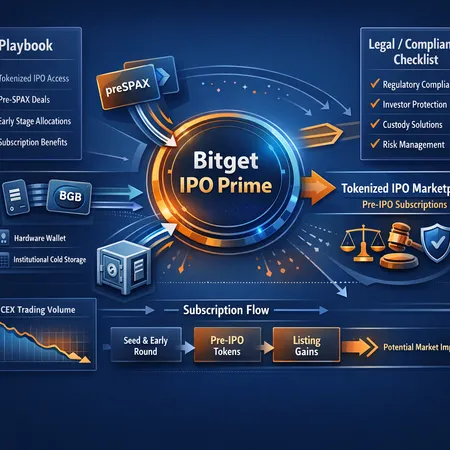
Bitget’s IPO Prime initiative, which recently debuted with SpaceX’s tokenized pre‑IPO allocation known as preSPAX, signals a deliberate attempt to bridge private company allocations and crypto markets. According to The Block’s coverage of the launch, Bitget positioned IPO Prime as a subscription marketplace for tokenized pre‑IPO allocations that lets users obtain fractional exposure to sought‑after private deals. For allocators, this is not just another memecoin-like listing; it’s a product that sits at the intersection of tokenized allocations, custody innovations, and securities regulation.
How subscription‑based pre‑IPO marketplaces work
Subscription pre‑IPO marketplaces typically run in three phases: deal sourcing and allocation; tokenization and issuance; and secondary trading or settlement. In Bitget’s model users subscribe to allocations during a window and receive a token that represents a claim on a portion of the issuer’s pre‑IPO allocation — in this case, preSPAX. The token can be standardized (ERC‑20 style) for trading on the exchange, or issued under a security‑token framework with transfer controls and whitelisting.
Mechanics at a glance:
- Deal originator secures a tranche of pre‑IPO shares from an issuer or large holder.
- The tranche is fractionalized and represented by on‑chain tokens (e.g., preSPAX) or ledger entries controlled by the exchange.
- Subscribers are whitelisted, complete KYC/AML, and are allocated tokens pro rata.
- Secondary transfers may be allowed subject to lockups, transfer restrictions, or on‑chain controls.
This structure promises lower minimums and faster settlement than traditional private placements. But the convenience comes with several tradeoffs — most importantly, legal enforceability of tokenized claims and custodial counterparty risk.
Tokenized allocations vs traditional pre‑IPO allocations
Tokenized allocations aim to democratize access: where traditional allocations require high minimums and broker relationships, tokenization reduces ticket sizes and enables price discovery via exchange trading. That said, price discovery may be thin; tokenized pre‑IPO markets can still suffer from low turnover and wide spreads, especially given cooling CEX volumes observed across the industry. Recent reporting highlights that centralized exchange trading volumes have cooled materially, which factors into expected liquidity for new tokenized products.
Custody and provenance: where the legal rubber meets the road
Custody is the single most important operational consideration for tokenized pre‑IPO allocations. Ask two core questions: what exactly does the token represent, and who legally holds title to the underlying equity? Models we see in the market include:
- Centralized custodial model: the exchange or an affiliated custodian holds the underlying pre‑IPO shares and issues a token representing a beneficial interest. Operationally simple, but creates concentration of counterparty risk.
- Qualified third‑party custody: independent licensed custodians hold the underlying assets with segregation and audit rights. This reduces counterparty risk but adds complexity and cost.
- On‑chain native security tokens: the equity is represented directly by tokenized securities governed by smart contracts, often issued under a compliant security token standard with built‑in transfer controls. Legally elegant where permitted, but still reliant on the issuer and applicable securities law compliance.
Key custody red flags:
- No segregated custody or unclear chain of title.
- Absence of third‑party audits and reconciliations.
- Lack of clear redemption mechanics if the issuer issues equity or cash at IPO.
- No clarity on insolvency treatment or customer priority in an exchange failure.
Practically: insist on written custody agreements, proof of asset ownership, periodic attestations, and clarity on the waterfall if the custodian or exchange becomes insolvent.
Regulatory risks to watch
Tokenized pre‑IPO allocations sit in a grey area between private securities and crypto tokens. The principal regulatory risks include:
- Securities classification: Many jurisdictions will view a token representing a pre‑IPO allocation as a security. That triggers registration requirements or exemptions, prospectus rules, and investor eligibility limits.
- Distribution and transfer restrictions: Token secondary trading may be restricted until the underlying equity is registered or until specific lockups expire.
- Accredited/institutional investor rules: Offers may be limited to accredited or professional investors; exchanges must enforce this through KYC/whitelisting.
- Cross‑border compliance: Different rules apply in the U.S., EEA, Singapore, Hong Kong, etc., which complicates global distribution.
- AML/KYC and sanctions screening: Pre‑IPO allocations often attract high‑net‑worth participants; rigorous AML is expected.
Regulators are watching novel exchange products closely. The market backdrop — muted market participation despite price moves — suggests investors may be cautious even when new products arrive, as highlighted in recent market coverage.
Market implications given waning CEX volumes
CEXs are searching for new product lines and revenue; tokenized IPO offerings are one route. But the macro picture matters: centralized exchange volumes have cooled significantly in many markets, and headline reporting shows muted retail participation even around meaningful macro or corporate news. That suggests several consequences:
- Initial demand may be concentrated among sophisticated or institutional allocators rather than broad retail.
- Liquidity will likely be episodic and concentrated around settlement or conversion events (e.g., token holders redeeming for shares at IPO).
- Exchanges may use tokenized allocations to drive user acquisition, but sustainable secondary market liquidity depends on genuine economic interest in the underlying equity.
In other words: tokenized pre‑IPO products are promising, but not a guaranteed liquidity driver. For exchanges, they represent product diversification and potential fee revenue (and potentially utility for native tokens like BGB if the exchange ties access or discounts to token holdings), but they also draw regulatory scrutiny.
Playbook for retail and institutional allocators
Below is a practical sequence to evaluate and participate in tokenized pre‑IPO allocations.
Legal onboarding and eligibility
- Confirm you meet issuer/exchange investor eligibility rules (accredited, professional, jurisdictional limits).
- Obtain and review the legal offering documents and any legal opinions on token rights.
Asset‑structure due diligence
- Determine whether the token is a direct security token, a claim token with custodial backing, or a derivative exposure.
- Verify documentation that defines redemption mechanics, conversion terms, and lockups.
Custody and counterparty assessment
- Confirm who holds the underlying shares and whether custody is segregated.
- Request recent custodian attestations and audit reports.
Secondary market and liquidity analysis
- Check trading rules: can the token be traded freely? Are transfers whitelisted?
- Model worst‑case liquidity scenarios and plan exits accordingly.
Tax and accounting review
- Confirm tax treatment in your jurisdiction for gains, conversions, and distributions.
- Clarify how to account for these tokens on balance sheets or personal tax returns.
Allocation sizing and risk limits
- Limit initial exposure to a small percentage of private allocation budgets until the market proves reliable.
- Use position sizing rules and consider hedges if available.
Operational checklist before subscribing
- Validate KYC/AML completion, wallet controls, custodian access, and dispute resolution mechanisms.
- Keep copies of all offering documents and custodial confirmations.
Checklist of legal and compliance questions (copyable)
- Is the token classified as a security in the issuer’s and investor’s jurisdictions?
- Is there a legal opinion confirming the token’s rights and enforceability?
- Who is the legal owner of the underlying equity and how is beneficial ownership recorded?
- Are the tokens issued under a recognized security token framework or are they exchange ledger credits?
- What investor eligibility checks are enforced (accredited status, residency limits)?
- Are secondary transfers restricted or subject to whitelisting/escrow?
- What are the lockup periods, vesting schedules, and conversion triggers?
- Which custodian holds the underlying asset, and is custody segregated and insured?
- Are there periodic third‑party attestations or audits of the underlying holdings?
- How will taxation be reported and who will issue tax documents (issuer, exchange, custodian)?
- What dispute resolution forum and governing law apply to token holder claims?
- What happens to token holders’ claims in the event of issuer or custodian insolvency?
Risk management and exit considerations
Tokenized pre‑IPO exposures have idiosyncratic risk: issuer execution risk, regulatory risk, and illiquidity. Practical mitigations:
- Diversify across issuers and avoid concentration in single pre‑IPO tokens.
- Limit allocation size; treat early allocations as long‑duration private exposures.
- Keep a documented exit plan: are redemptions allowed at IPO? Is there a buyback or secondary market?
- Consider legal escrow or special‑purpose vehicles (SPVs) for large institutional allocations to improve enforceability.
Operational tips for custody and settlement
- Insist on cold‑wallet controls and multi‑party key custody for any on‑chain token.
- For custodial models, require monthly reconciliations and a standing right to audit custody holdings.
- Validate the redemption mechanics in live testing or via historical precedent: how were past tokenized allocations settled?
- Confirm how corporate actions (dividends, spin‑offs) are handled for token holders.
Final thoughts: opportunity vs execution
Tokenized pre‑IPO allocations — exemplified by Bitget IPO Prime’s preSPAX — are an intriguing overlay of private markets and crypto infrastructure. They can open access to otherwise closed deals and create new marketplaces for price discovery. But the value is conditional: on clear legal rights, robust custody, enforceable redemption mechanics, and realistic liquidity expectations. With centralized exchange volumes muted and regulatory attention high, investors should approach these products with careful validation, small initial allocations, and thorough legal review.
For allocators who want to stay current on these product innovations and related custody solutions, platforms like Bitlet.app provide educational resources and tools that help track new listings and custody best practices.