XRP’s Institutional Conundrum: ETF Flows, Ripple’s Asia Push, and the Roadmap for Allocators
Summary
Executive snapshot
XRP’s recent narrative is schizophrenic: on several days U.S.-listed spot XRP ETFs quietly attracted net inflows while some other crypto ETFs bled assets, yet headline technical charts show vulnerability and liquidity can be thin at key levels. Institutional anecdotes — from public valuation claims to reported multi-hundred-million-dollar ETF bets — add fuel to both bullish and cautious cases. Below I unpack the evidence, weigh the catalysts (including the SEC timeline and Ripple’s Asia push), and finish with a practical investment checklist for allocators.
What the flows are telling us
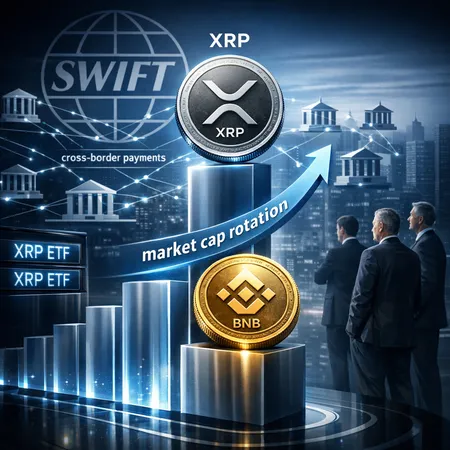
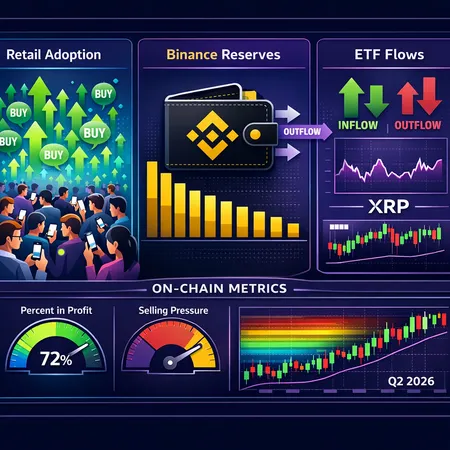
One clear, quantifiable signal comes from ETF flows. TokenPost reported that U.S.-listed spot XRP ETFs recorded net inflows and were the only altcoin ETF inflows on that trading day, a datapoint that matters because ETFs aggregate institutional demand and institutional execution pipelines. However, inflows are not a constant — ETFs rotate and some XRP products have experienced intermittent outflows on other days, producing a noisy picture.
Institutional-sized ETF activity changes on- and off-exchange liquidity dynamics: large inbound flows increase available passive bids, but the converse is also true. FXEmpire covered how sizable institutional stakes — including a reported $152 million ETF exposure tied to a major name — can alter short-term liquidity and create asymmetric order book risk around rebalances or corporate trading decisions (FXEmpire report).
Why net inflows don’t equal ‘sustained demand’ automatically
- ETF flows are relatively easy to interpret at a headline level but hide execution nuance: sponsor hedging, AP behavior, and delta-hedge flows matter.
- Even sustained ETF inflows can coexist with thin spot markets for certain exchanges or regions, producing volatility when a block trade hits.
- Outflows from other crypto products or market-wide deleveraging can swamp ETF-driven demand quickly.
The bullish narrative: Bitrue valuation and Ripple’s institutional push
A distinctly bullish data point comes from market commentators and large retail/OTC platforms. Bitrue publicly argued that XRP’s fair value should already be near $10, a bullish call that highlights narratives around network utility, settlement use cases, and potential re-rating from renewed institutional flows (NewsBTC coverage). That kind of public valuation debate can influence sentiment among high-frequency allocators and retail whales.
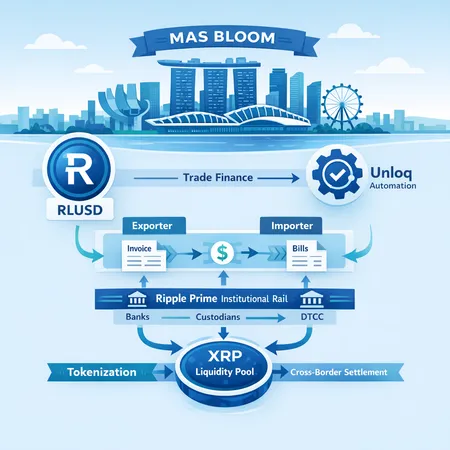
Separately, Ripple’s corporate strategy is an institutional adoption tailwind. TokenPost reported Ripple accelerating its push into Asia with engagement with Singapore authorities — a jurisdictional win that could open institutional corridors and pilot programs with banks and payment providers (Tokenpost on Ripple Asia). Regional regulatory acceptance and business development directly support the long-term case for broader institutional use.
These elements — public valuation advocacy, ETF inflows, and corporate expansion into Asia — combine into a coherent fundamental story: infrastructure, demand pathways, and narrative support for re-rating.
The bearish and structural counterpoints: SEC uncertainty and technical pressure
The SEC overhang remains a central macro-regulatory risk. Even as Ripple courts institutional partners in Asia, looming SEC deadlines and unresolved legal issues with the U.S. regulator continue to cloud the timeline for mainstream bank adoption and some institutional counterparties. Regulators’ timelines can act as multi-month to multi-quarter catalysts, not daily events — and they shape component parts like custody arrangements, exchange listings, and broker-dealer willingness to hold inventory (this is the classic SEC catalyst variable institutions track).
On-chain and market technicals amplify the cautionary story. Price charts have shown episodes of technical pressure: failed attempts to hold key moving averages, elevated realized volatility, and narrow order-book depth at critical support levels. ETF inflows can mask this: a headline inflow day may balance out with underlying liquidity providers tightening spreads, meaning any sudden sell pressure cascades more sharply. FXEmpire’s work suggests that large institutional ETF bets affect short-term liquidity, particularly around rebalance windows (FXEmpire report).
Why technicals matter for institutional allocators
- Institutions trade in size; technical thinness equates to execution risk and market impact.
- Stop cascades and algorithmic outflows can produce short-term drawdowns that matter to multi-asset funds with VaR limits.
- ETFs can amplify intraday moves when APs and market makers adjust delta exposure rapidly.
Reconciling opposing signals: a synthesis
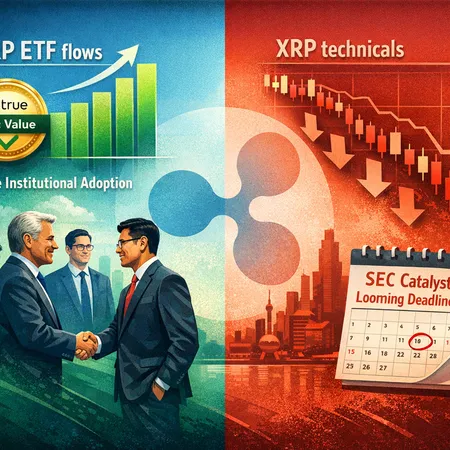
The evidence is mixed because different actors and timeframes are being observed simultaneously. Short-term liquidity and XRP technicals look fragile; mid-term institutional interest (ETF flows, public valuations, and corporate expansion) is tangible; long-term adoption depends on regulatory clarity and real-world payment integration.
A few practical observations:
- Institutional interest is real but heterogeneous: some allocators are allocating via ETFs (passive/regulated wrapper), others via OTC and custody relationships.
- Corporate and regional wins (e.g., Singapore engagement) lower political risk in parts of Asia but don’t eliminate U.S. regulatory counterparty friction.
- Public bullish statements such as Bitrue’s $10 fair-value claim are sentiment amplifiers, not substitutes for liquidity and execution plans.
(For broader market context, remember that Bitcoin still acts as the primary risk-on barometer for many allocators; large BTC moves often precede or coincide with altcoin re-ratings. And while XRP isn’t a DeFi token per se, cross-market flows between spot markets and decentralized venues can affect price discovery the way NFTs and DeFi cycles sometimes spill over.)
Operational checklist for institutions considering XRP exposure
Below is a practical, balanced checklist for asset managers and institutional allocators evaluating XRP. It blends trading operations, regulatory due diligence, and risk management.
Regulatory & legal review
- Confirm the status of any SEC litigation or administrative deadlines and evaluate jurisdictional exposures across custody, trading, and client mandates. If you are U.S.-based, treat the SEC catalyst as a contingent timeline.
Counterparty and custody due diligence
- Use custodians with proven custody controls for XRP and explicit legal opinions on segregation, insolvency remoteness, and recovery procedures. Confirm whether custody providers support direct settlement vs. wrapped products.
Sizing and portfolio construction
- Consider small initial allocations with a capped drift rule; treat XRP as a high-volatility satellite allocation unless your mandate allows otherwise. Backtest allocations under stressed scenarios.
Execution plan and liquidity assessment
- Define preferred execution paths: ETF creation/redemption vs. OTC or exchange fills. Model market impact at different notional sizes and have a block-trade protocol.
Monitoring and liquidity triggers
- Implement intraday liquidity monitoring and automated alerts for spreads, depth, and realized volatility. Set cold/warm/hot thresholds for action.
Custodial settlement & prime-broker readiness
- Verify prime broker or settlement chain support for XRP. Some institutions prefer ETF wrappers to avoid custody complexity; others want direct exposure for basis capture.
Stress-testing and scenario planning
- Model three scenarios: rapid regulatory clarity, prolonged litigation, and sudden market liquidity shock. Predefine stop-loss and escalation ladders.
Governance and client disclosure
- Update client-facing documentation to reflect XRP-specific risks: regulatory overhang, market impact, and operational frictions. Ensure Investment Committees sign off on explicit triggers.
Fee and tax considerations
- Work with tax and compliance teams on the treatment of XRP gains/losses and ETF tax efficiency versus direct holdings.
Exit rules and rebalancing cadence
- Define clear exit mechanics (e.g., via ETF redemption windows or OTC blocks) and rebalance frequency tied to liquidity metrics.
Practical trade examples (illustrative)
- Small allocator with limited custody appetite: access XRP exposure via regulated spot XRP ETFs while monitoring spreads and AP behavior. This reduces custody friction but introduces basis and tracking error considerations.
- Larger allocator seeking basis capture: use a split approach — core position in ETF wrapper, incremental opportunistic allocations via OTC with pre-vetted custodians and block trades.
Mentioning operational platforms in passing, services like Bitlet.app provide modular tools for crypto exposure management that some allocators use to help coordinate custody, flows, and client reporting — but operational integration should follow internal controls and legal review.
Conclusion
XRP is in a transitional phase: institutional signals are clearest at the narrative level — ETF inflows, public bullish views such as Bitrue’s, and Ripple’s Asia push — while technicals and regulatory uncertainty keep execution and timing uncertain. For asset managers, the right approach is pragmatic and operational: small, controlled allocations; robust custody and execution playbooks; and predefined monitoring and exit rules keyed to liquidity and regulatory milestones. That balances the upside of potential re-rating with the real-world frictions that can turn headlines into trading losses.
Sources
- TokenPost — U.S.-listed spot XRP ETFs recorded net inflows: https://www.tokenpost.com/news/investing/19310
- NewsBTC — Bitrue says XRP should already be at $10: https://www.newsbtc.com/news/bitrue-says-xrp-should-already-be-at-10-traders-are-betting-it-gets-there/
- TokenPost — Ripple accelerates push into Asia with Singapore authorities: https://www.tokenpost.com/news/business/19313
- FXEmpire — Goldman Sachs’ reported $152M ETF exposure and liquidity impacts: https://www.fxempire.com/forecasts/article/xrp-news-today-goldman-sachs-reveals-152m-etf-bet-1587745