Understanding Turkey's New AML Regulations and Their Impact on Crypto Trading

Published at 2025-06-25 18:27:37
Understanding Turkey's New AML Regulations and Their Impact on Crypto Trading – cover image

Turkey has recently implemented updated Anti-Money Laundering (AML) regulations aimed at increasing transparency and security within the cryptocurrency market. These new rules require crypto exchanges and trading platforms to enhance their compliance measures, conduct stricter user identity verifications, and report suspicious transactions promptly to authorities.

For traders and crypto enthusiasts in Turkey, these regulations mean more robust scrutiny but also greater safety and legitimacy in the crypto market. Exchanges are expected to adopt better Know Your Customer (KYC) procedures and adhere to tighter monitoring standards.

Despite the increased compliance requirements, the Turkish crypto market continues to grow, and platforms like Bitlet.app offer innovative solutions tailored to these new regulatory environments. Bitlet.app, for instance, provides a Crypto Installment service that allows users to buy cryptocurrencies immediately while paying monthly installments. This flexible payment method is especially attractive for traders looking to invest steadily while managing their finances responsibly.

Understanding these updated AML regulations is crucial for users in Turkey and beyond to ensure they stay compliant while benefiting from the evolving landscape of crypto trading. By choosing reliable platforms such as Bitlet.app, traders can confidently navigate regulatory challenges and optimize their cryptocurrency investments within the new framework.

Share on:

Related posts

DOJ Seizes $61M in USDT Linked to Pig‑Butchering Scams: Tracing, Risk, and Compliance Implications – cover image
DOJ Seizes $61M in USDT Linked to Pig‑Butchering Scams: Tracing, Risk, and Compliance Implications

The US Department of Justice seized more than $61 million in USDT tied to pig‑butchering scams — a case that underscores how traceability of stablecoins changes enforcement, raises new AML questions for Tether, and will push exchanges and remittance rails to tighten monitoring. This article explains how the funds were traced, what it means for custodial vs DEX flows, and practical steps compliance teams should expect.

Published at 2026-02-25 12:42:07
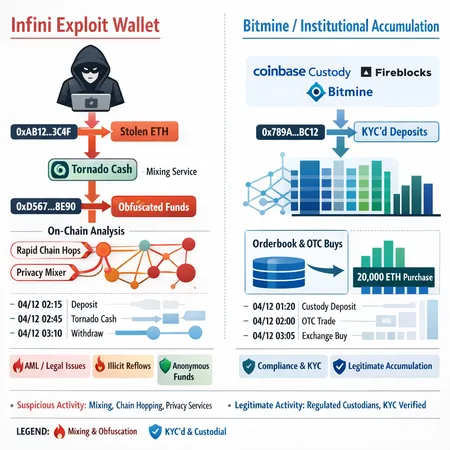
Who’s Buying the Ether Dip? Infini Exploit Wallet vs Institutional Accumulators – cover image
Who’s Buying the Ether Dip? Infini Exploit Wallet vs Institutional Accumulators

A forensic comparison of an exploit-linked wallet that reactivated to buy ETH (and routed funds through Tornado Cash) against institutional accumulation such as Bitmine’s 20k ETH purchase. This piece provides a practical on-chain provenance and AML framework for reporters and compliance teams to separate illicit reflows from legitimate buying.

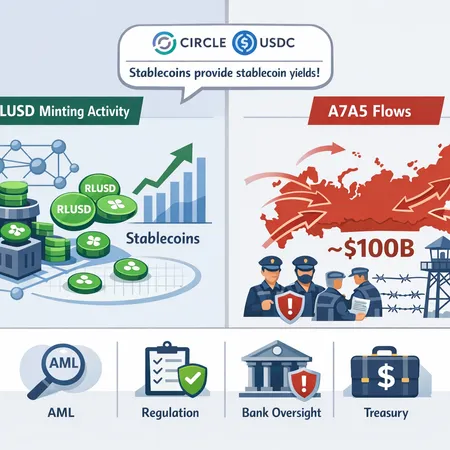
Stablecoins, Yields and Geopolitics: RLUSD Minting, A7A5 Flows and the New AML Dilemma – cover image
Stablecoins, Yields and Geopolitics: RLUSD Minting, A7A5 Flows and the New AML Dilemma

An investigative primer on recent stablecoin minting, cross‑border risk, and the debate over yield‑bearing stablecoins. Practical policy recommendations for compliance officers, stablecoin teams and regulators.

Published at 2026-01-23 16:09:46