XRP Community Day: An Event-Driven Trade Guide for Swing Traders

Summary
Why XRP Community Day matters for traders
Ripple’s XRP Community Day is more than a PR moment — it’s a concentrated catalyst that can reorder expectations, liquidity and positioning in XRP for weeks. CEO Brad Garlinghouse has hinted at a potentially major reveal, which is exactly the kind of event that attracts both community HODLers and short-term speculators. For swing traders, that combination of high attention and uneven information flow creates amplified volatility and asymmetric opportunity: a clear agenda can spark follow-through, while an underwhelming disclosure can trigger fast retests of technical support. The event is worth treating as a formal catalyst in your market plan, not just another tweet storm; U.Today’s write-up on the Community Day summarizes the expectation that Garlinghouse could deliver meaningful news to the community.
Understanding the mechanics of headline-driven moves and how they fit within your swing timeframe is the first step toward a practical playbook. This guide assumes you manage positions over days to weeks (not tick-level scalps) and want step-by-step rules to size, hedge and react without getting whipsawed by headline noise.
Event logistics and likely public themes
Ripple announced the upcoming XRP Community Day as a community-focused event with the possibility of a major reveal from Brad Garlinghouse. While details vary by announcement, historically these events include: product demos or roadmaps, partnership reveals (banks, custodians, exchanges), legal or regulatory posture updates, and roadmap items for the XRP Ledger or liquidity products. Expect the public messaging to be framed around adoption metrics, partner logos and concrete timelines if Ripple wants to move markets.
From a trader’s lens, product or partnership news tends to be interpreted as demand-side catalysts (long bias), while regulatory clarity or legal wins can produce the most durable lifts because they reduce existential risk. Conversely, vague announcements or anything that sounds like “we’re exploring” often fails to overcome sellers already positioned to take profits.
Realistic market-moving announcements to watch for
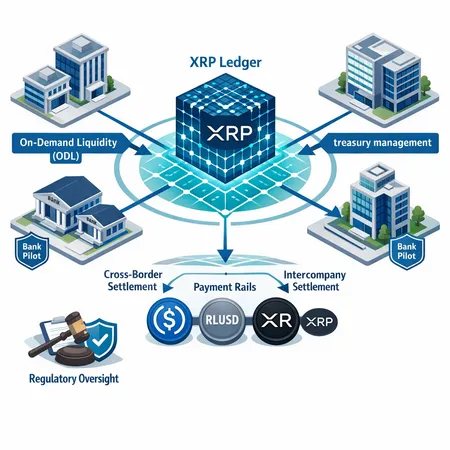
Treat announcements in three pragmatic buckets: (1) Demand drivers — new On-Demand Liquidity corridors, major exchange/custody listings or bank integrations that can increase real-use demand; (2) Technical/roadmap upgrades — a meaningful XRPL feature or tooling that materially lowers friction for institutional flows; (3) Legal/regulatory — any movement toward clarity or settlements that reduce counterparty/regulatory risk. Each produces different trade profiles: partnerships often produce a short-lived spike, roadmap upgrades can sustain an organic rally if adoption follows, and regulatory wins can flip long-term sentiment.
Also watch for surprises: unexpected executive hires, announced pilot results with high-volume partners, or details on token utility that change how XRP is used in settlement rails. For context, announcements framed as pilot completions with measurable volumes are more market-moving than vague strategic commitments.
Market sentiment and the technical backdrop
Sentiment before a high-profile company event is often a blend of optimism from community participants and caution from technical traders. Right now, headlines indicate that XRP is trading with significant attention around a technical support region and may face a retest ahead of catalysts — a risk many traders will price into positions. Crypto.news flagged this near-term technical sensitivity and the possibility of a support retest as a real downside pathway ahead of the event (read their technical note here).
When an asset is perched on or near key support, event-driven buying needs to overcome not only sell-side profit-taking but also the mechanical liquidation pressure from leveraged players. That makes pre-event sizing and the choice of hedges more important than usual: you’re trading both headline delta and technical fragility.
A technical-risk framework every swing trader should use
Rather than guessing a single price target, build rules around observable metrics. Use these three anchors:
- Reference trend and support zones from multi-timeframe analysis (daily/4H). Identify the nearest multi-week horizontal support and a simple moving average (e.g., 50-DMA) as context. If price is near those levels, classify risk as elevated.
- Use volatility measures for stop placement. ATR (14) is ideal: set initial protective stops at 1–2 ATR beyond structural support or your entry, avoiding stops that sit inside noisy intraday ranges.
- Quantify capital risk per trade. Limit absolute risk to a small percentage of account equity (common ranges: 0.5–2%). Compute position size using Risk = Account_Size * Risk_Percent. Position_Size = Risk / (Stop_Distance * Entry_Price).
This framework keeps stops logical (volatility-aware) and position sizes aligned with balance-sheet risk rather than emotion.
Event-driven trade playbook: how to size and hedge
Here’s a practical sequence for swing traders in the 48–72 hours around Community Day.
- Pre-event posture: reduce outright directional exposure. If you already carry a sizable long, consider trimming 25–50% into the run-up to lock profits while leaving a participation leg. For new entries, prefer staggered scaling — don’t commit full size on a single pre-event buy.
- Define your risk envelope before the event. Decide the amount you’re willing to lose if news is negative (for many swing traders, 1%–2% of account). Calculate position size accordingly using the ATR-stop method above.
- Decide on hedges. If available and liquid, a short futures or inverse perpetual position can hedge directional exposure. Options (if liquid on your venue) offer a cleaner, time-decay aware hedge: a protective put or a collar can cap downside while keeping upside open. If options aren’t available, reduce leverage or increase cash collateral.
- Plan scenario responses. For a bullish surprise, let a pre-defined portion (e.g., 50% of post-trim position) run with a trailing stop; take profits on the remainder at staged targets. For a neutral or confusing announcement, be ready to exit quickly — it’s often better to lock a small loss than to hold through a range-bound grind. For a negative surprise, rely on your hedges and be prepared to re-enter only after confirmed technical recovery.
Mention: if you use platforms like Bitlet.app for P2P or margin products, consider lowering leverage or increasing collateral ahead of the event to avoid forced unwinds.
Hedging and instruments — practical options for XRP traders
Hedges need not be perfect; they must reduce tail risk. Common hedging tools for XRP are: short perpetual/futures contracts on major derivatives venues, put options where available, or reducing net long exposure. A quick checklist:
- Short futures equal to 25%–50% of notional long exposure reduces directional delta while keeping upside optionality.
- A put option sized to cover a portion of your position provides asymmetric insurance; the premium is the cost of peace of mind.
- Collars (sell covered calls, buy puts) work if you hold spot and want to monetize some upside to pay for downside protection.
Liquidity matters: don’t buy an insurance contract that you can’t exit during the move. Prefer venues with proven XRP futures/options volume.
Examples: position-sizing templates and calculations
Below are two simple templates you can plug numbers into. Replace the placeholders with real-time values from your chart and account.
Example A — conservative: 1% account risk
- Account: $50,000
- Risk percent: 1% → $500 max loss
- Entry price: 0.80 USD (example)
- ATR (14): 0.08 USD → stop distance = 1.5 * ATR = 0.12 USD
- Position size (units) = $500 / (0.12) ≈ 4,166 XRP
- Notional exposure ≈ 4,166 * 0.80 = $3,333
This keeps tail risk limited while letting you participate. Adjust the stop to respect structure (place stops beyond the next clean support level).
Example B — hedged swing: 2% account risk with partial hedge
- Account: $50,000
- Risk percent: 2% → $1,000
- Entry price: 0.80 USD
- ATR: 0.08 USD → stop distance = 1.5 ATR = 0.12 USD
- Raw long size = $1,000 / 0.12 ≈ 8,333 XRP (notional ≈ $6,666)
- Hedge: short futures sized at 40% of long notional ≈ $2,666 — net delta reduced while keeping ~60% upside participation
These are templates — they should be combined with trade-specific judgment (liquidity, news clarity, correlation with broader markets like Bitcoin). If you prefer event-neutral strategies and if options are liquid, a straddle or strangle can profit from realized volatility, but be mindful of high implied volatility that can make premiums expensive.
Execution checklist and post-event rules
Before the event:
- Lock in risk tolerance and compute size using ATR and account risk.
- Trim large positions and stagger re-entry plans.
- Put protective stops in place and ensure your hedges are executable in low-latency venues.
During the announcement:
- Avoid immediate size increases on first headlines unless the catalyst is unambiguously strong and confirmed by follow-up details.
- Watch order book depth — thin liquidity can exaggerate moves and slippage.
After the event:
- Let winners run to predefined trailing stops; take partial profits at staged targets.
- If the market overreacts and you were hedged, unwind hedges according to your pre-set thresholds rather than emotion.
- Re-evaluate only after the price stabilizes and you have digestible confirmation (volume follow-through, partner statements). Re-entries are rarely optimal in the immediate 30–60 minutes after headline chaos unless you trade very short timeframes.
Final notes: balancing conviction and prudence
Event-driven trading around XRP Community Day can be rewarding, but it magnifies both upside and structural risk. The most disciplined traders enter with pre-mortem rules: known risk, defined hedges, and scenario plans. Technical risk — specifically the potential for a support retest noted in market commentary — means position sizing and protective measures should be tighter than in ordinary conditions. For a community investor, holding a smaller participation stake while selling volatility can be a reasonable compromise.
If you want a single takeaway: plan before the bell, quantify your worst-case loss, and don’t let headline FOMO override the math. Use volatility-aware stops, practical hedges and staged profit-taking to navigate the noisy aftermath. For background on the current pre-event technical sensitivity, see the technical note highlighted by crypto.news and for the Community Day announcement and expectations from Garlinghouse, review the U.Today coverage.