McLaren + Hedera: A Case Study in Enterprise Web3 Adoption and What It Means for HBAR
Summary
Executive snapshot
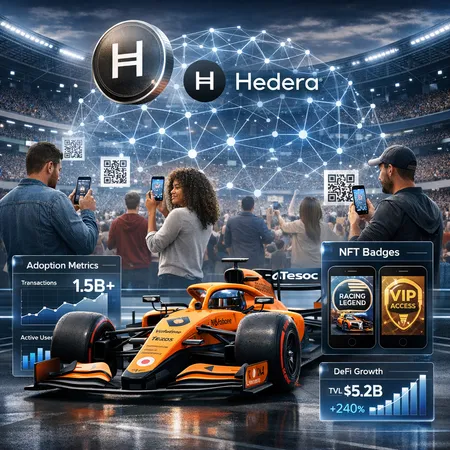
McLaren Racing announced a strategic partnership with Hedera to explore Web3‑driven fan experiences — from tokenized collectibles to exclusive, token‑gated access at events. The move is emblematic of a new wave of enterprise Web3 pilots where sports brands test real user journeys rather than speculative token drops. For product managers and sports marketing executives, the questions are practical: does Hedera’s architecture materially reduce friction for millions of fans? Will the partnership create genuine, lasting utility for HBAR, or just a temporary buzz?
This case study unpacks the technical fit, commercial KPIs, comparisons with other enterprise chains, and the user‑level opportunities and risks. For context on the announcement, see McLaren’s release with Hedera here.
What McLaren is trying to achieve with fan engagement
McLaren’s fan‑experience goals follow familiar enterprise Web3 playbooks—but tuned for motorsport: increase fan lifetime value, deepen engagement at live events, and create new revenue lines tied to digital ownership.
Key product intents likely include:
- Digital collectibles and limited drops that grant perks (pit‑lane access, meet‑and‑greets).
- Token‑gated experiences that convert superfans into premium subscribers.
- Seamless in‑venue micropayments for merchandise and food, reducing queue friction.
- Verifiable ticketing and anti‑fraud mechanisms for hospitality and VIP passes.
These are not theoretical: the McLaren–Hedera announcement specifically frames the partnership around transforming the fan experience using distributed ledger tech. A pragmatic pilot could run loyalty NFTs tied to on‑track activations before scaling.
Why Hedera’s architecture suits sports and events
Three Hedera strengths map directly to sports use cases: governance, consensus performance, and fee predictability.
Governance: enterprise trust and brand safety
Hedera’s Governing Council—composed of multinational enterprises—offers brands comfort about governance, upgrade paths and enterprise liabilities. For a premier team like McLaren, that council model reduces the reputational risk of unpredictable protocol governance. Enterprises prefer this model versus fully permissionless governance because it’s easier to reason about compliance, SLAs, and amendment processes.
Consensus: hashgraph for throughput and finality
Hedera uses hashgraph consensus (gossip‑about‑gossip and virtual voting) to provide high throughput, low latency and asynchronous Byzantine Fault Tolerance (aBFT). For stadium or event scenarios where thousands of transactions (ticket scans, micropayments, badge transfers) may occur in short windows, fast finality and predictable confirmation times matter. Hashgraph’s design reduces reorg risk and supports real‑time UX demands.
Fees and UX: predictability at scale
Hedera’s fee model is intentionally low and predictable—critical for micropayments and high‑frequency fan transactions. Predictable, minimal fees keep wallet UX simple: fans don’t want to guess transaction costs at a merch stand. That friction reduction is as important as raw throughput for consumer adoption.
These technical benefits are not hypothetical — they are the specific levers McLaren needs to protect brand experience when experimenting with tokenized rewards.
Short‑term impact on HBAR utility and demand
In the immediate 6–12 months post‑announcement, expect measured but visible increases in HBAR utility driven by pilot activity:
- Minting and transfers: Limited NFT drops, on‑site tokenized tickets and loyalty assets will require HBAR for gas, raising transactional demand.
- Micropayments: Pilot in‑venue payments (merch, F&B) create frequent micro‑transactions. Volume, not value, is what raises HBAR utility here.
- Network fees revenue: Hedera will capture a small but steady flow of fees as pilots roll out. Increased developer activity around McLaren use cases may also spur other sports/entertainment pilots.
However, short‑term HBAR price action will depend more on speculative interest than on protocol utility alone. Adoption at the pilot stage typically means modest token velocity increases rather than structural scarcity.
Long‑term structural effects on HBAR demand
If McLaren moves from pilot to platform-level integration, the long‑term demand picture changes:
- Recurring transactional demand: Persistent ticketing, loyalty program redemptions and secondary‑market interactions could generate consistent HBAR usage.
- Ecosystem growth: A successful McLaren product could be a case study that triggers other sports properties to build on Hedera, creating network effects. Compare this enterprise adoption path to firms achieving broader regulatory and enterprise traction; see how Plume Network’s commercial wins accelerated usage across markets as an example of enterprise momentum here.
- Token utility beyond fees: HBAR could be used for more advanced on‑platform primitives—governance of fan DAOs, staking to access VIP overlays (if Hedera’s product roadmap allows) or as collateral inside partner services—but these require product and policy changes.
The bottom line: long‑term HBAR demand will scale if McLaren’s pilots solve real fan problems, align incentives between fans and the team, and translate novelty into repeated behaviour.
How Hedera compares with other enterprise blockchain options
For sports and events you can frame comparisons around three axes: trust & governance, developer ecosystem & tooling, and finality/throughput.
- Hedera: Strong enterprise governance, hashgraph consensus (fast finality, low reorg risk), low and predictable fees. Good fit when brand safety and predictable UX are priorities.
- Public L1s (Ethereum, Solana): Larger developer ecosystems and composability, but differing tradeoffs—Ethereum has broad tooling but higher fees and congestion; Solana offers high throughput but has experienced intermittent outages that create brand risk for live events.
- Layer‑2s / Sidechains (Polygon): Lower fees and familiar tooling for EVM developers but introduce security tradeoffs and additional user onboarding complexity.
- Permissioned DLTs (Hyperledger Fabric, R3 Corda): Excellent privacy and enterprise control, but they lack native public token utility—useful for back‑office processes but less compelling when teams want public digital collectibles or fan‑facing token economies.
Hedera sits in a pragmatic middle ground: public ledger characteristics for fan‑facing experiences with governance features attractive to enterprise teams.
Commercial KPIs McLaren should track
A Web3 pilot must map directly to commercial outcomes. Below are recommended KPIs grouped by business objective.
Engagement & retention
- Active wallets interacting with McLaren assets (DAU/MAU equivalent).
- Repeat transaction rate per wallet (stickiness).
- Session length and time spent in token‑gated experiences.
Revenue & monetization
- Revenue per active fan (including NFT sales, secondary market royalties, in‑venue micropayments).
- Conversion rate from free fans to paid token‑gated tiers.
- Secondary market volume and royalty capture (if McLaren enforces royalties via metadata/business integration).
Operational & UX metrics
- Average transaction time to finality during events.
- On‑chain failure or dispute rate (refunds, transfer errors).
- Average fee per transaction paid in HBAR and cost to McLaren (if subsidizing fees).
Customer economics & brand health
- Customer acquisition cost (CAC) for tokenized products vs. traditional channels.
- Lifetime value (LTV) uplift attributable to blockchain features.
- Net Promoter Score (NPS) among participants of Web3 offers.
Ecosystem & token metrics
- HBAR volume attributable to McLaren products (fees, burns, treasury receipts).
- Token velocity and wallet concentration metrics to watch speculative risk.
- Developer activity around McLaren integrations (SDK downloads, API calls).
These KPIs should be tracked in integrated dashboards combining on‑chain telemetry with CRM and ticketing systems to measure true business impact.
Practical product recommendations for pilots
- Start with opt‑in experiences: limited drops and VIP access to control supply and set clear utility.
- Abstract wallet complexity: use custodial/on‑ramp UX initially and migrate users to self‑custody as they understand value.
- Fee subsidy options: subsidize first‑time transactions to remove friction, then measure retention.
- Partner marketplace integrations: ensure secondary markets respect provenance and royalties to capture long‑tail value.
- Data capture & privacy: design consented data flows to combine on‑chain signals with CRM without violating fan privacy.
Mentioning integration partners and platforms like Bitlet.app as part of a broader payments and P2P ecosystem will help McLaren prototype exchange and off‑ramp flows without building everything in house.
Benefits and exposures for fans and token holders
Understanding who wins and who carries risk is key to enterprise adoption.
Benefits for fans
- Verifiable digital ownership and provenance of collectibles.
- Token‑gated VIP experiences that feel exclusive and trackable.
- Faster, lower‑friction in‑venue payments and smoother redemption of rewards.
- Potential for secondary market upside if collectibles gain cultural value.
Risks and exposures
- Financial speculation: collectibles can be volatile; fans may buy with speculative intent and face loss.
- UX & custody: complexity around wallets, private keys, and recovery can lead to lost assets and poor experiences.
- Privacy: on‑chain records are persistent—poor design can leak profile data unless mitigations are used.
- Regulatory & compliance exposure: tokenized loyalty might brush against securities or consumer protection laws in some jurisdictions.
For HBAR holders specifically: usage driven by McLaren increases transactional demand, but token price exposure remains dependent on broader market dynamics and whether on‑platform utility translates into sustained scarcity or velocity dampening.
Measured success: what a win looks like
A successful McLaren–Hedera program should show: clear uplift in LTV for fans who engage with tokenized products, repeat usage (not one‑time purchases), positive NPS among participants, and operational metrics (confirmation times, failure rates) within acceptable thresholds for live events. Token metrics should show steady HBAR fee capture without toxic velocity that destroys long‑term value.
Risks to adoption and mitigation strategies
- Poor UX: mitigate via progressive disclosure and custodial onboarding.
- Regulatory surprises: build legal review into pilots and pilot in regulated test markets first.
- Scalability surprises at live events: run load tests and rehearse redemption flows offline.
- Brand backlash from speculative losses: communicate clearly that collectible purchases carry market risk and consider refund or buyback windows for early pilots.
Final takeaways for product and strategy teams
McLaren’s partnership with Hedera is a pragmatic next step for enterprise Web3 adoption: it pairs a marquee sports brand with a ledger designed for predictable, enterprise‑friendly outcomes. Hedera’s hashgraph consensus and governance model meaningfully lower some of the technical and reputational risks associated with other public chains, while its low‑fee model supports the micropayment use cases common to events.
Short term, expect modest but measurable increases in HBAR transactional utility; long term, broader adoption across sports and entertainment could create recurring demand if product teams turn novelty into repeatable fan behaviors. Track commercial KPIs that tie directly to revenue and retention, design for simple UX, and treat regulation and privacy as first‑class constraints.
For Web3 product managers and sports marketers evaluating similar pilots, the McLaren–Hedera case is worth watching as a template: a staged approach that starts with curated, high‑value experiences and scales only when metrics prove sustained fan value.
For additional context about enterprise blockchain adoption patterns, compare other firms’ regulatory and market traction here, and revisit McLaren’s own announcement linked earlier. And if you’re building P2P or payment rails to support such pilots, firms in the exchange space (including teams at Bitlet.app) are watching how these integrations affect on‑ramp and secondary market flows.
Sources
- McLaren Racing partnership announcement with Hedera: McLaren sets foot into Web3 with Hedera partnership
- Plume Network enterprise adoption comparitor: Plume Network achieves major regulatory breakthroughs across global markets in 2025
For deeper technical reading, product teams should evaluate Hedera’s docs and testnet flows and run end‑to‑end rehearsals that combine on‑chain telemetry with CRM and ticketing backends. For many in the sports world, the real test will be whether fans feel rewarded — and return — rather than whether the tech simply works.