Privacy-Coin Resurgence 2026: Regulatory Clarity, Flows, and Investor Due Diligence
Summary
The 2026 privacy-coin comeback: what happened and why it matters
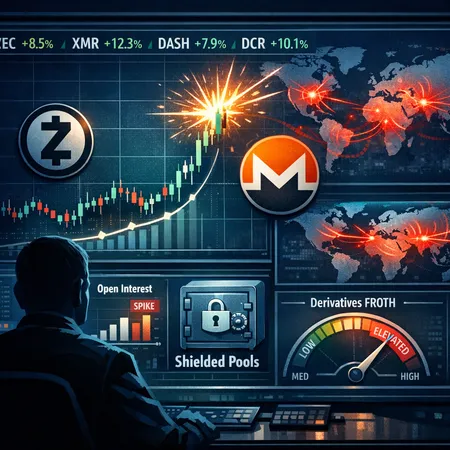
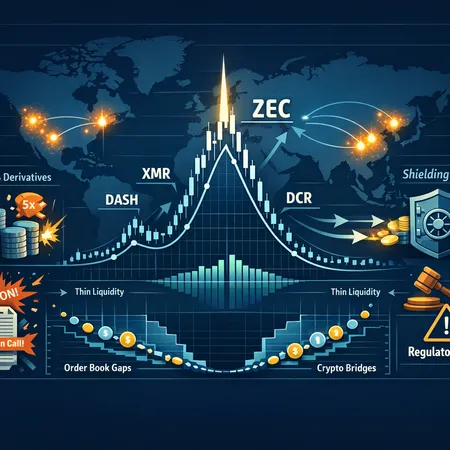
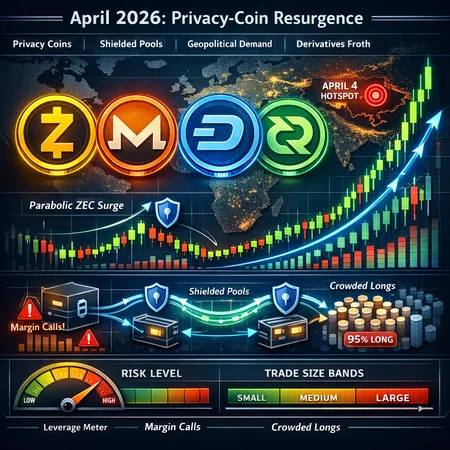
Privacy tokens — led visibly by DASH, XMR and ZEC — outperformed in the 2026 rally as macro forces and market rotation pushed traders toward niche narratives that had been under-owned for years. Data-driven coverage shows privacy projects capturing disproportionate market-cap gains and attracting flows that outpaced many legacy layer-1 and DeFi plays (Cryptopolitan). The move wasn't purely speculative: it was a convergence of liquidity, narrative shift toward censorship resistance, and — crucially — evolving regulatory outcomes.
For many traders, Bitcoin remains the primary market bellwether. Yet the 2026 episode demonstrated that smaller, thematic pockets like privacy tokens can lead during regime changes — particularly when perceived regulatory overhangs start to lift.
Market leadership: DASH, XMR, ZEC in the spotlight
Dash (DASH) and Monero (XMR) both delivered remarkable relative performance, but the headlines were also about Zcash (ZEC). Dash’s outperformance was documented in several post-rally analyses that point to renewed retail and OTC demand, tight on-exchange liquidity pockets, and narrative momentum around fungibility (BeInCrypto). Monero’s long-standing privacy primitives — ring signatures, stealth addresses, and Kovri-style routing improvements — attracted capital from traders seeking protocol-native privacy rather than optional shielded layers.
Zcash occupies a different technical and regulatory niche. ZEC’s optional shielded transactions and zk-SNARK tech provide a compliance-flexible model (users choose shielded addresses), which made it more palatable to some institutions once regulatory uncertainty eased. Combined, these three presented differentiated risk-return profiles: DASH and XMR for pure privacy demand and trading flow, ZEC for a hybrid model with better path-to-listing prospects in certain jurisdictions.
Regulatory clarity: the SEC, the Zcash Foundation, and fundraising implications
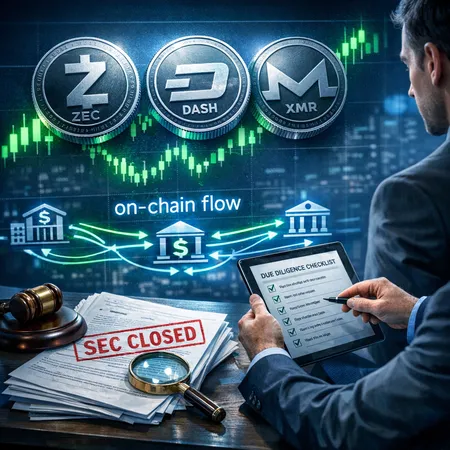
A pivotal moment in 2026 was the SEC closing its investigation into the Zcash Foundation, a development that materially changed how funds and exchanges think about ZEC exposure (Cointribune). Why does this matter? When an enforcement agency publicly closes an inquiry, it reduces ambiguity around custody, listing risk, and fundraising for associated entities. That decreased legal tail risk makes token sales, foundation grants, and institutional listings easier to justify from a compliance standpoint.
Regulatory clarity matters for three practical reasons: (1) it reduces counterparty risk for exchanges and custodians considering listings or custody, (2) it lowers the compliance hurdle for institutional allocators performing KYC/AML and legal signoffs, and (3) it enables projects to raise capital with clearer guidance on permitted use-cases and token economics. Even so, “closure” is not universal immunity — ongoing rulemaking, state-level actions, or foreign regulators can still alter the landscape. The SEC action on ZEC is a positive data point, not a blanket endorsement.
On-chain and exchange flows: reading the signals for privacy assets
Privacy tokens demand different telemetry than transparent chains. Traditional on-chain flow analysis relies on traceable transfers between wallets and exchange addresses. For privacy coins, certain on-chain signals remain usable while others are obfuscated.
ZEC: Because Zcash offers both transparent and shielded addresses, you can still observe exchange deposits and transparent transfers. Patterns often show increased conversions from transparent to shielded pools ahead of volatility events. The closing of the SEC inquiry correlated with reduced exchange sell pressure in several windows, as longer-term holders felt more comfortable holding or staking.
XMR: Monero’s privacy-by-default design dramatically limits address-level tracing. Useful signals include aggregate exchange inflows/outflows (exchange balance changes), mix-to-exchange timing patterns, UTXO-age-like metrics adapted for ring analysis, and known exchange deposit patterns. Sharp spikes in exchange balances generally precede sell-offs, but interpreting magnitude requires contextual liquidity analysis.
DASH: Dash’s on-chain flows are more transparent than XMR but show usage-specific patterns — governance payouts, masternode rewards, and treasury spend can produce identifiable flows. Dash also experienced concentrated OTC and P2P flows during the rally, which depressed on-exchange liquidity and exaggerated price moves.
Across all three, comparing exchange reserves, OTC desk reports, and known custodian holdings gives a clearer picture than wallet-level tracing alone. On-chain flows still matter — but you have to adapt the metrics. Tools that aggregate exchange balances, trace large withdrawals/deposits, and monitor OTC desk inventory become more valuable.
Why listings, custody, and fundraising hinge on regulatory nuance
Exchanges and custodians run legal and compliance teams that evaluate exposure to enforcement risk before listing or holding a token. When the regulator’s intent is uncertain, platforms apply conservative policies: delisting, refusal to custody, or imposing deposit/withdrawal limits. The SEC’s decision on Zcash removed a key blocker for some counterparties and provided precedent that can be referenced in internal legal memos.
But nuance matters. Projects with flexible privacy (ZEC) may find easier paths to relisting and institutional custody than default-private assets (XMR), which remain harder to support in regulated institutional setups. Dash, with its governance and masternode model, sits somewhere in the middle: easier to reason about from a treasury and governance perspective, but still subject to AML concerns tied to privacy use-cases.
Due diligence checklist for investors and fund managers
Below is a practical checklist to evaluate privacy-token exposure. Use it as a working framework, not a silver bullet.
Legal & regulatory review
- Confirm any public investigations or enforcement actions and their outcomes (for example, the SEC closing its inquiry into the Zcash Foundation).
- Get counsel opinions on token status in relevant jurisdictions and for institutional counterparties.
- Understand AML/CTF implications for custody and trading in your domicile.
Protocol and technical assessment
- Privacy model: mandatory (Monero) vs optional (Zcash) vs mixed (Dash features). Assess how the model affects compliance and usability.
- Audit history: formal security audits, bug bounties, and any past protocol exploits.
- Upgrade path and governance: how are protocol changes activated? Who controls upgrades or parameter changes?
On-chain & off-chain liquidity analysis
- Exchange reserve trends: monitor large inflows/outflows, exchange balance changes, and the cadence of deposits preceding volatility.
- OTC and P2P activity: quantify off-exchange liquidity to understand real-world depth.
- Volatility and slippage profiles across top exchanges and OTC desks.
Custody & counterparty readiness
- Which custodians (if any) support the asset and under what controls?
- Are there trusted crypto-native custody solutions that can segregate shielded vs transparent funds (where applicable)?
- Counterparty credit risk for OTC desks.
Governance, funding, and token economics
- Treasury size, runway, and transparency of spending.
- Foundation structure and historical fundraising: are funds centralized or multisig/diverse?
- Emission schedules and inflationary pressures.
Operational red flags
- Exchange delistings or repeated withdrawal freezes.
- Key developer departures, forks without clear governance, or opaque treasury spends.
- Significant concentration of tokens in a small set of addresses or masternodes.
Scenario planning & exit triggers
- Predefine exit triggers tied to regulatory developments, exchange actions, or liquidity deterioration.
- Size positions so a forced liquidation on one venue won’t cascade losses across your book.
Red flags to watch for include sudden shrinkage in custodial support, adverse regulatory rulings in major jurisdictions, and persistent unexplained exchange withdrawals.
Portfolio construction and risk management considerations
Allocations to privacy coins should be deliberate and sized to reflect regulatory, custody, liquidity, and reputational risk. A few practical rules investors use:
- Position sizing: treat these as higher jurisdictional/compliance risk allocations — many allocators keep privacy exposure in a smaller ‘satellite’ sleeve of the portfolio (single-digit percent of crypto allocation) until comfort increases.
- Diversify within privacy: mix mandatory-privacy (XMR) with optional-privacy (ZEC) and utility/governance tokens (DASH) to spread tech and regulatory vectors.
- Hedging: maintain hedge instruments (BTC, stablecoin buffers, or options where available) to handle liquidity squeezes.
- Active monitoring: automate exchange-reserve alerts, large withdrawal/deposit flags, and legal/regulatory newsfeeds. On-chain signals for privacy assets require different tooling — consider vendors that specialize in exchange balance aggregation and OTC flow intelligence.
Platforms like Bitlet.app illustrate how varied crypto services — P2P, earn, and installment products — can integrate privacy assets with careful compliance frameworks. That said, any product offering privacy tokens must weigh AML obligations and counterparty risk tightly.
Bottom line: opportunity tempered by complexity
The 2026 privacy-coin rally proved two things: first, thematic, under-owned pockets can lead broader market moves; second, regulatory clarity materially changes investor calculus. The SEC’s public decision on the Zcash Foundation is a meaningful step that reduced a specific overhang for ZEC, but it did not remove all legal or operational risk for privacy protocols.
For allocators, the path forward is pragmatic: do deep legal and technical due diligence, treat allocation sizes conservatively, and invest in specialized monitoring and custody solutions. Privacy tokens can diversify crypto portfolios and offer asymmetric returns, but they demand a higher bar for governance, compliance, and liquidity planning.
Sources
- Privacy coins lead the 2026 rally and market-cap strength analysis: https://www.cryptopolitan.com/privacy-coins-lead-crypto-rally-2026/
- SEC closes its investigation into the Zcash Foundation: https://www.cointribune.com/en/zcash-escapes-scrutiny-as-sec-closes-investigation/?utm_source=snapi
- Dash’s outperformance and market coverage: https://beincrypto.com/dash-privacy-coins-2026-surge/