Telegram Wallet TON DeFi Vaults: A Practical How‑To for One‑Click BTC/ETH/USDT Yield
Summary
Why this matters: DeFi without friction
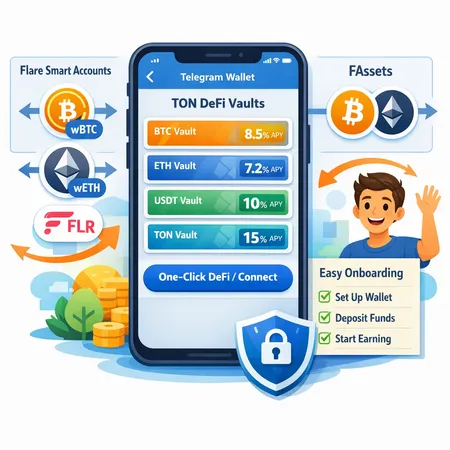
Telegram’s wallet update brings BTC/ETH/USDT yield vaults and the ability to deposit wrapped native tokens into the TON ecosystem, a push toward one‑click DeFi for mainstream users. Instead of manual bridges, multiple wallets, and complex contract calls, the interface aims to let someone tap a vault, deposit an asset, and see an APY number. For many new users that lowers the barrier to entry—but it also introduces important custody and smart‑contract trade‑offs you should understand.
What Telegram’s TON DeFi vaults and wrapped deposits are
The new wallet bundles a few things together: BTC, ETH and USDT yield vaults that package yield‑generating strategies, plus support for wrapped native deposits on TON (so BTC/ETH can be used within TON‑based DeFi). Reports show Telegram is launching these vaults and wrapped native deposits, and some vault strategies advertise returns in the low‑to‑double digits APY depending on risk and strategy (NewsCrypto report). Independent coverage highlights advertised returns up to ~18% APY on some TON‑oriented DeFi vaults, though APY varies substantially by strategy and time period (Blockonomi report).
In plain terms:
- Yield vaults are pooled strategies (lending, staking, liquidity provision, or automated strategies) that try to maximize yield for deposited BTC/ETH/USDT.
- Wrapped native deposits mean a BTC/ETH token can be represented inside TON (wrapped) so it can interact with TON smart contracts and vaults.
For users who still think in native tickers, remember that the asset you deposit may become a wrapped representation inside TON — so the asset label (BTC, ETH) might be the same, but the custody and settlement layer can differ.
How the integration abstracts cross‑chain complexity (Flare Smart Accounts, FAssets, one‑click flows)
One of the design goals is to hide cross‑chain plumbing. Part of that is executed by using smart account patterns and wrapped asset systems. In other ecosystems, Flare Smart Accounts and FAssets abstract complex flows for users — allowing wallets to orchestrate cross‑chain minting, bridging, and smart contract interactions behind a single user action. The Flare/Xaman partnership shows how projects are building one‑click DeFi access points that let an XRPL wallet or other accounts enter yield strategies without users manually moving funds across chains (Flare/Xaman announcement).
Applied to Telegram/TON, the wallet can:
- Accept BTC/ETH/USDT into the UI.
- Programmatically route deposits through a bridge or mint a wrapped representation on TON.
- Deposit the wrapped token into a vault contract and show an APY and balance in the Telegram UI.
From a UX perspective, that one‑click is an orchestration of several on‑chain steps. The wallet or a backend service must still sign transactions, pay gas/fees on one or more chains, and manage the wrapped token lifecycle — but the user sees a single, simplified flow.
APY examples, fees and custody implications
Advertised APYs can be eye‑catching (Blockonomi reported returns up to ~18% APY for certain TON vault strategies), but they come with caveats: APY depends on strategy composition, market conditions, liquidity incentives, and reward tokens. Typical factors to evaluate:
- Source of yield: lending interest, liquidity mining incentives, staking rewards, or protocol token emissions. Each has different durability and volatility.
- Fee drag: bridging, wrapping and vault management fees reduce net APR. Expect on‑chain fees when assets cross chains or when the vault rebalances.
- Reward tokens: some strategies pay yield in protocol tokens that may have volatile value.
Custody implications:
- If the Telegram wallet uses a non‑custodial model and executes wrapping locally (user holds private keys, wallet signs cross‑chain operations), your private key ownership remains intact but you still face bridge/smart contract risk.
- If a service mints wrapped assets that are centrally issued (a custodian or permissioned bridge), there is counterparty and custodial risk — the wrapped token’s peg relies on that issuer.
For stablecoins such as USDT, remember regulatory and issuer risks (issuers can freeze tokens under certain conditions). That affects wrapped USDT too. Always check the vault’s documentation for whether the wrapped token is fully collateralized and who operates the bridge/custodian.
Step‑by‑step onboarding checklist (for mainstream users)
Use this checklist before depositing real funds. Treat the first deposit as a small test transaction.
- Update Telegram to the latest version and confirm the official wallet release notes.
- Create a new wallet inside Telegram or import an existing non‑custodial wallet. Write down the seed phrase, store it offline, and verify the backup flow. Do not store seeds in chat messages.
- Verify whether your wallet instance is non‑custodial (you control keys) or custodial (service controls keys). This is the single most important custody question.
- Read the vault’s short documentation: strategy type, reward tokens, fees, lock‑up periods, and redemption mechanics.
- Send a small test amount (for example 1–2% of intended allocation) to the wallet and run the whole flow: wrap/mint (if required), deposit into the vault, and withdraw. Confirm your experience and timing.
- Check on‑chain transactions (explorer links the wallet exposes) to validate that assets moved and wrapped tokens were minted by the expected contract address.
- Confirm gas and bridge fees and confirm the APY math (is the quoted APY net of fees?).
- Enable safety features: transaction confirmations, spending limits, and notifications.
- Monitor positions regularly and be prepared to migrate if a vault changes strategy or the bridge operator updates terms.
Security and regulatory caveats: non‑custodial vs wrapped/custodial assets
Security risks to weigh:
- Smart contract risk: Vault contracts can have bugs. Even audited contracts have had exploitable logic. A single vulnerability can drain pooled funds.
- Bridge risk: Cross‑chain bridges are frequent attack targets. Wrapped assets rely on the bridge’s code and custody model.
- Counterparty/custodial risk: If wrapped tokens are issued by a custodian, that custodian could go offline, get compromised, or be required by law to freeze funds.
- Oracle and peg risk: Price oracles used by vaults can be manipulated, affecting liquidation or rebalancing.
- Regulatory risk: Stablecoin issuers (USDT) and custodians operate under regulatory pressure. That can impact redemptions and custody.
For mainstream users, non‑custodial flows preserve self‑custody but don’t eliminate technical risk. Wrapped and custodial representations reduce user complexity but introduce counterparty and regulatory exposure. Decide based on your threat model: do you prioritize ease or sovereignty?
UX notes for product teams building one‑click DeFi
If you’re a product manager or designer building similar wallet experiences, consider these UX guardrails:
- Show explicit custody labels: “You control keys” vs “Custodian holds wrapped token.”
- Provide a clear, stepwise breakdown of what happens when users click “Deposit” (bridging, wrapping, contract interactions), including expected delays and fees.
- Use a sandbox/testnet flow for first‑time users and offer simulated APY examples.
- Surface contract addresses and explorer links so power users can verify operations.
- Make withdrawal and emergency exit mechanics obvious and testable.
Bitlet.app and other wallet services can learn from these patterns — the simpler the one‑click metaphor, the more responsibility product teams have to make the invisible steps auditable and reversible when possible.
Practical tips for everyday users
- Treat high APYs skeptically. Higher returns often come with higher or opaque risks.
- Keep a small percentage of assets in a separate self‑custody wallet that never enters wrapped or custodial flows.
- Use hardware wallets for large amounts if the Telegram wallet supports external signing.
- Follow official channels for contract addresses; verify against multiple sources.
- Schedule periodic re‑assessment: APYs change and bridges evolve.
Quick checklist before you tap that vault button
- Seed phrase backed up and verified?
- Custody model understood?
- Small test deposit executed?
- Fees and lockup clear?
- Contract addresses verified?
Conclusion
Telegram’s wallet integration with TON and the addition of BTC/ETH/USDT yield vaults make one‑click DeFi a closer reality for mainstream users. That convenience matters: onboarding friction is a real adoption barrier. But convenience brings new trade‑offs — wrapped assets and bridges hide complexity at the cost of additional custody and smart‑contract risks. Use the step‑by‑step checklist above, test with small amounts first, and treat high APYs as the start of a deeper due diligence process.
Sources
- Telegram wallet launching BTC/ETH/USDT yield vaults and wrapped native deposits in TON: https://thenewscrypto.com/telegram-wallet-launches-btc-eth-usdt-yield-vaults/?utm_source=snapi
- Blockonomi coverage of Telegram integrating DeFi vaults with returns up to 18% APY: https://blockonomi.com/telegram-integrates-defi-vaults-into-ton-wallet-with-returns-up-to-18-apy/
- Flare and Xaman one‑click DeFi access point for XRPL wallets enabling XRP yield strategies: https://www.tokenpost.com/news/business/18870
For context on market terms, check resources on Bitcoin and broader DeFi ecosystems.