Bittensor Governance Crisis: Covenant AI Subnet Exit, TAO Crash, and Concrete Fixes

Summary
Executive snapshot
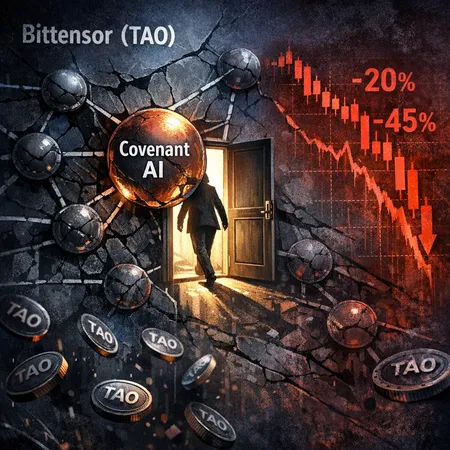
In early April 2026 a high-profile subnet operator called Covenant AI announced its exit from Bittensor, a decentralized AI network that issues the TAO token. What began as an operational split quickly became a public governance crisis: Covenant AI’s complaint framed the project as insufficiently decentralized, public threads heated up, and within 24–48 hours TAO’s market capitalization plunged as traders and counterparties reassessed risk. Multiple outlets documented the selloff and the reputational fall‑out: Invezz reported on the Covenant AI subnet exit and ensuing governance accusations, while CryptoSlate and Decrypt covered the builder departure and community dispute. Analysts framed the episode as more than an operational breakup — some called it “decentralization theater” and modeled deeper downside scenarios Cointelegraph covered those concerns and downside targets.
This piece documents the timeline, compares reactions across exchanges and governance channels, diagnoses the technical and social failure modes, and offers practical guardrails that DAOs and protocol designers can implement to prevent single‑operator catastrophes.
What actually happened: Covenant AI’s subnet exit and the public spat
Covenant AI reportedly wound down its subnet relationship and made its grievances public, asserting that Bittensor’s governance and operational posture allowed excessive influence from a small set of actors. The announcement was not an isolated technical postmortem — it included pointed accusations of centralization aimed at core maintainers and governance processes. Media coverage tracked how the narrative spread: headlines emphasized both the exit and the charge that decentralization had not materialized as advertised. As reports spread across social channels, holders and market makers reacted by re-pricing TAO to reflect the increased counterparty and coordination risk.
The key features of the event were straightforward: an operator with important infrastructure and reputation left, the departure became politicized, and the market translated reputational uncertainty into realized sell pressure. The public nature of the dispute amplified behavioral risk — traders and institutions are quick to mark down tokens tied to governance uncertainty.
Market impact and community/exchange reactions
Price action was sharp. Multiple outlets reported double‑digit intraday drops for TAO as liquidity evaporated and stop limits triggered cascades. Exchanges faced the usual triage challenges: some introduced temporary liquidity controls, while OTC desks widened spreads and paused large fills until they could re-evaluate counterparty exposure. Community governance forums shifted from technical threads to reputation management and emergency proposals.
Responses diverged by venue. On centralized exchanges and OTC desks the reaction was immediate and market‑driven: price discovery moved fast and some liquidity providers pulled orders to avoid being left with inventory. On governance tools and forums (on‑chain proposal pages, Snapshot, Discords, and governance subreddits) the reaction was slower but more consequential for long‑term protocol health — users demanded transparency, an explanation for concentrated operator roles, and immediate proposals to limit single‑party risks. That split—fast financial reaction versus slower, normative governance response—creates a dangerous window during which price moves outpace corrective institutional action.
For builders who track larger crypto narratives, incidents like this echo debates in other sectors: for many traders, Bitcoin remains a reference for decentralization narratives, while parts of the DeFi ecosystem have already wrestled with single‑entity control in bridges and oracles. Protocol teams must assume markets will move before governance catches up.
Where the design failed: technical and governance root causes
Several intertwined design and social failures turned an operator exit into a full‑blown crisis. Below are the principal failure modes we observed.
Concentrated operator value: When one or a few subnet operators hold disproportionate influence—through compute, data, or reputation—their decisions have outsized network effects. Covenant AI’s role made its exit material.
Weak on‑chain commitments: Promises of decentralization that live only in blog posts or tokenomics papers are fragile. If key operational levers are off‑chain or subject to ad‑hoc control, the network cannot credibly bind actors.
Fast, permissioned exits with no staging: The ability of an operator to sever ties without an enforced notice period or on‑chain exit protocol creates a liquidity shock. Markets price not just the exit but the expectation that others could follow.
Lack of slashing, bonds, or collateral: Without financial skin in the game that’s at risk if an operator behaves adversarially or abandons responsibilities, operators face low marginal cost to exit.
Governance cadence mismatch: Slow proposal processes and high quorums can be good for stability — until they prevent timely corrective action in a crisis. Conversely, low quorums can be captured by well‑capitalized actors.
Reputation anonymity and identity risk: If operator identity and historical performance are opaque, the community has limited ability to assess counterparty risk or apply social capital pressure.
These are not unique to Bittensor; they’re recurring patterns in any protocol that stitches together on‑chain incentives with off‑chain compute and human contributors.
Practical governance guardrails: concrete steps to reduce single‑operator risk
Protocol designers and DAO stewards can adopt layered, pragmatic measures. Below are specific patterns that can be implemented individually or combined as part of a governance hardening roadmap.
- Bonding with staged unbonding windows
Require operators to post a refundable bond locked for a meaningful period. Implement a staged, multi‑day unbonding window before exit becomes effective so markets and governance have time to react. This reduces immediate liquidity shocks and adds time for mitigations.
- Slashable performance and exit clauses
Define on‑chain conditions under which a portion of an operator’s bond is slashed (e.g., abrupt exit, prolonged downtime, protocol‑level rule violations). Clear slashing rules align incentives and make abandonment costly.
- Timelocks and delayed governance actions
For critical parameter changes or operator rotation, enforce timelocks that give stakeholders a visible window to contest or prepare. Timelocks should be paired with emergency paths that themselves are subject to multisig and community review to avoid unilateral freezes.
- Staggered operator rotation and multi‑operator redundancy
Avoid single‑point incumbency by architecting subnets so that workloads are distributed among multiple operators with overlapping responsibilities. Design redundancy and graceful handover processes for compute and model checkpoints.
- Identity and reputation on‑chain
Incentivize operators to register verifiable identities and maintain reputational scores (uptime, contributions, audits). Make some governance weight or privileges conditional on reputation milestones rather than raw stake alone.
- Collateralized insurance and liquidity buffers
Create an insurance pool funded by protocol fees or bond confiscations to support market‑making during operator shocks. A modest liquidity buffer can prevent cascades and buy time for governance fixes.
- Fast‑track emergency governance with accountable multisig
Design an emergency governance process that can act quickly but is accountable: a multisig with rotating signers drawn from vetted contributors, subject to ex‑post review and slashing for abuse.
- Clear operator onboarding/offboarding standards
Codify requirements for operator selection, onboarding audits, and published exit plans. If an operator can’t meet transparency checks, limit their privileges until they do.
Implementation tradeoffs and governance sequencing
No single guardrail is a panacea; each has tradeoffs. Longer bonding periods improve stability but raise capital efficiency concerns. Heavy slashing can deter contributors who can’t accept financial risk. Timelocks can impede urgent fixes. The right strategy is layered: mix economic deterrents (bonds and slashing), technical controls (timelocks, redundancy), and social mechanisms (identity, reputational incentives).
For many DAOs the sensible sequencing is: 1) rapidly codify minimal emergency protocols (timelock + accountable multisig); 2) introduce bonding/unbonding windows and clear exit requirements; 3) build redundancy and reputation systems; 4) add insurance or liquidity buffers. Communicate each step transparently so markets know the protocol is responding and learning.
A final verdict and checklist for DAOs and protocol teams
The Covenant AI exit and TAO price shock are a reminder that decentralization is not an outcome you announce — it’s a property you architect and enforce. The market punished poor alignment between on‑chain promises and off‑chain realities. For protocol designers and DAO stewards, here’s a short checklist to take away:
- Audit where operational control sits and publish a risk map.
- Implement bonded operator requirements and staged unbonding.
- Add well‑documented slashing rules and dispute mediation.
- Require identity/reputation signals for high‑privilege operators.
- Build redundancy so no single operator can trigger a critical failure.
- Fund an insurance buffer to stabilize market disruptions.
- Establish accountable, reviewable emergency governance with timelocks.
Acting quickly on these measures can reduce the chance that a single exit becomes a systemic collapse. The Bittensor episode is painful but instructive: when off‑chain compute and on‑chain money combine, governance design matters as much as code.
Bitlet.app users and protocol stewards watching the TAO fallout should take these lessons to heart—both to protect token holders and to preserve long‑term builder trust.
Sources
- Invezz: Covenant AI subnet exit and governance accusations — https://invezz.com/news/2026/04/10/bittensor-tao-price-outlook-as-subnet-exit-causes-governance-crisis/?utm_source=snapi
- CryptoSlate: Bittensor’s TAO plunges after top AI builder exit — https://cryptoslate.com/bittensors-tao-plunges-27-after-top-ai-builder-exit/
- Decrypt: Bittensor token plunges after builder departs amid decentralization doubts — https://decrypt.co/363926/bittensor-token-plunges-builder-departs-decentralization-doubts
- Cointelegraph: TAO risks deeper dip amid 'decentralization theater' accusation — https://cointelegraph.com/news/bittensor-s-tao-risks-45percent-dip-amid-decentralization-theater-accusation?utm_source=rss_feed&utm_medium=rss&utm_campaign=rss_partner_inbound