Why US Spot Bitcoin ETFs Logged $561–562M Inflows Amid Volatility — A Trader’s Guide

Summary
Quick framing: $561–562M in context
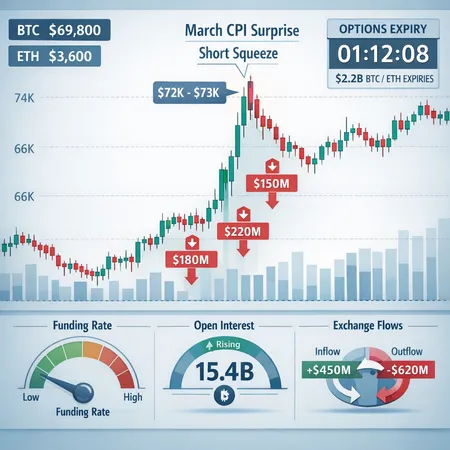
On Monday US spot Bitcoin ETFs recorded roughly $561–562 million of net inflows, a notable cash injection during a session of renewed BTC volatility. The largest incoming pockets were concentrated in Fidelity’s FBTC, along with appreciable demand for iShares’ IBIT and BlackRock’s BITB. Market reports highlighted a resumed flow after a recent period of outflows and noted traders were hunting bargains amid a pullback (Blockonomi; Invezz).
Those headlines are important, but intermediate traders and portfolio managers need to parse mechanics: who actually buys the BTC that backs these ETFs, why flows can be positive while spot falls, and where execution risk shows up. Below I unpack the pipeline from retail cash to on-chain BTC and offer concrete strategies for trading around ETF-driven moves. Bitlet.app users and other institutional platforms often watch these same dynamics closely because they affect custody demand and P2P liquidity.
Which providers led the inflows and why it matters
Fidelity’s FBTC appeared to lead the inflow pack, with IBIT and BITB also registering significant net subscriptions. That distribution matters for two reasons:
- Sponsor footprint: larger inflows into a single fund (FBTC) concentrate the operational impact — APs and custodians have to source more BTC in tighter windows. That raises localized liquidity pressure.
- Market signal: different funds attract different buyer profiles — e.g., FBTC is commonly used by retail/RIAs in certain channels, while IBIT/BITB see more institutional or ETF-arbitrage activity.
News coverage framed the event as a cash-driven “bounce” where traders seized ETF flows as opportunistic buying; Coindesk described this as buyers hunting bargains, using ETFs as an on-ramp during a pullback (Coindesk). Cointelegraph emphasized the inflows while warning that headwinds still linger (Cointelegraph).
How ETF creation and redemption actually work — step by step
Understanding creation/redemption is essential to see how ETF flows translate to spot buying.
- Authorized Participants (APs) receive institution-sized orders from brokers and ETF buyers. If ETF share demand exceeds supply and the NAV trades at a premium, APs create shares.
- For spot Bitcoin ETFs, creation typically involves APs acquiring BTC on spot venues or via OTC desks and delivering it to the ETF custodian in exchange for newly minted ETF shares (in-kind) or via cash creations where APs deliver cash and the fund buys BTC.
- Redemptions work in reverse: APs return ETF shares to the sponsor and receive BTC (or cash) out, which then hits the market when the AP liquidates.
In calm markets this process keeps the ETF share price tightly coupled to underlying BTC through arbitrage. But the process is operationally heavy: large OTC fills, custody deliveries, and settlement windows create latency and execution slippage when demand spikes.
Arbitrage pressure in stressed markets
Arbitrage normally aligns ETF NAV and secondary-market price: if ETF shares trade at a premium, APs create and sell shares to capture the spread, buying BTC in the market to cover the creation. In stressed markets the mechanism is hampered by several frictions:
- Liquidity fragmentation: exchanges and OTC desks may not have the BTC inventory at displayed prices to absorb a large AP buy without moving the market.
- Price slippage and funding risk: APs face higher execution costs and may widen their required spread before creating, allowing the ETF to trade at persistent premiums or discounts.
- Custody and settlement lag: physical deliveries to custodians take time, and in moments of volatility APs may prefer cash creations or delay activity, breaking the quick arbitrage loop.
Those frictions increase the cost of arbitrage, which can let ETF flows and spot prices diverge for short windows — a key reason we can see strong net inflows into ETFs while BTC spot weakens.
Why ETFs can see net inflows while spot price falls
It sounds counterintuitive: buyers pour cash into ETFs even as BTC slips. There are several overlapping explanations.
Different pools of liquidity move at different speeds. Retail ETF buyers (long-term allocators, dollar-cost-averagers) deploy cash slowly through brokers, while spot sellers (derivatives deleveraging, short-term traders) can dump paper quickly on exchange order books. The net result: ETF demand can remain positive even as instantaneous spot pressure pushes the market down.
Timing and execution mismatch. ETF creations often aggregate demand across many investors, and APs may source BTC off-exchange at a premium. The ETF inflows reflect committed buyer demand that doesn't always show up as immediate resting liquidity on exchanges.
Structural buyer preference. Some buyers specifically want ETF exposure for custody/legal or tax reasons, so they buy ETF shares irrespective of a short-term spot move. That creates demand under the surface that shows up as ETF inflows without offsetting spot bids at the same time.
Short-term arbitrage mechanics can work both ways. When ETFs accumulate and ETF shares trade at a premium, APs must buy BTC to create shares. But if spot selling pressure is concentrated in margin/derivatives markets, those sellers offload into order books and the AP buys may be executed at higher prices, yet after mark-to-market the visible spot price could still be lower.
These dynamics were part of the story analysts flagged: inflows resumed after outflows and traders were actively viewing ETF flows as buying opportunities during a pullback (Invezz; Blockonomi).
How ETF flows affect exchange liquidity and custody demand
ETF creations translate into real custody demand for BTC. That has knock-on effects across venues:
- Exchange order books thin: APs and OTC desks absorbing large creation demand will pull liquidity from centralized exchanges or source inventory via OTC, tightening spreads for other traders.
- Increased OTC fills and larger block trades: to avoid moving lit books, APs often work with prime brokers and OTC desks, which pushes more volume into off-exchange liquidity pools. This raises the importance of having trusted counterparties and pre-funded FX/custody rails.
- Custody inflows: custodians of ETFs (and their sub-custodians) must accept growing BTC deposits, which can create short-term operational bottlenecks (withdrawal limits, inbound processing, reconciliation). The demand for secure custody solutions grows with ETF inflows, changing where coins sit — more institutional custody, less on-exchange inventory.
The result: visible spot liquidity can be weaker even as aggregate demand for BTC rises. Traders should watch order book depth and OTC desk quotes when ETFs are seeing inflows — the real execution market is often off-exchange.
For those tracking broader crypto liquidity trends, it’s useful to remember how on-chain and off-chain liquidity interact with institutional vehicles like ETFs; similar cross-market linkages appear across DeFi bridges and derivatives venues.
Trading strategies to exploit ETF-led price moves (actionable)
Below are practical approaches intermediate traders and PMs commonly use, with risk notes.
1) Basis arbitrage (ETF vs spot)
- Monitor the ETF secondary-market premium/discount to NAV in real time. If FBTC/IBIT/BITB trade consistently above NAV, AP creation pressure suggests underlying spot buys are incoming — consider long spot or futures hedged against ETF exposure.
- Risk: creation lag and execution slippage can blow up the trade; size conservatively and use TWAP/VWAP to acquire OTC if necessary.
2) Market-making and liquidity provision
- Provide passive liquidity when order book depth thins during ETF-created demand. Narrow spreads earn fees while APs and other liquidity takers execute.
- Risk: adverse selection. If a large AP sweep moves the price quickly, standing bids get picked off.
3) Options and hedged ETF buys
- Buy protective put spreads on BTC or buy calls on ETFs to express directional views with defined downside. Combining ETF buys with short futures can isolate basis moves.
- Risk: implied vol spikes during stress, so options cost may be high; position sizing and roll management are critical.
4) Cross-product arbitrage (spot, futures, ETFs)
- Watch funding rates and futures basis. If ETFs are pulling spot BTC out of exchanges but futures remain rich, basis trades involving selling expensive futures and buying ETF/spot can be profitable after accounting for execution costs.
- Risk: basis can widen or invert quickly; ensure access to repo/funding lines.
Practical execution tips: pre-arrange OTC lines, split fills across venues, use algorithmic execution (TWAP) to reduce slippage, and maintain a list of prime brokers/custodians for fast settlement.
What inflows mean for near-term Bitcoin price levels
Net inflows of $561–562M are meaningful, but they should be scaled to broader context. Daily BTC spot volume often runs in the tens of billions; institutional ETF inflows of half a billion are supportive but not singularly decisive.
Base case: inflows provide a supportive backdrop that can create temporary floors and compress downside — especially if AP buying reduces on-exchange inventory and forces sellers into thinner books. Traders may see short-term bounces around ETF creation events.
Bull case: sustained and growing inflows (repeated days of similar-sized subscriptions) could meaningfully tighten available liquidity, pushing BTC higher as ETF custodians accumulate sizeable long-term reserves.
Bear case: if inflows are concentrated in a few funds and macro/derivatives deleveraging accelerates, ETF buys may not offset heavy liquidations, and the market could still trend lower. Cointelegraph and other outlets warned of lingering headwinds despite the inflows (Cointelegraph). Coindesk also highlighted traders treating ETF flows as an opportunity during a pullback rather than a guaranteed bid (Coindesk).
For portfolio managers, the practical takeaway is to view single-day inflows as a signal — not a substitution for risk controls. Watch repeated daily flows and changes in ETF share premiums, exchange order book depth, and OTC desk inventory to judge persistence.
Closing thoughts: trade the mechanics, not the headline
A $561–562M inflow day is newsworthy and can create tactical trading opportunities, but the real edge comes from understanding the plumbing: how APs source BTC, where liquidity is executed, and how custody flows change available market inventory. ETF flows change the composition of liquidity more than they instantaneously change BTC’s market cap — and that distinction matters for execution and risk.
If you trade these events, prioritize execution planning: pre-arrange OTC lines, monitor ETF premiums for FBTC/IBIT/BITB, and size positions for potential slippage. Information sources such as the inflow reports above are useful, but the real alpha is often in the microstructure.
Sources