Is XRP’s Early‑2026 ETF‑Fueled Rally Sustainable? A Deep Dive into Flows, Supply and Policy
Summary
Why the rally feels different this time
XRP’s price action in early‑2026 has a distinct narrative: spot ETF inflows meet shifting regulation. Headlines linked the move above $2 to steady capital into U.S. spot XRP ETFs and improved regulatory sentiment, a combo that feels structural rather than purely speculative (TokenPost). At the same time, a high‑profile change at the SEC has traders pricing in a friendlier posture toward crypto, creating a regulatory catalyst for institutional buyers (CoinDesk).
This article examines whether those ingredients — ETF mechanics, AUM growth, regulatory shifts and supply dynamics — can produce a lasting market‑share gain for XRP among top alts, or whether the move is a short‑lived rotation.
How spot ETFs actually put crypto on the tape
Creation, redemption and the real flow of demand
Spot ETFs are different from futures ETFs: when new shares are created, authorized participants buy the underlying asset (or use basket settlement) and deliver it into the fund, which reduces available spot supply. That direct purchase is the clearest route for external capital to influence price.
However, ETF mechanics also include creation/redemption arbitrage. If inflows slow or reverse, APs can redeem shares and return underlying XRP to the market, which can mute or reverse price action. The net market impact depends on the persistence of flows and whether ETFs are primarily accumulation vehicles for long‑term holders or short‑term tools for traders.
$1B AUM — milestone or mirage?
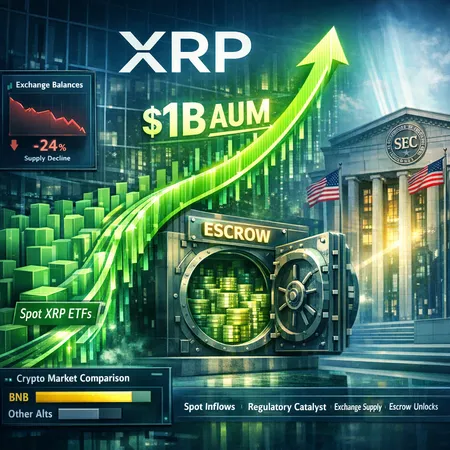
Crossing $1 billion in spot ETF assets is a psychological and practical milestone. CryptoSlate’s data shows XRP spot ETFs surpassed the $1B AUM mark, which validates demand from institutions and high‑net‑worth allocators who prefer regulated wrappers over direct custody (CryptoSlate). Yet AUM alone doesn’t guarantee a lasting re‑rating: the relationship between flows and price is mediated by liquidity depth, market maker behavior, and whether ETFs are susceptible to large redemptions.
Regulation as a catalyst — what changed at the SEC?
The recent departure of an SEC commissioner was read by markets as lowering resistance to spot crypto products and signaling a possible shift in enforcement priorities. CoinDesk reported traders betting that such personnel changes could pave the way for friendlier policy toward crypto, which increases institutional appetite for exposure (CoinDesk).
Regulatory clarity reduces a key friction for institutional allocators: custody risk, legal ambiguity and potential regulatory blowback. If this clarity persists, capital that has been sitting on the sidelines — pension allocators, family offices, asset managers — may progressively move from smaller pilot allocations into larger, permanent positions.
But regulation is binary in its effects: perceived progress can boost flows quickly, and perceived regressions or renewed enforcement can dry them up just as fast. Investors should therefore treat regulatory improvements as necessary but not sufficient for a permanent market‑share shift.
Exchange balances, escrow mechanics and on‑chain supply dynamics
Exchange balances: the immediate liquidity signal
One of the most reliable on‑chain indicators to watch is exchange balances — the amount of XRP held on centralized exchanges. A sustained decline in exchange balances tightens available sell‑side liquidity and often precedes squeezes. Several reports around the rally pointed to tighter exchange inventories as part of the supply story; Coinpedia noted that tighter exchange balances helped XRP outpace BNB temporarily as it moved into the fourth spot by market cap (Coinpedia).
A falling exchange balance plus rising ETF purchases equals fewer tokens available for spot market liquidity providers, which can widen spreads and amplify moves.
Escrow unlocks and Ripple’s supply controls
Ripple historically used an escrow mechanism to release controlled amounts of XRP to manage corporate liquidity; unused portions can be re‑locked. The escrow schedule and the company’s secondary market sales are important: regular, predictable releases are more easily priced in than ad hoc large distributions.
Escrow mechanics act like a latent supply option. If Ripple chooses to reduce secondary sales or re‑lock more tokens in response to strong price action, that action materially tightens supply. Conversely, increased sales into the market — whether for corporate funding or legal settlements — would increase sell pressure. Keep an eye on announced escrow activity and significant on‑chain transfers from Ripple‑controlled addresses.
Why AUM hasn’t always moved price proportionally
CryptoSlate asked a pointed question: if ETFs crossed $1B, why didn’t price move proportionally? The answer lies in market structure. ETF inflows can be offset by:
- Market makers and custodians hedging exposure via derivatives or spot sales, muting price impact.
- Redemptions that return XRP to the open market.
- Liquidity provision strategies from exchanges that absorb buys without widening spreads.
In other words, ETFs create demand, but the net price effect depends on the behavior of liquidity providers and whether underlying XRP leaves the general tradable float (e.g., being held by long‑term ETF holders or locked in custody).
Competition and narrative risk: BNB and other alts
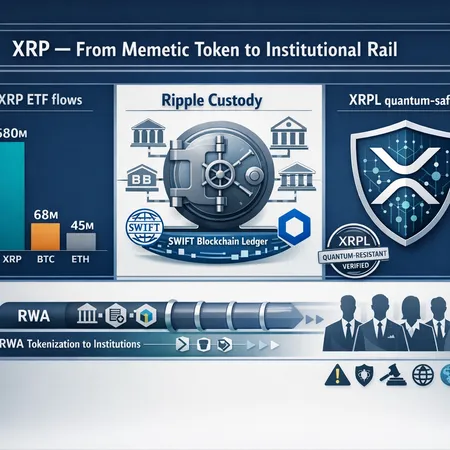
XRP’s climb past BNB to the fourth market cap slot is a symbolic win, but market cap rank can be fluid. BNB’s utility within its ecosystem (exchange discounts, chain utility) remains a narrative anchor. For XRP to keep its new sizing among top alts, its narrative needs to evolve beyond ETF flows: sustained on‑chain utility, institutional settlement adoption, or a multi‑year reallocation from other assets.
Narrative competition matters: if a new memecoin wave or another protocol’s on‑chain activity abruptly rehypothecates capital, rotations can be swift. Institutional investors often prefer diversifying across regulated exposures, which is favorable to ETFs — but retail flows can still drive temporary rank changes.
Scenarios for sustainability
Bull (structural gain)
- Continued, persistent net inflows into spot XRP ETFs with minimal redemptions.
- Sustained decline in exchange balances and reduced secondary sales from escrow.
- Regulatory clarity becomes durable (not merely temporary headlines), unlocking long‑duration institutional allocations.
- On‑chain adoption or product integrations that expand real utility beyond price speculation.
Under this scenario, ETFs act as a channel to permanently move a portion of the circulating supply into long‑term custody, reducing float and allowing XRP to retain a higher market share among alts.
Base (consolidation)
- ETFs continue to attract capital but with episodic inflows and occasional redemptions.
- Exchange balances stabilize at lower levels, allowing for periodic retracements without deep corrections.
- Regulatory progress persists but is incremental, and macro liquidity conditions dictate headline moves.
Price consolidates at a higher range than pre‑ETF levels, but XRP’s ranking among top alts remains contestable over quarters.
Bear (short‑lived rotation)
- Short‑term ETF buying is followed by profit taking or adviser‑led rebalancing, causing redemptions and reintroduction of XRP to the market.
- A surprising regulatory setback or enforcement action triggers a risk‑off rotation away from crypto ETFs.
- Escrow or corporate selling ramps up, eroding the supply squeeze.
This scenario produces a quick retracement and a return to previous market structure, with XRP’s elevated position proving temporary.
What institutional researchers and retail investors should monitor
To evaluate sustainability, track a short list of concrete indicators:
- Net ETF flows and weekly AUM changes (not just headline AUM milestones).
- Exchange balances (inflows/outflows from major centralized exchanges).
- Escrow release schedule and large transfers from Ripple‑controlled addresses.
- Derivatives metrics: open interest, funding rates and basis between futures and spot.
- Bid/ask spreads and depth on major order books.
- Regulatory developments and formal guidance from the SEC or other major jurisdictions.
Combining these metrics gives a clearer signal than price alone. Services like Bitlet.app provide tools for dollar‑cost entry and monitoring exposure, but the analytical work is about correlating flows to on‑chain supply changes and policy shifts.
Bottom line
XRP’s early‑2026 rally has credible structural drivers: spot ETF inflows, regulatory optimism and tighter visible supply. Crossing $1B AUM is meaningful, and personnel shifts at the SEC add a plausible regulatory catalyst. Yet AUM is not destiny — creation/redemption mechanics, market maker hedging, escrow behavior and macro liquidity conditions determine whether inflows become a durable demand base or a transient flame.
For XRP to keep its new sizing among top alts, inflows must be persistent, exchange supply must remain tight, and regulatory clarity needs to be sustained long enough to change institutional allocation decisions. Watch ETF net flows, exchange balances, escrow activity and derivatives signals closely — those will tell you whether this is a new market structure or a high‑octane rotation.
Sources
- TokenPost report linking XRP’s rise to spot ETF inflows and regulatory sentiment
- CoinDesk on the SEC commissioner departure as a regulatory catalyst
- CryptoSlate analysis on XRP spot ETFs topping $1B AUM and questioning price correlation
- CoinPedia coverage of XRP flipping BNB amid ETF flows and exchange balance tightness
For further context on broader market cues, many readers track XRP alongside macro bellwethers such as Bitcoin.