Navigating Regulatory Challenges for DAOs: Insights from DeFi Education Fund and Uniswap Foundation
Published at 2025-08-07 17:45:02
Navigating Regulatory Challenges for DAOs: Insights from DeFi Education Fund and Uniswap Foundation – cover image

Decentralized Autonomous Organizations (DAOs) are transforming the way blockchain communities organize and govern themselves without centralized control. However, as DAOs grow in influence, they encounter increasing regulatory scrutiny, posing challenges in areas such as compliance, legal recognition, and operational transparency.

The DeFi Education Fund and Uniswap Foundation have emerged as pivotal players in educating and guiding DAOs through these hurdles. Their efforts emphasize the importance of clear governance frameworks, adherence to evolving legal standards, and fostering community engagement to ensure DAOs can operate sustainably within regulatory boundaries.

These organizations advocate for proactive dialogue with regulators and the development of best practices that balance innovation with accountability. This approach helps DAOs maintain their decentralized ethos while addressing concerns that regulators and stakeholders may have.

In parallel, platforms like Bitlet.app are innovating within the crypto ecosystem by offering services such as Crypto Installment Plans. This feature allows users to invest in cryptocurrencies immediately and pay over time, making crypto investments more accessible and manageable. Such innovations support the broader adoption of decentralized technologies and contribute to a more inclusive crypto economy.

By combining educational initiatives from entities like the DeFi Education Fund and Uniswap Foundation with practical user-centric solutions from platforms like Bitlet.app, the crypto community can better navigate regulatory challenges while promoting growth and innovation in the decentralized space.
Share on:

Related posts

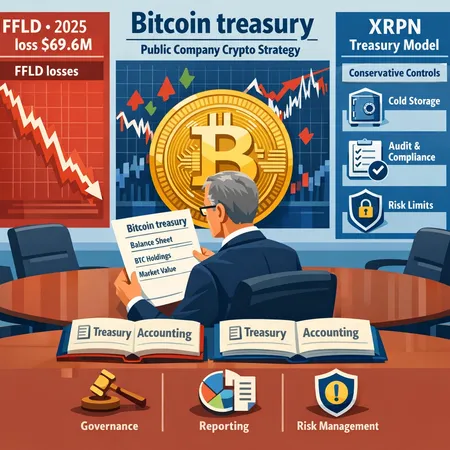
Can Public Companies Sustain a Bitcoin Treasury? Lessons from Fold (FFLD) and Evernorth’s XRPN Plan – cover image
Can Public Companies Sustain a Bitcoin Treasury? Lessons from Fold (FFLD) and Evernorth’s XRPN Plan

Fold’s steep maiden-year losses highlight the hazards of converting operating revenue into volatile crypto treasuries, while Evernorth’s XRPN proposal shows an alternative, treasury-first design. This article compares the two models and gives practical steps for CFOs and treasurers considering a crypto-denominated balance sheet.

Published at 2026-03-19 16:14:02
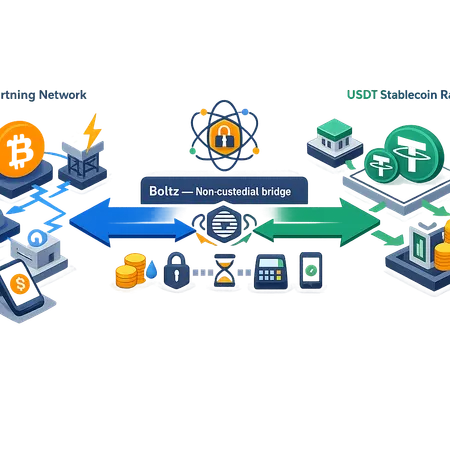
Boltz’s Non‑Custodial USDT Swaps: Bridging Lightning and Stablecoins for Instant BTC Liquidity – cover image
Boltz’s Non‑Custodial USDT Swaps: Bridging Lightning and Stablecoins for Instant BTC Liquidity

Boltz’s new non‑custodial USDT Swaps connect Lightning to major stablecoin rails, enabling near‑instant BTC on/off‑ramps without custody. This explainer breaks down the architecture, channel mechanics, security/UX tradeoffs and adoption barriers for product managers and dev‑savvy crypto teams.

Published at 2026-03-19 15:50:24
When Revenue Doesn't Move the Token: Pump.fun, Hyperliquid and the DeFi Revenue Paradox – cover image
When Revenue Doesn't Move the Token: Pump.fun, Hyperliquid and the DeFi Revenue Paradox

High protocol revenue no longer guarantees token rallies. This article dissects why Pump.fun generated ~$39M in monthly revenue while PUMP stayed flat and contrasts that with Hyperliquid’s market‑cap surge, offering a practical framework to evaluate revenue capture in DeFi.

Published at 2026-03-19 14:57:44