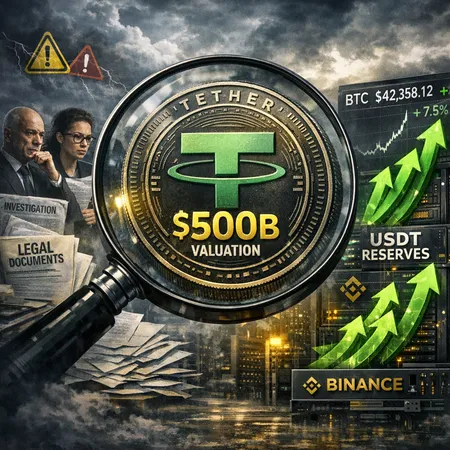
The Strategic Significance of Tether's $600 Million Adecoagro Acquisition in the Commodities Sector

Published at 2025-07-18 11:55:57
The Strategic Significance of Tether's $600 Million Adecoagro Acquisition in the Commodities Sector – cover image

The recent acquisition of Adecoagro by Tether for $600 million represents a significant milestone in the evolving landscape of cryptocurrency's integration into traditional commodity markets. Adecoagro, a leading agricultural commodities company, now under Tether's wing, symbolizes a strategic expansion of crypto assets into tangible, real-world sectors.

Tether's move is not just about diversification; it reflects the growing trust and utility of stablecoins like USDT beyond mere trading or digital payments. By investing heavily in commodities, Tether is bridging the gap between conventional markets and blockchain technology, potentially enhancing liquidity and accessibility.

This acquisition could herald new opportunities for investors and stakeholders in both industries. For crypto enthusiasts aiming to diversify their portfolios, platforms like Bitlet.app offer innovative ways to participate in such market shifts. Bitlet.app’s unique Crypto Installment service allows users to buy cryptocurrencies now and pay monthly, making it easier to manage investments in rapidly changing markets.

The strategic implications of this acquisition are vast; it underscores the potential for cryptocurrencies and stablecoins to underpin real-world assets and drive new forms of financial interaction.

In summary, Tether's $600 million Adecoagro deal is a game-changer, potentially influencing the future of commodities trading and crypto usage. For those looking to stay ahead, leveraging tools like Bitlet.app can provide a practical pathway to engage with these emerging financial trends effectively.
Share on:

Related posts

Why Solana Is the Preferred On‑Chain Infrastructure for Stablecoins and Tokenization in 2026 – cover image
Why Solana Is the Preferred On‑Chain Infrastructure for Stablecoins and Tokenization in 2026

Solana’s combination of high throughput, sub‑cent fees, and recent upticks in on‑chain activity make it a strong candidate for USD stablecoin issuance and tokenization rails in 2026. Product and treasury teams should weigh technical advantages against regulatory, custody, and market risks before choosing Solana for high‑volume payment rails.

Stablecoins as Native Brokerage Rails: USDC, RLUSD, PYUSD and the 24/7 Funding Shift – cover image
Stablecoins as Native Brokerage Rails: USDC, RLUSD, PYUSD and the 24/7 Funding Shift

Stablecoins are moving from crypto-native use cases into core brokerage rails, enabling 24/7 funding and faster on‑chain settlement. This feature analyzes recent integrations—Interactive Brokers' USDC rollout, LMAX Group's RLUSD partnership, and new entrants like ctUSD—and what they mean for custody, settlement, risk and regulation.

Published at 2026-01-16 13:04:42
USD1 and Bitcoin Credit: Remittance Experiments in Pakistan and Argentina – cover image
USD1 and Bitcoin Credit: Remittance Experiments in Pakistan and Argentina

Two divergent experiments — Pakistan’s USD1 stablecoin partnership and Argentina’s grassroots bitcoin-credit movement — reveal how emerging markets test payments solutions under high inflation. These cases highlight trade-offs between regulatory control, on-ramps, and practical remittance needs for product teams and policymakers.