Vitalik's ETH Sales, Ethereum Upgrade, and Miner Pushback: A Guide for Investors
Summary
Quick snapshot: what happened and why it matters
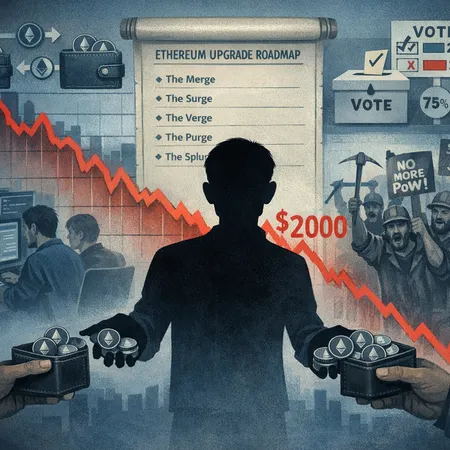
In February and March 2026, multiple media reports flagged large‑scale ETH disposals linked to Vitalik Buterin. One report quantified the early‑February activity as roughly 428.57 ETH sold since the start of that month, and follow‑up reporting described additional disposals as price action went below the $2,000 mark. These transactions quickly became a focal point for traders and governance watchers because founder selling is a visible signal that can influence sentiment around the protocol and the asset’s near‑term outlook.
Those moves coincide with a heated developer push for a major Ethereum upgrade and vocal miner objections, making the timing politically and economically sensitive. For investors and governance analysts, the central questions are simple but consequential: Was this liquidity-driven, tax‑ or personal‑finance motivated, or a reflection of a deeper lack of confidence in the upgrade? And how should such on‑chain founder activity change how you size position and risk in ETH?
The reported scope and timing of Vitalik’s ETH disposals
Multiple outlets tracked the disposals as a series of on‑chain transfers and market sells. CryptoTicker reported the earlier tranche (about 428.57 ETH since early February) and summarized the pattern of large transactions that drew attention across the market. Later coverage reported additional disposals as ETH prices struggled under $2,000, which intensified debate around motive and impact.
The sales were not a single block trade but a pattern over weeks: that cadence matters because recurring sales convey a different message than a one‑off liquidity event. See the reporting at CryptoTicker for the initial series and CryptoPotato for subsequent activity and market reaction (CryptoTicker report, CryptoPotato follow‑up).
Amounts in the low hundreds of ETH are sizeable for an individual but small relative to total ETH supply or large market makers. Context: on‑chain scale matters more than raw numbers — frequency, wallet patterns, and whether funds route through OTC desks or DEXs will shape market impact.
Founder selling vs. protocol funding and market interpretation
Investor reaction to founder selling rarely has a single explanation. Interpretations typically fall into three buckets:
- Practical needs (taxes, diversification, donations). Founders sell to fund living expenses, taxes, or philanthropic commitments — legitimate reasons that don’t necessarily imply mistrust in the protocol.
- Governance or informational signal. Repeated or timed sales around contentious governance periods can be read as a signal of private information or a vote of low confidence. Markets tend to overweight this interpretation when the founder is highly symbolic and influential.
- Protocol funding & legal structuring. Sometimes founder sales are prearranged to fund a foundation, treasury operations, or legal obligations. Those sales are part of protocol economics rather than pure personal action.
Market participants will often default to the signaling story because it’s simpler and actionable: when a visible founder offloads, short‑term sentiment can sour. But effective parsing requires looking at why and how the sale happened: was it routed OTC, spread over time, or executed on public order books? Those details affect price impact and signal strength.
The Ethereum upgrade roadmap and the miner pushback
Developers are pressing a significant upgrade intended to change protocol behavior, performance, or economic parameters. Reporting has highlighted that core developers remain committed to the overhaul even as some miners and ecosystem actors have pushed back publicly. TheCurrencyAnalytics described the dynamic: an active developer push despite miner resistance, outlining the political and technical friction around the proposed changes (TheCurrencyAnalytics coverage).
Why miners object matters. Historically, miners resist changes that reduce block rewards, alter uncle rules, or materially change consensus incentives; such changes can reduce miner revenue or require new hardware/operations. Developer insistence on an upgrade that affects incentives creates a governance battleground: soft coordination through social signaling may give way to contentious hard forks if consensus breaks down.
For ETH holders, the risk isn't just the technical upgrade; it’s the governance fallout. A contentious, polarized process can cause short‑term volatility, network fragmentation fears, and uncertainty about future issuance or fee structure — all of which feed into ETH price action.
Short‑term price and sentiment impacts
On the market side, founder sales plus governance controversy create a two‑pronged pressure: mechanical selling and narrative risk.
Mechanical: visible sells add liquidity supply. When markets are thin — and prices are already under stress, as some reports show with ETH dipping below $2,000 — even modest sell volumes can exacerbate downward moves. CryptoPotato’s reporting tied additional disposals to price weakness below the $2k line, illustrating how timing and price context amplify impact (CryptoPotato follow‑up).
Narrative: founder selling during a contentious upgrade invites headline risk. Traders and algorithmic desks may widen spreads, reduce leverage, or temporarily lower risk exposure to ETH. Sentiment measures (fund flows, derivatives skew, open interest) often reflect this within days.
That said, not all founder selling equals doom. The market frequently digests one‑off sells without material protocol damage, especially if the upgrade path remains credible and coordination among validators and developers stays intact. Short‑term volatility can present buying opportunities for investors with a long horizon and conviction in the upgrade’s fundamentals.
How to parse on‑chain founder activity when sizing risk
For intermediate investors and governance analysts, a structured approach helps separate noise from signal. Here are practical steps:
1) Examine the pattern and execution
- Frequency: is the selling one‑off or repeated? Repeated sales over time are more meaningful as a signal.
- Venue: OTC routes and dark pools usually reduce price impact and imply preplanned liquidity needs; exchange sales are more visible and market‑moving.
- Wallet links: are funds moving from known founder addresses or foundation multisigs? That distinction changes the interpretation.
2) Cross‑reference governance events
- Is the selling timed around proposal votes, hard‑fork announcements, or critical meetings? If yes, treat it as a possible governance signal rather than pure liquidity needs.
- Track the on‑chain governance calendar (EIPs, testnet timelines) — decisions often follow predictable windows.
3) Monitor market microstructure indicators
- Derivatives skew and implied volatility spikes can indicate fear beyond what spot flows suggest.
- Fund flows into ETH spot ETFs (where applicable), staking inflows, and exchange reserves provide balance‑sheet context for price moves.
4) Combine with on‑chain health metrics
- Active addresses, fees, and staking ratios speak to economic utility and network confidence. A robust activity backdrop reduces the weight of a single founder sale.
5) Apply pragmatic position‑sizing rules
- If a sale coincides with governance uncertainty, reduce leverage and set tighter stop sizes. Use a rule of thumb: increase cash buffer or hedge exposure by X% (your firm’s risk policy) during high governance risk windows.
- For long‑term holders: treat founder selling as one input among many — re‑assess conviction based on protocol roadmap credibility, not headlines alone.
6) Watch for coordinated follow‑through
- A founder sale followed by large institutional liquidations or a change in validator behavior is a stronger negative signal than an isolated disposal.
Governance signals vs. market mechanics: a short checklist
- If sales are routed through foundation multisigs with transparency, treat as protocol finance rather than a negative signal.
- If sales cluster ahead of contentious votes, increase the probability assigned to a sentiment signal.
- If miners publicly threaten to withhold support or propose countermeasures, probability of escalation (and price volatility) rises.
Putting it together: a sample investor reaction plan
- Verify facts: confirm reported wallets and execution venues (on‑chain explorers, watch services).
- Check the governance timeline: is a major vote or fork imminent?
- Monitor liquidity and derivatives: rising skew or falling open interest = caution.
- Adjust exposure: reduce leverage, trim new positions, or hedge with options if available.
- Reassess after decisive technical/governance events — don't overreact to headlines alone.
For traders focused on cross‑market context, remember that macro and non‑ETH crypto narratives matter too; for many traders, Bitcoin remains the primary market bellwether, and risk‑on/off flows often move in tandem. DeFi activity and NFT markets also shape ETH demand through fees and utility, so keep tabs on those sectors as well — for example, NFT volumes on DeFi platforms can alter fee economics and staking incentives.
Final takeaways
- Vitalik’s disposals were notable for timing and visibility, but the raw ETH amounts—while meaningful—are small relative to total market depth. Interpretation depends heavily on execution details and context.
- The ongoing developer push for a major Ethereum upgrade, and the miner pushback described in reporting, create a governance backdrop that amplifies the signal value of any founding‑team activity.
- Short‑term price moves and sentiment shifts are plausible, but long‑term investors should weigh protocol fundamentals, upgrade credibility, and on‑chain health alongside founder activity.
Bitlet.app users and other investors should use a measured, evidence‑based approach: treat founder selling as one of several inputs rather than an automatic sell‑signal. Keep rule‑based position sizing, track governance calendars, and prefer transparent liquidity events over opaque transfers when interpreting intent.
Sources
- CryptoTicker — Vitalik Buterin Ethereum sale report: https://cryptoticker.io/en/vitalik-buterin-ethereum-sale-february-2026/
- TheCurrencyAnalytics — Developer push vs miner pushback coverage: https://thecurrencyanalytics.com/altcoins/ethereum-devs-push-major-upgrade-despite-mining-pushback-244191
- CryptoPotato — Follow‑up reporting on additional ETH disposals and price context: https://cryptopotato.com/vitalik-buterin-dumps-even-more-eth-as-prices-struggle-below-2k/