Institutionalizing Tokenized Gold: Wintermute, PAXG/XAUT and the OTC Playbook

Summary
Why Wintermute’s OTC move matters
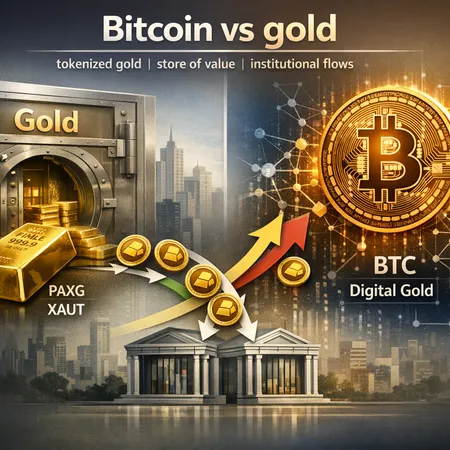
Wintermute’s decision to offer institutional OTC trading for tokenized gold — specifically PAXG (Paxos Gold) and XAUT (Tether Gold) — is more than a product launch. It signals market-makers and liquidity providers treating tokenized commodities as an institutional asset class rather than just a retail on‑ramp. The announcement frames an effort to replicate the familiar OTC workflow institutions use in FX, bonds and bullion markets but adapted to blockchain settlement and custody models. Reports about the launch and Wintermute’s expansion note both increased institutional demand and the need for bespoke trading rails; see the coverage of the announcement and market analysis for context (Wintermute expands into tokenized gold trading and Wintermute’s institutional launch summary on CryptoNomist: Wintermute's launch of institutional OTC trading for Pax Gold (PAXG) and Tether Gold (XAUT)).
For institutional desks and treasury managers, this progression matters because it addresses three common objections: liquidity, counterparty structure, and operational workflows. The next sections walk through how the OTC plumbing works, where risks remain, and how to evaluate tokenized gold alongside traditional instruments and digital counterparts such as Bitcoin or tokenized assets in DeFi environments.
Wintermute’s strategy: market-making meets institutional rails
Wintermute is positioning itself as the liquidity anchor between traditional institutional counterparties and the world of tokenized commodities. Their strategy appears twofold: (1) provide large‑ticket, bespoke OTC execution that mirrors prime‑broker style workflows, and (2) offer credit and settlement facilitation so counterparties do not need to manage every on‑chain nuance themselves.
Practically, that means Wintermute can match or warehousing flow, offer price discovery for sizable PAXG/XAUT trades, and net exposures for participants with established credit relationships. This is the classic market‑maker value proposition translated to tokenized gold: reliable two‑way pricing, willingness to take inventory temporarily, and mechanisms to settle on‑chain or via custodial transfer on agreed terms. For institutional clients used to voice and algorithmic OTC trading in FX and fixed income, those rails reduce friction and speed adoption.
OTC market structure and settlement mechanics
OTC trading in tokenized gold combines elements of on‑chain token transfer and off‑chain custody/redeemability. Key structural points:
Execution: Trades are negotiated bilaterally or via a dealer (e.g., Wintermute) and documented with trade confirmations that reference token identifiers, settlement windows, and legal clauses mirroring ISDA/ISMA language adapted for tokens.
Settlement mechanics: Settlement can take multiple forms — direct on‑chain token transfer, custodial ledger updates, or a combination (on‑chain transfer accompanied by off‑chain custodian confirmation). For PAXG and XAUT, token transfers on supported chains are the canonical settlement event, but full legal finality often depends on issuer redemption and custodian acknowledgment.
Custody handoff: Institutional counterparties typically maintain segregated custody (enterprise custodians or bank custodians with crypto custody arms) to hold tokens. The transfer of economic ownership is effected by moving tokens to the buyer’s custody address and reconciling with on‑chain proofs and issuer redemption rights.
Netting and credit: Dealers may offer netting windows and credit lines to reduce settlement leg counts and funding burdens. That creates counterparty credit risk and requires standard credit support annexes or bespoke bilateral agreements.
Where OTC differs from exchange trading is the level of documentation and bespoke settlement terms. An institutional OTC trade will explicitly define how a PAXG/XAUT transfer constitutes delivery, the acceptable confirmation depth (number of block confirmations), and how to handle chain reorganizations or custodian disputes.
Custody, redemption and operational frictions
Tokenized gold is only as strong as its custody and redemption story. Two technical/legal layers deserve scrutiny:
Issuer‑backed physical linkage — PAXG and XAUT each claim backing by allocated physical gold stored in vaults. That backing is the primary value anchor, but institutions should verify issuer audit routines, proof‑of‑reserves, and the terms of redemption (minimum sizes, fees, and lead times). A token’s market price can deviate from spot if redemption mechanisms are slow or economically burdensome.
Custodial and settlement risk — Tokens live on blockchains; the physical bullion is off‑chain. That creates operational vectors: smart contract risk, wallet mismanagement, chain outages, and reconciliation mismatches between token holders and custodial records. Institutions should demand segregated custody accounts, insured custody solutions, strong key‑management (e.g., HSMs, MPC), and documented reclaim/force‑majeure procedures.
Regulatory friction is another important operational risk. AML/KYC, derivatives treatment, and securities classification vary by jurisdiction; some regulators may treat tokenized commodities through the prism of commodities law, others as transferable securities. This affects onboarding timelines, reporting obligations, and cross‑border settlement choices.
Market size: realistic TAM and adoption hurdles
The physical gold market is enormous — measured in trillions of dollars of above‑ground gold — and tokenized gold’s realistic total addressable market (TAM) is a portion of that, not a replacement. Tokenized offerings target three pools of demand: crypto‑native investors seeking block‑native hedges, institutional treasuries exploring digital asset allocations, and capital markets participants (prime brokers, OTC desks) looking for new collateral forms.
Projections cited around Wintermute’s expansion emphasize substantial opportunity given the size of the underlying gold market and the incremental liquidity tokenization can unlock. However, adoption speed depends on custody maturity, issuer transparency, and regulatory clarity. In practice, early institutional uptake is likely measured in low‑to‑mid billions of dollars under custody initially, scaling to tens or potentially hundreds of billions over several years as operational frameworks and legal precedents solidify. That trajectory mirrors other tokenized asset classes where infrastructure and trust networks had to be built first.
Counterparty, legal and regulatory risks
Institutional players should assess three overlapping risk categories:
Counterparty credit and concentration: OTC desks and market‑makers reduce complexity but introduce exposure to their credit and operational stability. Institutions should insist on credit lines, margining provisions, and substitution rights.
Legal title and redemption rights: Does holding a token equate to legal title to a specific bar of gold? Are redemption windows practical for the institution? Ambiguity here can convert a perceived safe‑haven into a counterparty‑dependent instrument.
Regulatory divergence: Different jurisdictions will treat tokenized commodities differently — as commodities, securities, or new regulated products. That divergence affects where custodians can store tokens, how trades are booked, and tax/treatment for corporate treasuries.
The net effect: tokenized gold offers new efficiencies, but the trade‑off is accepting some degree of counterparty, smart contract and issuer risk relative to physically holding allocated bullion or using regulated ETFs.
How tokenized gold fits institutional portfolios
Tokenized gold should not be judged only by its crypto novelty; evaluate it against the normal set of institutional criteria for hedging and diversification:
Inflation and crisis hedge: Gold’s historical correlation properties remain attractive. Tokenized gold preserves price exposure and offers faster, programmable settlement than physical bars, which can be useful for automated treasury liquidity strategies.
Liquidity and execution: On‑chain markets and OTC desks provide rapid execution and 24/7 settlement windows, which can complement traditional markets. However, liquidity depth varies by token and chain, so institutions must size positions with an eye to exit costs and slippage.
Operational fit: Treasuries can use tokenized gold for intra‑day liquidity, cross‑border transfers of value, or as collateral in crypto‑native lending markets — but only after validating custodial insurance, legal timetables for redemption, and accounting/tax treatment. Integration with treasury systems and custodial reporting is critical.
When combined with clear counterparty agreements and segregated custody, tokenized gold can act as a pragmatic digital expression of a traditional hedge — offering programmability (e.g., smart contracts for automated rebalancing) and settlement speed not achievable with physical bullion.
Best practices for treasury and asset managers
If you’re considering PAXG, XAUT, or similar instruments, adopt a checklist mindset:
- Due diligence on issuer and token economics: review audits, proof‑of‑reserves, and redemption terms.
- Custody validation: require segregated, insured custody with strong key management and legal title opinions.
- Legal and tax review: obtain counsel on local classification, reporting, and tax treatment of token holdings and redemptions.
- Counterparty controls: set credit limits, margins, and counterparty concentration rules for OTC relationships; get documented SLAs for settlement and dispute resolution.
- Operational runbooks: define settlement windows, confirmations required (on‑chain block depth), reconciliation processes, and contingency plans for chain outages.
- Integration planning: ensure treasury systems ingest token positions, valuations, and reconcile them to custodian statements; use proof‑of‑reserves as a recurring check.
Many institutions piloting tokenized assets use specialist service providers and trading desks to bridge expertise gaps. Platforms such as Bitlet.app and institutional desks can help incorporate tokenized commodities into broader treasury workflows, but the responsibility for legal and operational controls remains with the manager.
Conclusion: measured adoption, meaningful opportunity
Wintermute’s institutional OTC offering for PAXG and XAUT accelerates a natural evolution — tokenized gold moving from retail novelty toward institutional utility. The opportunity is meaningful because gold’s on‑chain incarnation solves certain frictions: faster settlement, composability with digital collateral, and global transferability. But adoption will be measured: institutions will demand airtight custody, clear redemption mechanics, robust counterparty agreements, and regulatory certainty before allocating material capital.
Tokenized gold won’t immediately replace physical bullion or regulated ETFs, but it can complement them. For treasury and asset managers, the right approach is pragmatic: pilot with strict limits, validate operational and legal assumptions, and use institutional OTC providers and qualified custodians to manage the bridge between blockchain settlement and the physical bullion that ultimately backs value.
Sources
- Wintermute's launch of institutional OTC trading for Pax Gold (PAXG) and Tether Gold (XAUT): https://en.cryptonomist.ch/2026/02/17/tokenized-gold-wintermute-otc/
- Wintermute expands into tokenized gold trading (market and announcement coverage): https://thenewscrypto.com/wintermute-expands-into-tokenized-gold-trading/?utm_source=snapi