How Big Insti Buys — BitMine’s 40,000 ETH and Strategy’s BTC — Change Supply Dynamics and Miner Valuations
Summary
Executive snapshot
Institutional accumulation has become a major driver of modern crypto markets. Two recent headlines — BitMine’s reported purchase of 40,000 ETH and the Strategy/Michael Saylor group adding more BTC to its balance sheet — are emblematic of coordinated, large‑scale buying that happens largely off the public order books. These moves matter because they remove supply from immediate circulation, reshape liquidity, and change how investors value miners and treasury‑heavy projects.
For many allocators and on‑chain analysts the simple question is: do large buyers like BitMine and Strategy actually change the supply/demand equation, or are they headline theater? Below I break down the mechanics of OTC buys, how miner coverage upgrades influence perception, what a sustained supply shock looks like, and three practical scenarios to test the thesis.
What happened — the facts on recent accumulation
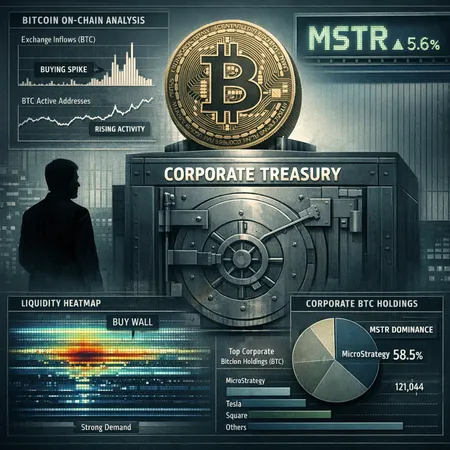
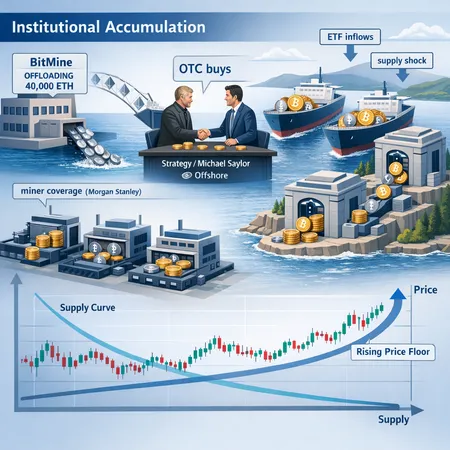
In short, two streams of institutional buying accelerated simultaneously. Reports indicate BitMine bought roughly 40,000 ETH in concentrated off‑exchange trades; several outlets trace those fills to custodial counterparties like BitGo and FalconX, suggesting a single buyer engaging OTC liquidity rather than sweeping exchange books (Beincrypto, TheNewsCrypto). At the same time, Strategy (Michael Saylor’s vehicle) continued adding BTC to its treasury, another concentrated institutional accumulation event (DailyHodl).
These purchases are large by any standard and illustrate a coordinated pattern: miners, treasuries, and funds using OTC rails to add to long positions without causing immediate on‑exchange slippage.
How large OTC buys work — mechanics and on‑chain footprint
OTC counterparties, custodians and settlement
Large institutional buyers typically avoid public exchange orders to limit market impact. Instead they transact over‑the‑counter using brokers, custodians, and liquidity providers. In practice that looks like: a buyer (institution) directs an OTC desk or custodian (BitGo, FalconX, etc.) to source liquidity, the desk nets sellers (other institutions, custodians, or market makers), and the trade settles off the order book.
From a public ledger perspective the trade often has a muted immediate footprint. The counterparty custodians move large on‑chain transfers to their cold wallets, sometimes aggregated, sometimes split. But crucially the coins are transferred into long‑term custody or cold storage rather than circulating on exchanges. That reduces the available float even if the on‑chain transaction history shows movements.
Why OTC reduces visible supply faster than on‑exchange buys
- No visible order book liquidity is taken, so price slippage is controlled.
- Custodial settlement takes coins off‑exchange quickly; those balances are effectively locked from spot sellers for the short to medium term.
- OTC fills often come from other institutions or liquidity providers who prefer settlement via custodians rather than leaving large residual balances on exchanges.
The result: a meaningful chunk of supply is functionally removed from liquidity channels that fuel short‑term selling.
Supply dynamics: how accumulation creates a supply shock
When large buyers repeatedly accumulate and tuck assets into custody, the interaction with demand vectors such as spot ETF flows and retail buying creates an outsized effect.
- ETF inflows amplify demand: Spot ETF purchases directly bid for inventory and create visible demand on brokers and APs. Improved institutional flows into spot products can accelerate depletion of available exchange and OTC liquidity (Coinpaper).
- Custodial locking reduces float: Institutional buys settled into long‑term custody (or treasury holdings) stop circulating. The effective free float shrinks even if the total supply is unchanged.
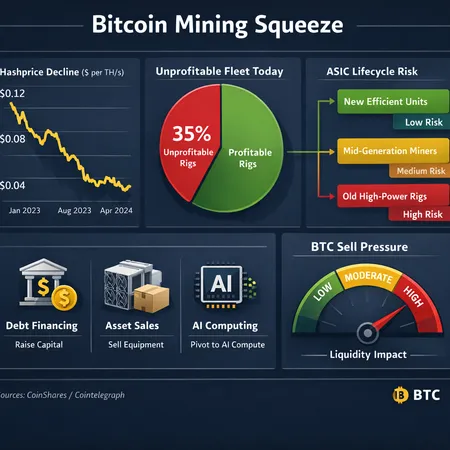
- Miner selling pressure may decline: If miners anticipate sustained higher realized prices or can access more efficient hedging, they may reduce opportunistic sales. Simultaneously, positive sentiment and coverage upgrades can give miners access to capital markets, helping smooth cash flow volatility.
A classic supply‑shock dynamic emerges when buying (OTC + ETF flows) outpaces selling (exchange liquidity + miner sales), creating a structurally tighter market and raising the floor beneath prices.
Miners, coverage upgrades, and the re‑rating of miner equities
Morgan Stanley’s initiation and differentiated ratings across miners (overweights for Cipher and TeraWulf, underweight for Marathon in their note) are not just passive research updates — they change how institutional portfolios treat miners as allocable assets (TheNewsCrypto).
Why coverage matters
- Capital allocation: Institutional investors often need sell‑side research to put miners on buy/sell lists. An overweight from a major bank drives flows into equity sleeves and managed funds.
- Valuation anchoring: Analysts shift the narrative from binary crypto‑bet to infrastructure play, emphasizing revenue per mined coin, hosting contracts, and balance‑sheet strength. That reduces the perceived binary risk of miners being pure commodity proxies.
- Access to financing: Better ratings and research reduce the cost of capital for miners, meaning they can finance growth or buyback programs rather than selling freshly mined BTC immediately.
For allocators, the combined effect of ESG/institutional mandates, research coverage, and improved access to hedging can compress miner selling windows and therefore reduce supply into spot markets.
Medium‑term price floors — how far does the cushion go?
A new, higher price floor emerges when: (a) persistent institutional accumulation continues, (b) ETF inflows remain constructive, and (c) miners curb spot selling due to better financing or hedging. But there are caveats.
- Magnitude depends on velocity of accumulation: A few concentrated buys like BitMine’s 40k ETH matter, but sustained weeks/months of similar sizing are what create durable floors.
- Liquidity redistribution matters: If supply simply shifts from retail to institutional custody without a net reduction in sell intent, the price floor is fragile.
- Macro and policy risk: Rates, regulatory news, and global liquidity conditions can overwhelm on‑chain supply dynamics.
Practically, watch for: falling exchange reserves, rising custodian balances labeled as long‑term holdings, and continued positive ETF flows. These are measurable signs that the floor is strengthening.
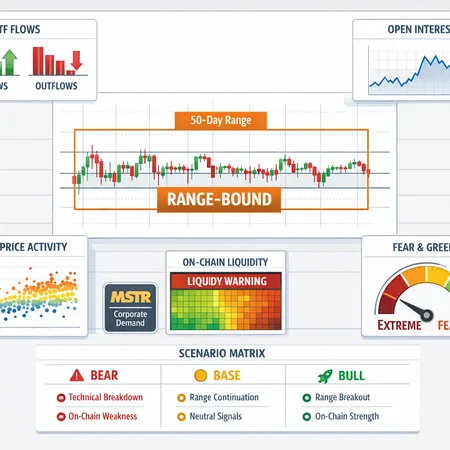
Scenario analysis — three paths for accumulation and their implications
Scenario A — Continued coordinated accumulation (base case)
Assumptions: institutional buys continue, ETF flows remain positive, miners modestly reduce spot sales.
Implications: persistent drawdown of exchange reserves and liquid OTC inventory; higher realized prices; miners re‑rate toward higher EV/EBITDA multiples as forward cash flows look safer; volatility may decline as liquidity becomes more concentrated in custody.
Signals to monitor: sustained daily net inflows into spot ETFs, on‑chain decline in exchange balances, and recurring large OTC fills reported by custodial counterparties.
Scenario B — Accumulation plateaus (pause)
Assumptions: large buyers pause or slow, ETF flows neutral, miners continue historical sell cadence.
Implications: the temporary removal of supply is absorbed by market makers and retail; price consolidates and may retest local supports. Miner equities decouple and revert to commodity‑like sensitivity. Perception of institutional conviction becomes less robust.
Signals to monitor: halting of large OTC reports, stabilization (not decline) in exchange reserves, and neutral ETF day flows.
Scenario C — Accumulation reverses or sellers reappear (bear case)
Assumptions: institutions rebalance, large wallets re‑enter selling, macro liquidity tightens.
Implications: rapid increase in available float, higher intra‑day volatility, and a possible unwind of miner equity premia. Price floors evaporate until sellers are absorbed.
Signals to monitor: sudden transfers from custodial cold wallets to exchanges, large dark pool/OTC sell blocks hitting liquidity providers, and negative ETF flows.
Practical takeaways for allocators and on‑chain analysts
- Track custodial reporting and OTC desk color: headlines like BitMine’s ETH buys are important, but the sustainable impact comes from repeated fills and custody posture. Pay attention to counterparties like BitGo and FalconX and their on‑chain settlement patterns (Beincrypto, TheNewsCrypto).
- Combine on‑chain signals with institutional flow data: exchange reserve trends plus ETF inflows are stronger together than either alone (Coinpaper).
- Re‑think miner exposure as a liquidity play: research coverage changes (e.g., Morgan Stanley’s initiation) mean miners can be bought not just as leverage to BTC price but as partially de‑correlated yield/capex stories if managements use better financing rather than immediate sales (TheNewsCrypto).
- Model scenarios, not point outcomes: assume several months of data are needed to confirm a structural supply shock. Use conditional triggers (exchange reserves drop X% while ETF flows average Y net inflows over Z days) as your operational rules.
Final note: conviction vs. optics
Large OTC accumulations are both signal and action. They demonstrate conviction in markets — whether that’s for ETH or BTC — and they alter the plumbing of supply. But not every big headline equals a permanent supply shock. Institutional accumulation becomes truly market‑moving when it is sustained, coordinated with product flows (like ETFs), and accompanied by a reduction in miner selling pressure.
For allocators and on‑chain analysts, combining custody/OTC color with measurable on‑chain signals and flow data provides the clearest view of whether today’s buys will be tomorrow’s floor. Platforms and analytics, including those integrated into products like Bitlet.app, can help monitor these indicators in real time.
Sources
- https://beincrypto.com/bitmine-buys-ethereum-aggressive-eth-accumulation/
- https://thenewscrypto.com/bitmine-buys-40000-eth-from-bitgo-and-falconx-amid-eth-price-weakness/?utm_source=snapi
- https://dailyhodl.com/2026/02/10/michael-saylors-strategy-acquires-90000000-in-bitcoin-tom-lees-bitmine-buys-85500000-in-ethereum-amid-crypto-market-woes/
- https://thenewscrypto.com/morgan-stanley-initiates-bitcoin-miner-coverage-rates-cipher-and-terawulf-overweight-marathon-underweight/?utm_source=snapi
- https://coinpaper.com/14440/bitcoin-et-fs-show-signs-of-life-as-institutional-flows-improve?utm_source=snapi