Shiba Inu’s Post‑Hack Recovery: Shibarium Framework, Exchange Reserves, and Retail Risk
Summary
Executive summary
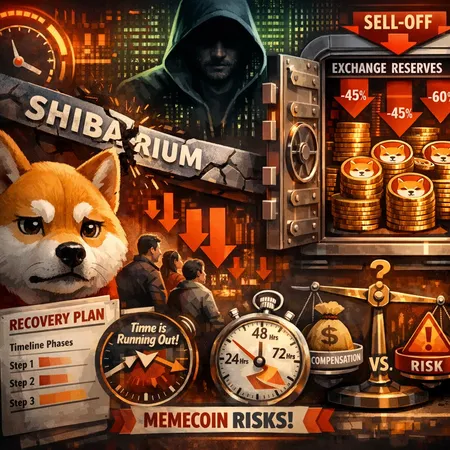
September’s Shibarium exploit forced the Shiba Inu community into two simultaneous problems: how to remediate immediate user losses on the layer‑2 and how to reckon with concentrated SHIB sitting on centralized exchanges. The developer team has presented a recovery framework to help affected users; meanwhile on‑chain analysis reveals an exchange reserve overhang that magnifies sell‑pressure risk for retail holders. This piece dissects the framework, the implications of >$716M of SHIB on exchanges, the operational realities of recovery, and clear risk‑management steps for SHIB holders.
What the Shibarium recovery framework promises — and what it likely means
The Shiba Inu developer team published a blueprint intended to help users who lost funds in the September hack. The public outline focuses on identifying victims, preserving evidence, and proposing mechanisms for reimbursement. The plan signals good intent: acknowledgement, a structured approach, and an emphasis on minimizing future attack vectors.
But a few practical caveats should be clear to holders:
- Identification vs. restoration: tracing which addresses were victimized is one thing; returning value to those addresses is another. Recovery commonly involves snapshots, claims processes, and verification steps that are resource‑intensive and slow.
- Custody and multisig: recovered assets will almost certainly be consolidated and managed by multisignature wallets and/or custodial intermediaries during remediation. That protects the recovery effort but raises questions about centralization and transparency during the process.
- Partial compensation: frameworks often prioritize fairness but cannot guarantee full restitution. Some value may be irrecoverable, technically stranded, or offset by legal/operational costs.
Viewed realistically: the recovery framework is a necessary first step, not an immediate fix. For a technical unpacking of the developer’s public plan, see the original announcement and details reported by industry outlets like this summary of the recovery framework.
Exchange reserve concentration: the $716M overhang and why it matters
On‑chain reporting shows more than $716 million worth of SHIB held on centralized exchanges. That figure is not hypothetical — it’s an on‑chain snapshot and a red flag for price dynamics:
- Liquidity overhang: centralized exchange reserves represent ready liquidity. Large balances sitting on exchanges create the potential for rapid sell pressure if major holders decide to liquidate, or if exchanges move funds for operational reasons.
- Psychological impact: markets may price in the risk of dumping even before it happens. The knowledge that large reserves exist can reduce buyer confidence and amplify downside moves.
- Not all on‑exchange SHIB is immediate sell intent: some balances are custody for retail users, some belong to market makers, and some are exchange cold wallets. But the key point is that a >$700M reserve amplifies tail risks for price action.
For the on‑chain reporting and the raw reserve estimates, see the investigative on‑chain article that highlights the concentration and potential sell pressure: Exchange reserve report.
How exchange reserves interact with a recovery event
When a remediation process unfolds, two pressure channels can collide:
- Withdrawals and re‑shielding: affected users receiving compensation may choose to move funds onto exchanges to convert to fiat or other tokens. That can increase exchange balances in the short term.
- Panic selling: if holders fear more vulnerability — to hacks or to price declines — some may liquidate. Exchange reserves provide the infrastructure to execute such sales quickly.
So paradoxically, a recovery effort that restores balance sheets for victims could temporarily increase on‑exchange liquidity and therefore near‑term sell pressure unless carefully managed.
Operational realities: custody, timeline, and compensation expectations
Recovery is an operational project as much as a technical one. Here are the practical steps and realistic timeframes to expect:
- Evidence collection and claims window (weeks to months): teams will typically require transaction traces, wallet ownership proofs, and a claims portal. Expect strict KYC and proofs to prevent fraud.
- Audits and legal review (weeks to months): any transfer or re‑minting needs security audits and sometimes legal vetting, especially when bridging value across chains or reissuing tokens.
- Custody arrangement (immediate to weeks): recovered funds are likely placed in multisig custody or held by a trusted intermediary until distribution rules are finalized.
- Distribution and reconciliation (months): executing distributions — partial or full — and reconciling disputes takes time. Some cases stretch into many months, especially when regulators or third‑party custodians are involved.
Compensation will probably be partial and phased rather than instantaneous full restitution. There are tradeoffs: speed increases exposure to secondary attacks or mistakes; slowness exposes victims to price volatility and frustration.
What retail SHIB holders should do now: practical risk management
If you’re a retail SHIB holder, prioritize steps that protect capital without overreacting. Here’s an actionable checklist:
- Assess position size: if SHIB represents an outsized portion of your portfolio, reduce exposure to a level you’d be comfortable holding through a downcycle. Memecoin risk is inherently high; size positions accordingly.
- Move large balances off exchanges: custody your tokens in wallets you control where practical. Exchange balances are easier to liquidate and more exposed to platform risks.
- Monitor exchange flow and on‑chain signals: sudden upticks in exchange inflows, or large single‑wallet movements, can presage sell events. Use block explorers and dashboards to keep tabs on big flows.
- Prepare liquidity exits: if you plan to realize gains, set limit orders or staged sells rather than market panic sells that can wipe value in a thin memecoin book.
- Avoid compensation scams: when recovery processes are announced, attackers mimic claims portals and airdrop scams. Verify official channels, and never sign transactions or share seed phrases.
- Consider diversification and hedges: if you want exposure to crypto but not memecoin risk, move a portion into stablecoins or blue‑chip tokens, or use dollar‑cost averaging to reduce timing risk.
- Leverage reputable services for trades: if you need to access fiat or P2P, use trusted platforms and consider escrowed options — platforms such as Bitlet.app highlight custody and escrow best practices for peer‑to‑peer trades.
Scenario analysis: three plausible market paths
- Optimistic path: recovery proceeds cleanly, victims receive meaningful compensation, no major sell events follow, and SHIB sentiment stabilizes. Price impact is modest and the narrative shifts to resilience.
- Middle path: recovery is slow and partial; exchanges briefly see increased balances and volatility rises. Some holders sell, but the market ultimately absorbs flows after several weeks/months.
- Downside path: recovered funds or panic flows hit exchanges in concentrated bursts, triggering heavy sell pressure and a prolonged downtrend. This is the main reason exchange reserve concentration matters.
Retail holders should mentally prepare for all three and size positions for survivability.
What to watch next (metrics and signals)
- Exchange inflow/outflow spikes: large inflows to centralized exchanges are an early warning sign.
- Developer transparency and audit reports: timely, open updates from the Shiba Inu team reduce uncertainty.
- KYC/claims portal announcements: how claims are validated matters — more stringent processes slow distribution but reduce fraud.
- On‑chain whale movements: unusually large transfers between wallets or to exchange deposit addresses.
Also watch broader market liquidity: when macro sentiment turns risk‑off, memecoins often experience amplified draws.
Bottom line
The Shibarium recovery framework is a necessary first step for victims, but it is not a quick fix. Operational realities — custody decisions, legal checks, KYC and claims processes — mean recovery will likely be phased and partial. Meanwhile, the existence of more than $716M of SHIB on centralized exchanges creates an overhang that can magnify market moves and turn a measured recovery into a volatile event for retail holders.
Practical advice: reduce outsized exposure, move tokens off exchanges if you control the keys, monitor on‑chain flow, and be cautious about anyone offering immediate compensation outside official channels. Memecoin risk is real; approach SHIB with a plan, not panic.
Sources
- Shiba Inu developer explains Shibarium recovery framework after hack: https://u.today/shib-owes-you-shiba-inu-team-member-explains-shibarium-recovery-framework?utm_source=snapi
- On‑chain report: >$716M in SHIB on centralized exchanges and implications: https://u.today/716000000-in-shiba-inu-shib-shocking-exchange-reserves-are-not-what-you-think?utm_source=snapi
Additional reading: for market context and DeFi flows see ShibaInu and monitoring dashboards on DeFi.