Zcash Rally & Futures Surge: Is Renewed Appetite for Privacy Coins Real?
Summary
Executive snapshot
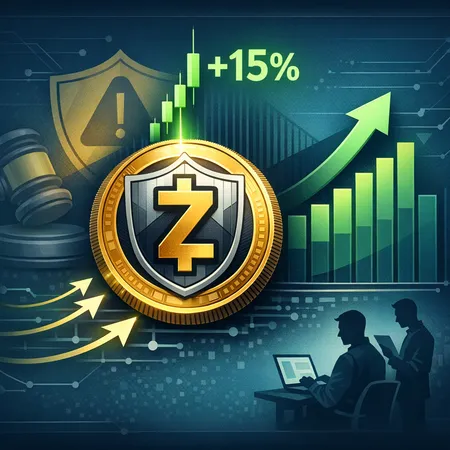
Zcash’s ticker ZEC spiked ~15% amid fresh on‑chain activity and a notable climb in futures open interest. That combination — cash flows + rising derivatives OI — is exactly the recipe markets use to fuel outsized rallies, but it also raises the stakes: leverage amplifies gains and losses. This note breaks down what drove ZEC’s move, how to think about a possible 45% extension, the regulatory landscape for privacy coins, and practical trading/holding frameworks for tactical exposure.
What drove the recent ZEC move?
The short answer: buyers returned to spot liquidity at the same time traders ramped up futures exposure. AmbCrypto flagged the early price jump as buyers finally re‑entering the market, producing a ~15% advance for ZEC, and market reporters simultaneously recorded a surge in derivative positioning that often precedes stronger trends.
On‑chain flows and concentration
On‑chain indicators that matter here are exchange inflows/outflows, large wallet activity, and concentration in a handful of addresses. The recent rally coincided with elevated withdrawals from major exchanges into private wallets — a common signal that holders prefer custody rather than quick sell pressure. That behavior suggests a degree of speculative conviction rather than a purely technical short‑squeeze.
That said, privacy coins historically show larger holder concentration than top layer tokens. When a handful of wallets re‑engage, price moves can be sharp but brittle. For traders, this means watching not just flow direction but the size and frequency of whale moves.
Futures open interest: a leverage lens
Crypto.News reported a near‑record rise in ZEC futures open interest, which is crucial to understanding market dynamics. Higher open interest signals that new money — often speculative — is entering the trade, and with leverage available, that can accelerate momentum. But it also raises liquidation risk: a sudden reversal can cascade as leveraged positions unwind, creating outsized intraday volatility.
In practical terms, rising OI increases the probability of a strong short‑term continuation if funding rates and basis support long positioning; conversely, if OI rises while spot weakens, it may indicate short hedges or unstable positioning.
Technical outlook and odds for a sustained 45% move
A 45% move from current levels is achievable but not high‑probability without confirming conditions. Here’s a structured view.
Key technical levels and structure
- Near‑term support: the most recent consolidation high and the closest exchange liquidity bands. If buyers reclaim those levels decisively on volume, the path to higher targets becomes cleaner.
- Resistance clusters: previous swing highs and orderbook walls where passive sell liquidity accumulates. Breaks above those areas on elevated OI and volume increase the chance of extended moves.
- Volatility environment: implied volatility and funding rates. Elevated implied vol and positive funding for longs suggest traders are paying to be long — a bullish sign, but one that also creates crowded trades.
Probability framework (qualitative)
- Short extension (10–20%): Moderate to high probability if current buyers hold spot flows and OI growth persists with constructive funding dynamics.
- Medium extension (20–45%): Reasonable probability if: (1) exchange outflows continue, (2) OI growth is steady but not explosive, and (3) liquidity beyond immediate orderbook supports larger fills.
45% sustained rally: Low to moderate probability in the near term unless a macro catalyst (e.g., renewed privacy narrative, major exchange listing announcement, or a derivatives-driven squeeze) materializes. Leverage can force sudden jumps, but sustaining such gains requires broader market participation and improved liquidity depth.
In short: rising OI tilts odds toward amplification, but concentration, thin order books and the specter of regulatory news reduce the likelihood of a clean, sustained 45% move without a clear fundamental catalyst.
Regulatory headwinds: the structural ceiling for privacy tokens
Privacy coins occupy a unique legal and compliance cross‑hairs. Regulators and compliance teams worry about transaction opacity, AML/CTF obligations, and cross‑border privacy implications.
- Exchange delistings: Several centralized exchanges have historically delisted or limited privacy tokens after regulatory scrutiny. That action reduces market depth and can make rallies short‑lived.
- Custody and institutional adoption: Many custodians and regulated venues are hesitant to hold privacy coins, limiting institutional flows that could underpin a sustainable rally. Even P2P and decentralized venues face added scrutiny.
- Policy shifts: A single regulatory action — guidance from a major jurisdiction or a large custodian tightening policy — can immediately remove a bidder from the market.
These constraints mean privacy coins often react more violently to sentiment and derivatives flows than mainstream assets. For allocators that want exposure, this is a persistent structural risk to model into position sizing and exit planning.
Trading and holding best practices
Whether you trade ZEC for a tactical speculative play or hold as a conviction bet, treat privacy coins differently from blue‑chip assets.
For traders (short to medium term)
- Size conservatively: Keep position sizes small relative to portfolio volatility. For many traders a single privacy‑coin position should be a modest fraction of total risk (e.g., single‑digit percentage of active risk capital).
- Use defined risk tools: Prefer options where available, or tight stop frameworks for futures and spot trades. Leverage can inflate returns but also wipe accounts quickly on sudden regulatory headlines.
- Monitor OI and funding: Track futures open interest and funding closely. Elevated OI + aggressive funding paid by longs suggests crowded positioning — a cue to trim or tighten stops.
- Watch exchange liquidity: Avoid executing large market orders on thin desks. Use limit orders, TWAPs, or sizable OTC liquidity if needed.
For holders (medium to long term)
- Custody considerations: Use self‑custody or trusted custodians that can handle privacy coins. Note some custodians may restrict privacy token support when regulatory pressure rises.
- Diversify exposure: Treat privacy tokens as a risky satellite allocation. A typical tactical allocation might be small — depending on risk tolerance, 0.5–3% of portfolio value — scaled up only if regulatory clarity improves.
- Exit plans: Predefine sell triggers tied to regulatory shifts or exchange delistings. Liquidity can evaporate quickly, so having a plan avoids emotionally driven exits.
Platforms and desks matter. Derivative flow intelligence and P2P liquidity can change the risk landscape quickly; services like Bitlet.app and specialized desks are part of that ecosystem, so understand counterparty and product risk before committing capital.
How traders should think about speculative demand vs. structural demand
Speculative demand (futures OI, whale re‑engagement, momentum chasing) can create sharp rallies. Structural demand (broad exchange listings, institutional custody, real‑world use cases for privacy) is what sustains multi‑month or multi‑year appreciation.
Current signals from ZEC point toward a speculative uptick: on‑chain withdrawals and rising OI are hallmarks of renewed trader interest, not yet clear evidence of sweeping structural adoption. That distinction matters for position horizon: speculative demand can evaporate quickly, while structural demand compounds.
Conclusion — a pragmatic stance
ZEC’s recent 15% rally and the surge in futures open interest are meaningful: they raise the probability of an amplified move but also increase the short‑term risk of violent reversals. A sustained 45% rally is possible but would likely require fresh structural catalysts beyond derivative positioning alone.
For traders: use disciplined sizing, monitor OI/funding and liquidity, and prefer tools that cap downside. For allocators: treat privacy coins as speculative satellites inside a diversified portfolio and plan for regulatory friction.
For many in the broader crypto market, including Bitcoin traders and DeFi participants, privacy narratives keep resurfacing. Whether privacy tokens reclaim a larger role depends as much on policy and custody decisions as on traders’ appetite.