XRPL’s 400% Surge and the Cooldown: Can the Ledger Sustain Institutional Tokenization?
Summary
Executive snapshot
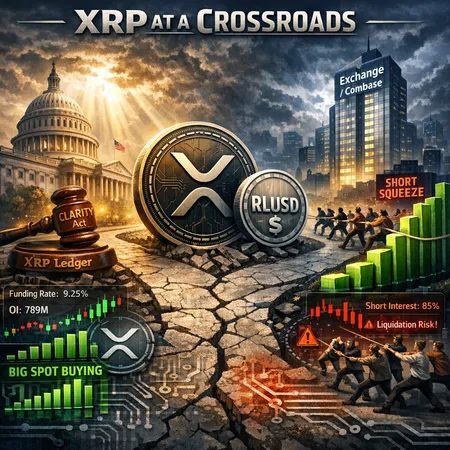
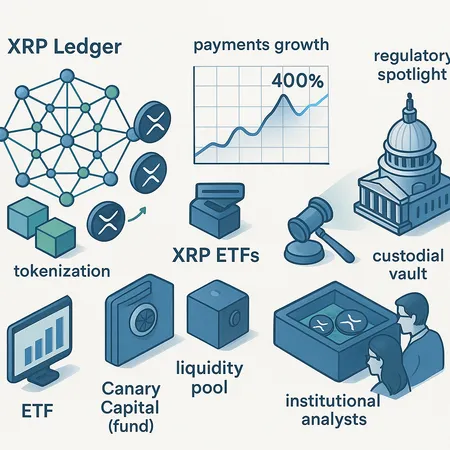
The XRP Ledger (XRPL) produced one of the sharper short‑term on‑chain rallies of 2025: on‑ledger payments and token flows spiked roughly 400% in a concentrated period before activity cooled back toward baseline. That volatility exposed both the ledger’s strengths — ultra‑low fees, fast settlement and a native tokenization model — and its systemic weaknesses: fragmented liquidity, uncertain custodial options, and the perennial regulatory glare. For institutional product teams, crypto fund managers and payments architects, the question is not whether XRPL can generate bursts of activity; it’s whether those bursts can be converted into sustained product demand for custody, tokenized securities and payment rails.
What happened: the 400% surge, then a cooldown
In late reporting the XRPL posted explosive month‑over‑month growth in payments and token issuance, quickly becoming a headline narrative in crypto markets. Coverage documented a dramatic jump in on‑ledger transfers and new token activity before a sharp deceleration as some speculative and utility flows subsided. The dataset compiled by reporters highlights how quickly on‑chain metrics can swing when a few large issuers, market makers or promos crowd the ledger.
There are two useful ways to read the run‑up and slowdown. First, the surge proves XRPL can handle sudden, high‑velocity flows without congestion or fee spikes — a positive sign for payments architects. Second, the reversal suggests today’s flows are still fragile: they depend on a narrow set of actors (issuers, exchange flows, a few market makers) rather than broad, organic demand across custodians, brokers and enterprise token issuers. The original reporting that captured the surge and the subsequent lull provides the central dataset for this assessment.XRPL’s euphoric growth and the follow‑up slowdown
Where institutional products stand: spot funds, ETFs and the Canary Capital case
Institutional wrappers around XRP — whether spot funds, OTC desks, or conceptual ETF filings — face three pain points exposed by the recent XRPL episode: performance volatility, custody complexity and product distribution.
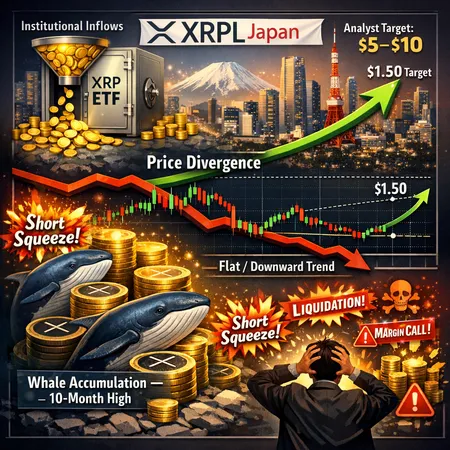
A notable cautionary sign: Canary Capital’s XRP fund has reportedly struggled since launch, delivering returns that lagged expectations and raising questions about active management in a market dominated by episodic flows and tight spreads. Coverage of Canary’s performance illustrates how fund-level factors (positioning, timing, fees) can dramatically affect results even if the underlying network shows technical promise.NewsBTC’s analysis of XRP and Canary Capital provides critical context on fund performance and sideways price action.
Meanwhile, the broader ETF conversation — and speculation about spot XRP productization — remains nascent. Unlike BTC/ETH spot ETFs that have clearer precedents, institutional XRP vehicles still wrestle with liquidity sourcing, auditor/custody arrangements, and the legal framing of tokenized IOUs versus native assets. That said, market teasers and hints from asset managers (for example, commentary tied to Toroso Investments) suggest there are active discussions on the demand side that could crystallize into meaningful products if regulatory and liquidity conditions improve.Toroso’s market teaser around an XRP initiative is worth watching as a potential catalyst.
Why the SEC chair’s comments matter — and why XRPL benefits
A significant macro overlay came from public remarks by the SEC chair about tokenization’s role in making markets more transparent and efficient. If tokenized assets move from theoretical to mainstream, ledgers that support fast settlement, native issuance and clear on‑chain provenance will attract institutional attention. The SEC chair even suggested that tokenization won’t take decades to arrive, arguing instead that the shift could accelerate as infrastructure and rulemaking converge. That narrative elevates XRPL’s relevance because XRPL was designed with native issuance and a built‑in decentralized exchange — a practical starting point for tokenized markets.
The Coinpaper analysis that contextualized the SEC chair’s remarks also tied the regulatory spotlight to practical ledger choices, highlighting why institutional teams are revisiting XRPL as part of their tokenization roadmaps.Read the SEC chair perspective and implications for XRPL
Technical strengths and product fit for tokenization and payments
XRPL brings several compelling features for institutional use cases:
- Low latency, low fee settlement. XRPL’s consensus process delivers sub‑second confirmations and very low nominal fees — helpful for micropayments and high‑frequency token flows.
- Native issuance model. XRPL supports on‑ledger issued currencies (IOUs) and a native decentralized exchange, which simplifies token creation and peer settlement without external smart contract stacks.
- Predictable finality. For custody and reconciliation teams, predictable settlement finality reduces operational risk relative to chains with probabilistic finality.
These attributes make XRPL an attractive candidate for cross‑border payments, stablecoin rails, and simple tokenized instruments where settlement speed and cost matter more than advanced smart contract composability.
Key technical and liquidity hurdles
However, the ledger is not without meaningful limitations that institutional buyers and product teams must evaluate:
- Gateway fragmentation and issuer risk. Most token liquidity on XRPL is broken down by gateway (issuers that back IOUs). That fragmentation creates credit and counterparty risk: assets with the same ticker can have different liquidity and trust assumptions depending on the issuer.
- On‑chain depth and market making. The surge showed XRPL can move lots of value, but sustainable markets require committed market makers and institutional counterparty depth. Thin order books during the cooldown exposed slippage risks for large trades.
- Composability vs EVM ecosystems. XRPL’s execution model trades off smart contract richness for stability and speed. For complex tokenization requiring programmable logic — complex derivatives, DAOs, or advanced DeFi primitives — XRPL currently lags EVM‑compatible chains in tooling and developer mindshare.
- Custody and settlement integration. Enterprise custodians and banks expect standardized custody solutions and settlement interfaces. XRPL needs broader support from qualified custodians and clear standards for fiat rails and reconciliation.
- Regulatory clarity on IOUs and tokenized securities. Even with encouraging comments from regulators about tokenization’s future, the legal status of certain token classes on XRPL (especially assets that mimic securities) requires clearer precedent.
Practical checks for institutional teams evaluating XRPL
If your product or fund is considering XRPL as a foundation for tokenized assets or payment rails, prioritize these monitoring items:
- Gateway inflows/outflows and concentration. Track which issuers are driving volume and whether settlement balances are centralized among a few players. High concentration implies counterparty risk.
- Market maker commitments. Engage with market makers early; request proof of capacity to tight spreads on large fills or formal quoting obligations.
- Custody providers and audit trails. Validate that custodians support XRPL natively, provide coherent reconciliation statements, and have legal frameworks for on‑ledger IOUs.
- Regulatory signals and enforcement actions. Watch enforcement precedent closely; favorable regulator rhetoric (like the SEC chair’s comments) helps, but concrete rules and actions matter most.
- Adoption beyond speculative flows. Look for real‑world token issuances (asset‑backed tokens, stablecoins for B2B settlement) and pay attention to enterprise proof‑of‑concepts that integrate XRPL with banking rails and payment processors.
For many institutional teams the comparison will be: can XRPL deliver settlement, traceability and low cost at scale while avoiding the liquidity headaches that make large fills expensive? Partial answers may be found in the ledger’s next wave of issuer commitments and dedicated liquidity programs.
Short‑term scenarios to expect
- Optimistic: A few large token issuances (stablecoins or asset‑backed tokens) anchor deep liquidity pools, market makers commit to two‑way books, custodians onboard XRPL, and institutional product teams launch viable spot and tokenized funds.
- Base: Episodic surges continue as individual projects and promos drive activity, but concentration and custody gaps prevent scalable institutional adoption.
- Pessimistic: Regulatory pushback on certain issued tokens or a major issuer default undermines trust in IOUs, prompting flight to more composable EVM chains.
Market teasers like those from Toroso and other managers suggest there is nontrivial demand on the buy side; the path from teaser to production, though, requires liquidity engineering and regulatory certainty.Toroso teaser coverage and market context
What to monitor next — a checklist for product teams and funds
- On‑chain metrics: payment volume, number of unique issuers, gateway balances and DEX depth.
- Fund flows: creation/redemption patterns for spot XRP funds and institutional vehicles; watch Canary Capital’s trajectory as an early case study in performance delivery.NewsBTC’s Canary Capital analysis
- Regulatory developments: formal statements, enforcement actions and policy papers that clarify tokenized securities frameworks — the SEC chair’s remarks are a directional positive but aren’t a rulebook.SEC chair perspective on tokenization
- Custody coverage: which qualified custodians and prime brokers will offer audited, insured custody for XRPL native and issued tokens.
- Integration wins: partnerships that connect XRPL token rails to fiat on/off ramps, bank partner APIs, or payments processors (platforms like Bitlet.app that build payment primitives on crypto rails are relevant reference points).
Final take — realistic optimism
XRPL has demonstrated it can process large bursts of activity cheaply and with speed, and recent headlines show institutional players are paying attention. The SEC chair’s public comments on tokenization tilt the narrative toward on‑ledger markets and give XRPL a timing advantage, because it already supports native issuance and a DEX. Yet pragmatic adoption will hinge on liquidity engineering, custodian support, and clearer legal frameworks for issued tokens.
For institutional product teams the right posture is cautious, active engagement: run pilots that stress test settlement and custody, negotiate market making commitments, and model concentration scenarios for issuer defaults. If XRPL can prove sustained depth and a robust institutional custody layer, it won’t just be a ledger that can handle spikes — it could become a cornerstone for tokenized markets and payment rails.
Sources
- XRPL’s 400% growth report and follow‑up coverage: https://u.today/xrp-ledgers-euphoric-400-growth-ends-will-it-stabilize?utm_source=snapi
- Analysis of XRP price action and Canary Capital fund performance: https://www.newsbtc.com/analysis/xrp/whats-happening-with-xrp/
- SEC chair commentary and why XRPL matters for tokenization: https://coinpaper.com/12931/sec-chair-says-tokenization-will-make-markets-transparent-soon-not-in-decades-why-xrp-ledger-matters-now?utm_source=snapi
- Toroso Investments market teaser and potential catalyst: https://bitcoinist.com/something-big-xrp-toroso-investments-manager/
For many traders, Bitcoin remains the primary market bellwether, and tokenized assets are increasingly appearing in DeFi integrations — both trends will influence how quickly XRPL can convert bursts of on‑chain activity into durable institutional product demand.