Global Stablecoins Playbook: How U.S. Regulation Is Reshaping Markets
Summary
Why U.S. stablecoin regulation matters globally
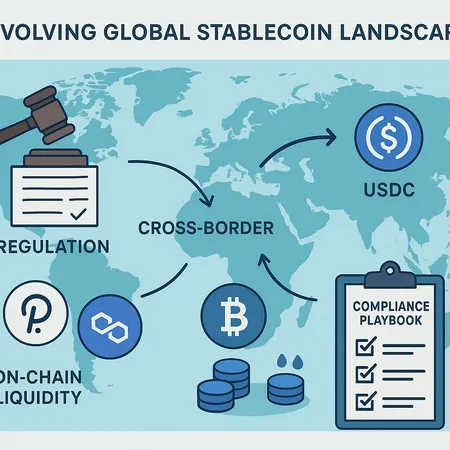
U.S. policy choices ripple across the global crypto plumbing because the dollar — and thus many stablecoins denominated to it — sits at the center of cross-border trade and on‑chain liquidity. Recent analysis shows U.S. regulatory moves are already reshaping the international financial landscape for stablecoins, nudging issuers to rethink banking relationships, disclosures, and operational setups to align with higher scrutiny (CryptoSlate).
Regulatory attention from Washington tends to create two immediate effects: first, it raises the bar for institutional counterparts (banks, custodians, auditors) that stablecoin issuers rely on; second, it accelerates market participants toward compliant, dollar-aligned rails that can prove reserves and manage AML/KYC expectations. For compliance officers and product leads, that means adjusting risk models to include legal and correspondent-banking risk — not just smart-contract and custody risk.
How regulation reshapes cross‑border providers and on‑chain liquidity
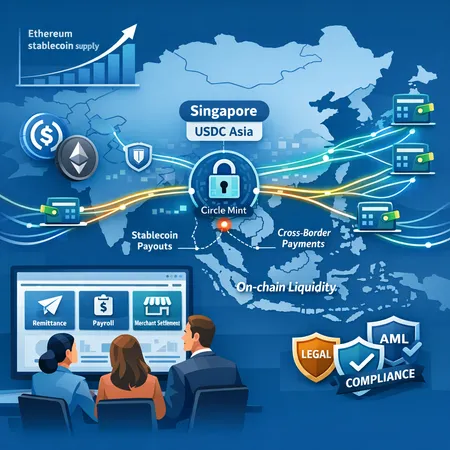
When a major jurisdiction clarifies rules — or signals a tougher stance — liquidity can fragment along legal and operational lines. Cross-border stablecoin providers now face decisions: centralize reserves in U.S. banking windows and accept heavier supervision, or diversify to local rails and regional currencies to avoid overexposure to a single regulator. Either approach affects where liquidity pools form, which bridges gain traction, and how quickly funds can move between fiat and on‑chain formats.
On‑chain liquidity is particularly sensitive. Exchanges, market‑makers, and DeFi protocols prefer fast, reliable redemption paths. If an issuer can no longer promise seamless fiat redemption because of correspondent‑bank constraints, traders price that into spreads and collateral requirements. That dynamic helps explain why some exchanges favor programmatic settlement with large, vetted issuers like USDC: predictable redemption and a clearer compliance posture reduce frictions and enable tighter markets.
Exchange adoption case study — Bybit deepens USDC integration
Exchange-level choices often set the tone for market liquidity. Bybit’s strategic expansion of USDC across its ecosystem is a textbook example of how an exchange can align product offering with regulatory realities to keep liquidity efficient and trusted (Cointelegraph).
Bybit’s move illustrates several operational imperatives: prioritize stablecoins with strong custody and reserve practices; integrate on‑ and off‑ramps that meet enhanced KYC/AML; and provide traders with multiple settlement options to avoid creating single‑point redemption bottlenecks. For product leads, the lesson is clear: listing a stablecoin isn't just a liquidity decision — it’s a compliance and bank‑relationship decision.
Regional response: KRW1 launches on Polygon and what it signals
Regional stablecoins are becoming a parallel play. The KRW1 stablecoin launching on Polygon is an example of local currency stablecoins using high‑throughput, lower‑cost chains to drive web3 payments and remittances in their home markets (AltcoinBuzz). By issuing a local‑fiat peg on Polygon, projects can avoid some dollar‑centric frictions while unlocking on‑chain rails optimized for payments and microtransactions.
This regionalization ties directly into the broader network thesis for chains like Polygon. Commentary and analysis around Polygon suggest that chains which can support native or well-integrated fiat‑pegged assets stand to attract payments use cases, and that in turn may affect token economics for MATIC and the broader POL ecosystem (crypto.news). For exchange operators, regional stablecoins open opportunities — but they also add complexity in compliance, cross-border liquidity routing, and sanctions screening.
Implications for Bitcoin and overall crypto liquidity
Stablecoins are the plumbing through which much crypto liquidity flows; any change to stablecoin availability or redemption certainty feeds into BTC and spot market dynamics. For many traders, Bitcoin remains the primary risk asset, but the ease of converting fiat ↔ on‑chain stablecoins dictates how quickly capital can rotate into and out of BTC and altcoins.
When a large stablecoin tightens redemption, venues may see wider spreads and thinner order‑book depth, particularly in cross‑exchange arbitrage. Conversely, exchanges that integrate compliant stablecoin rails effectively can sustain tighter liquidity and become preferred venues for institutional flow. That creates a feedback loop: stronger regulated rails attract professional liquidity, which reinforces the venue’s market-making capability.
Practical compliance checklist for stablecoin issuers and integrators
Below is an operational checklist designed for compliance officers, exchange operators, and product leads building or integrating stablecoin products. Treat this as a living playbook: policies and market practices will shift as regulators publish more guidance.
Legal and charter assessment
- Obtain clear legal opinions across primary jurisdictions of operation and redemption. Map where redemptions are enforceable.
- Register with local regulators where required; keep licensing roadmaps per jurisdiction.
Banking and custody
- Secure relationships with correspondent banks that understand crypto; insist on clear custody and reconciliation processes.
- Implement multi‑jurisdiction reserve diversification as appropriate; document segregation and custodial arrangements.
Reserve transparency and attestations
- Provide regular third‑party attestations or audits on reserves. Prefer continuous proof models where feasible and explain methodology publicly.
AML/KYC and sanctions screening
- Apply AML/KYC that matches correspondent‑bank expectations; screen counterparties and smart‑contract interactions for sanctions and PEP exposure.
- Implement transaction‑monitoring tools that reconcile on‑chain flows with off‑chain counterparties.
Technology and security
- Conduct smart‑contract audits and bug‑bounty programs; maintain emergency pause and upgrade paths.
- Monitor bridges and cross‑chain routers; maintain limits for incoming/outgoing liquidity while under heightened regulatory attention.
Operational controls and SLAs
- Define redemption SLAs and clearly publish limitations (e.g., KYC thresholds, regional caps).
- Run contingency drills (banking outage, regulatory freeze) and maintain playbooks for rapid customer communication.
Governance and disclosure
- Publish governance terms, dispute resolution mechanisms, and public transparency dashboards.
- Maintain open lines with major exchanges and liquidity providers to coordinate actions during stressed conditions.
Cross‑border tax and reporting
- Coordinate with tax teams to report flows and maintain currency‑specific reporting, especially for regional stablecoins used in payments.
Implementation notes for exchanges and product teams
Integrating a stablecoin is both a product decision and a legal/operations one. Prioritize three dimensions when evaluating stablecoins: 1) redemption certainty and reserve proof, 2) operational resilience (banking and custodian partners), and 3) on‑chain instrument support (token standards, bridge risk).
- Liquidity routing: implement smart routing that can fall back to alternative stablecoins or fiat rails if a primary issuer faces redemption delays.
- Market‑making: onboard market‑makers with experience in regulatory volatility; adapt inventory and collateral requirements dynamically.
- Technical integration: use robust monitoring for token contract changes, upgradeable proxies, and bridge inflows; automate delisting or deposit freezes if irregularities appear.
A practical tip for product leads: maintain at least two vetted stablecoin partners per major fiat corridor. That reduces single‑issuer concentration risk and supports continuous cross‑border payments. Platforms like Bitlet.app operate in this space and illustrate how modular rails can be composed to serve both custodial and non‑custodial flows.
Looking ahead: coordination, fragmentation, or hybrid rails?
The likely medium‑term outcome is neither total fragmentation nor absolute consolidation. Expect a hybrid world where dollar‑backed global stablecoins (like USDC) coexist with regional fiat stablecoins on performant chains (KRW1 on Polygon as an example). Policymakers in the U.S. will continue to influence the pace of consolidation because of dollar correspondent banking, but regional initiatives and layer‑1/2 technical choices will shape where payments and microtransactions live on‑chain.
For compliance officers and exchange operators, the takeaways are pragmatic: invest in reserve transparency, diversify rails, and build automation that ties on‑chain monitoring to off‑chain compliance workflows. Markets will reward platforms that balance regulatory rigor with low‑friction settlement.
Sources
- https://cryptoslate.com/us-stablecoin-regulation-reshapes-international-financial-landscape/
- https://cointelegraph.com/news/bybit-partners-circle-usdc-supply-nears-80-billion?utm_source=rss_feed&utm_medium=rss&utm_campaign=rss_partner_inbound
- https://www.altcoinbuzz.io/cryptocurrency-news/krw1-launches-on-polygon-as-korea-expands-web3-payments/
- https://crypto.news/polygons-matic-token-tests-support-as-stablecoin-thesis-builds/