Bank of North Dakota's Roughrider Coin: Pioneering State-Backed USD Stablecoins in 2026

Published at 2025-10-09 12:01:08
Bank of North Dakota's Roughrider Coin: Pioneering State-Backed USD Stablecoins in 2026 – cover image

The year 2026 witnesses a significant milestone in the cryptocurrency world with the launch of Roughrider Coin by the Bank of North Dakota. This state-backed USD stablecoin signals a new wave of government-issued digital currencies aimed at providing more secure and stable alternatives within the crypto ecosystem.

Roughrider Coin is designed to maintain a stable value pegged to the US dollar, reducing volatility commonly associated with cryptocurrencies. This makes it an attractive option for both everyday transactions and institutional use.

The rise of state-backed stablecoins like Roughrider Coin reflects growing trust by authorities in blockchain technology and digital finance. It is expected to stimulate greater adoption of crypto assets and provide a seamless bridge between traditional finance and the digital economy.

For crypto enthusiasts and investors eager to explore these state-backed stablecoins, Bitlet.app offers an innovative Crypto Installment service. This service allows users to buy their desired cryptocurrencies, including stablecoins like Roughrider Coin, by paying in monthly installments instead of a single upfront payment. This flexibility lowers the entry barrier and enables easier access to the crypto market.

With platforms like Bitlet.app supporting the adoption of new crypto assets, the integration of state-backed stablecoins into the mainstream financial system looks promising. The Bank of North Dakota’s Roughrider Coin exemplifies the future of digital currencies backed by government trust, safety, and stability.

Share on:

Related posts

Solana as a Stablecoin Rail: What $10.5B USDC in a Month Means for Liquidity and Institutional Flows – cover image
Solana as a Stablecoin Rail: What $10.5B USDC in a Month Means for Liquidity and Institutional Flows

Circle minted roughly $10.5 billion USDC on Solana in a month — a watershed for on‑chain dollar rails. This piece unpacks what that inflow means for Solana’s DeFi throughput, how competing rails and better institutional feeds (Pyth/Euronext) change the game, and the practical implications for builders, LPs, and traders.

Published at 2026-04-14 14:42:15
WLFI on Dolomite: Lessons on Collateral Concentration and Memecoin Risk – cover image
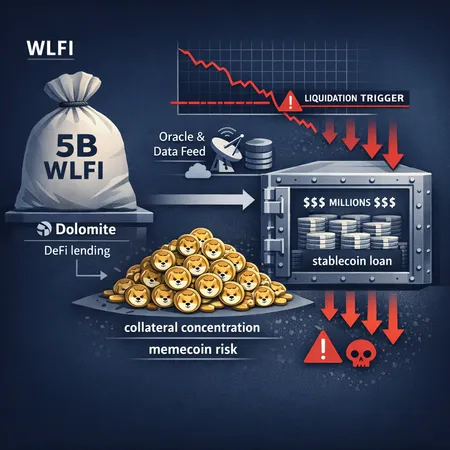
WLFI on Dolomite: Lessons on Collateral Concentration and Memecoin Risk

The WLFI loan on Dolomite exposed how concentrated, illiquid memecoin collateral can endanger lending pools and stablecoin borrowings. This article analyzes the incident, market reaction, and practical fixes for DeFi lending protocols.

Published at 2026-04-11 15:40:01
Canary Capital's PEPE ETF Filing: Institutionalizing Memecoins and What Comes Next – cover image
Canary Capital's PEPE ETF Filing: Institutionalizing Memecoins and What Comes Next

Canary Capital’s S‑1 for a spot PEPE ETF marks a turning point in how memecoins might be productized for institutional and retail markets. This article examines the filing’s specifics, SEC hurdles, custody and index mechanics, liquidity implications, and scenarios for memecoin ETF proliferation.

Published at 2026-04-09 13:30:46