PeerDAS
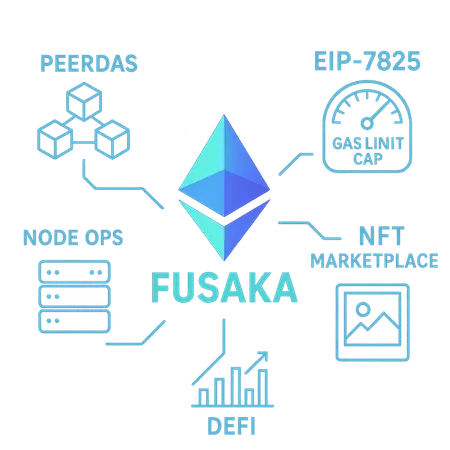
Fusaka (Fulu‑Osaka) and EIP 7825 introduce Peer Data Availability Sampling and gas‑limit mechanics that proponents say unlock large scaling gains. This explainer walks Ethereum devs, rollup teams and NFT/DeFi builders through the technical changes, expected market impact, and an operational checklist for post‑fork readiness.

Fusaka's PeerDAS hard fork multiplies Ethereum's blob capacity by roughly eight times, changing the data availability landscape and opening new L2 and large-data dApp possibilities. This article breaks down the technical changes, short‑term performance impacts, security tradeoffs, and concrete preparation steps for validators, node operators, and protocol teams.

The Ethereum Fusaka upgrade introduces significant enhancements in scalability and security, further boosted by the integration of PeerDAS technology. These improvements aim to optimize blockchain performance, making transactions faster and more reliable. Platforms like Bitlet.app benefit from these advancements, ensuring users experience efficient crypto services.

Discover how the upcoming Ethereum Fusaka upgrade and the integration of PeerDAS technology will significantly enhance validator efficiency and reduce network costs, paving the way for more scalable and cost-effective blockchain operations.
DeFi
All DeFi postsBitcoin
All Bitcoin postsDerivatives
All Derivatives posts- Uncovering XRP’s Hidden Bull Case: Futures Surge, Ichimoku Flip, Reserve Decline and Institutional Signals
- Privacy‑Coin Resurgence: Why ZEC, XMR, DASH and DCR Ripped Higher in April 2026 — Risks & Trade Rules
- XRP’s Quiet Buildup: Do Derivatives, On‑Chain Flows and Ledger Resilience Signal a Real Breakout?