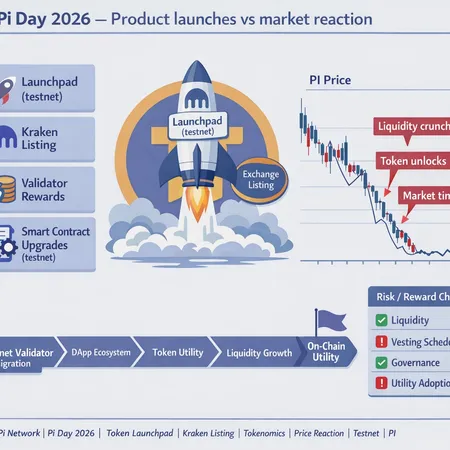
Pi Network's Tightrope: Rally Above $0.16 vs. Growing Pioneer Backlash
Summary
Executive snapshot
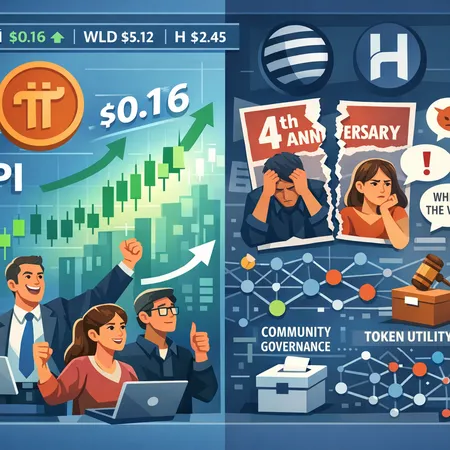
Pi Network just delivered a classic crypto plot twist: a price rally that pushed PI above $0.16 and a developer roadmap that reframes the project as a competitor to biometric ID plays like Worldcoin (WLD) and Humanity Protocol (H). At the same time, a growing pioneer backlash — crystallized after a controversial anniversary post — is spotlighting community governance and execution risk. This article unpacks the rally, the Core Team’s strategic pivot, the signals of community dissatisfaction, and practical takeaways for traders and protocol researchers.
The recent PI price rally: what happened and why it mattered
In mid‑week trading Pi Network experienced a sharp weekly rally that took PI above $0.16, a psychological level that pulled fresh attention from retail traders and speculators. CoinGape reported on the move and noted the price extension above that mark, which in crypto terms often fuels momentum as algorithmic and retail flows chase breakouts CoinGape.
Why this rally matters beyond headlines: short-term breakouts can mask fundamental ambiguity. With many retail participants still discovering PI, price action often reflects narrative momentum — coverage, listings, social buzz — rather than finished product milestones. That makes the current rally informative about sentiment and demand, not proof of product delivery or durable token utility.
Core Team’s announced strategy: aiming at Worldcoin and Humanity Protocol
The Core Team has publicly signaled an intent to compete in the Web3 identity/biometric space, casting Pi as an alternative to projects like Worldcoin (WLD) and the Humanity Protocol (H). Crypto.news summarized the team’s positioning and emphasized that the announcement shifts debate from a pure ‘social token’ story to one about identity-layer utility and real‑world on‑ramps Crypto.news.
What competing with Worldcoin/Humanity Protocol implies:
- Focus on identity attestation and sybil-resistance: Pi would need reliable, privacy-preserving ways to prove unique human participants at scale.
- Biometric and UX trade-offs: mechanisms that increase trust (e.g., face scans) often raise privacy and regulatory scrutiny. Achieving adoption without alienating privacy‑minded pioneers is a design and comms challenge.
- Token utility reframe: PI could gain more concrete utility if it becomes an access token or reputational layer for gated apps, but that requires strong developer adoption and measurable on‑chain integrations.
This strategic pivot raises expectations. Competing with WLD and H is not simply a marketing change — it requires engineering a robust identity stack, legal preparation for biometric data handling, and convincing third‑party apps to treat PI as a credential or access layer.
Signs of pioneer dissatisfaction: on‑chain cues and community sentiment
Price rallies tell one story; community channels tell another. In the weeks after a Core Team anniversary post, a backlash from early pioneers surfaced: long threads of criticism, questions about transparency, and calls for clearer governance. CryptoPotato reported the anniversary post was met with fury from some pioneers, highlighting disappointment and governance anxieties that can transfer into execution risk CryptoPotato.
On‑chain and sentiment indicators to watch:
- Retention and activation metrics: are early pioneers still staking, transacting, or using the network’s onboarding? Weak activity suggests token holders are disengaging even if prices spike.
- Distribution concentration: large holdings controlled by a small group or the Core Team can amplify governance risk if pioneers fear centralization.
- Social volume vs. net sentiment: elevated mentions with negative sentiment flag reputational risk; that’s often visible on Telegram, Discord, and Twitter.
Pioneer dissatisfaction matters because community trust is a key input for identity projects: if early users resist biometric pivots or perceive unfair token economics, adoption and third‑party integrations slow down, undermining the token utility story.
Divergent price reports: rallies, plunges, and media framing
Across crypto outlets, PI’s price action has been framed in conflicting ways: eye-catching rallies above $0.16 on some sites, and sharp corrections or “plunge” headlines on others. Part of the divergence comes from timeframes (intraday pump vs longer‑term retrace), and part from narrative lenses: some outlets emphasize bullish metrics, others flag the governance concerns and regulatory uncertainty.
Why these divergent reports matter for traders and researchers:
- Timeframe selection changes the headline: a weekly close above $0.16 looks different from a 24‑hour 30% retracement.
- Narrative bias: outlets that prioritize market excitement will underplay governance friction; investigative or community‑focused outlets will highlight pioneer anger and execution risk.
- Liquidity and spreads: PI listings and exchange availability influence how cleanly the market can price fundamentals. Thin liquidity magnifies moves.
For traders, reconciling these reports means looking beyond headlines: examine order books, wallet concentration, and how quickly price reacts to governance or roadmap news.
Practical takeaways for speculators and users
Whether you trade PI or study identity tokens, treat the present moment as a high‑variance experiment. Below are concrete, actionable guidelines.
For speculators:
- Manage position sizing: avoid large leveraged positions on PI until clearer governance and product milestones are delivered. Volatility driven by narrative is riskier than volatility driven by fundamentals.
- Watch liquidity and slippage: run small test orders to measure spreads on exchanges and P2P platforms (tracking P2P flows on Bitlet.app can help surface retail demand and spreads). Do not assume deep liquidity.
- Timeframe discipline: short‑term traders can profit from momentum, but set strict stop levels. Swing and position traders should tie exposures to roadmap deliverables, not just sentiment.
For protocol researchers and prospective users:
- Prioritize governance signals: look for clear token allocation disclosures, voting mechanics, and an independent dispute or review process. Projects that pivot into biometric ID need extra transparency.
- Assess token utility realistically: does PI have immediate on‑chain uses (fees, access control, staking) or is the utility primarily aspirational? Real integrations with dApps or identity providers matter more than whitepaper promises.
- Monitor legal and privacy posture: biometric and identity work invites regulation. Check how the Core Team plans to store/process identity data and whether designs are privacy‑preserving.
Across both camps, keep a running checklist: roadmap milestones achieved, third‑party integrations announced, on‑chain activity levels, and the tenor of core community channels. Those are better leading indicators than a single price threshold.
Balancing narrative and execution risk: a final assessment
Pi Network’s rally above $0.16 is a reminder that capital flows quickly into attractive narratives. The Core Team’s competitive posture relative to Worldcoin and Humanity Protocol reframes PI’s value proposition toward identity utility — a potentially higher‑value but higher‑risk path. Simultaneously, pioneer backlash and governance complaints are not peripheral; they strike at the project's social layer, which is essential for any identity-first protocol.
In short: the rally tests market appetite, but the pathway to sustainable token utility runs through execution and community trust. Traders should treat price moves as signals, not certainties. Researchers should keep governance and privacy readiness at the top of their checklist.
Conclusion
Pi Network sits at a crossroads. The market rewarded a narrative with a rally, but the Core Team’s pivot toward competing with projects like Worldcoin and Humanity Protocol raises the bar for engineering, legal compliance, and community alignment. Pioneer dissatisfaction is a live variable and a meaningful source of execution risk. Combine careful risk management, close monitoring of governance signals, and realistic expectations about token utility when forming views on PI.
Sources
- CoinGape — Pi Network price extended weekly rally and stayed above $0.16: https://coingape.com/markets/pi-network-price-prediction-how-high-can-pi-coin-go/
- Crypto.News — Analysis of Pi Network strategy versus Worldcoin/Humanity Protocol and price pressure context: https://crypto.news/pi-network-price-analysis-as-it-seeks-to-compete-with-worldcoin-humanity-protocol/
- CryptoPotato — Report on community backlash to Core Team anniversary post and pioneer dissatisfaction: https://cryptopotato.com/is-the-pi-network-dream-over-core-teams-anniversary-post-met-with-fury-from-pioneers/
For broader context on token behavior and market mechanics, compare PI’s narrative dynamics to other Web3 identity conversations and to how sentiment-driven rallies behaved during past identity token cycles. For many traders, Bitcoin still sets macro risk appetite, and on‑chain activity on DeFi rails often signals whether a token’s utility is being realized beyond speculative flows.