XRP's Rapid Recovery: $11B Inflows, Liquidity Dynamics, and the Payments Narrative
Summary
Executive snapshot
XRP’s rapid recovery this cycle arrived with an unusually large on‑chain liquidity event: on‑chain and flow analysis documented over $11 billion returning to XRP in a single day. That magnitude matters — it changes order‑book depth, forces margin clearings, and can flip narrative momentum from risk‑off to risk‑on almost overnight. This article unpacks what those inflows mean for liquidity and market structure, how Ripple is pitching XRP as payments infrastructure, the technical backdrop for the rebound, and investor takeaways for product and portfolio teams tracking token flows.
What the $11B inflows tell us about liquidity and market structure
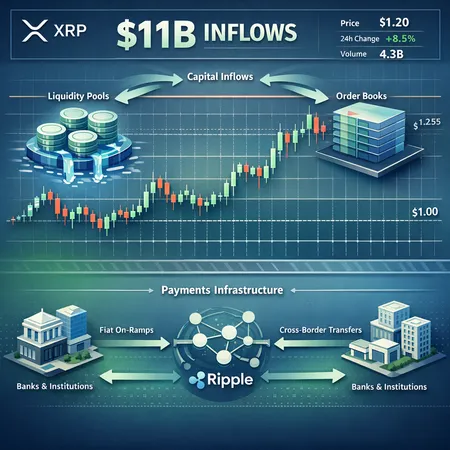
On‑chain trackers captured a concentrated surge of flows into XRP wallets and exchange liquidity pools. When a token absorbs inflows of that scale it affects the following mechanics:
- Order‑book depth expands — larger bids across exchanges reduce slippage for sizable market buys, enabling institutions and whales to execute without moving price as much as before the inflow.
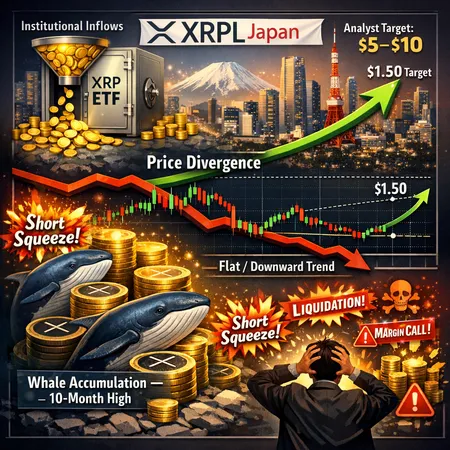
- Leverage and liquidity cascade — heavy inflows often coincide with forced deleveraging. As some short positions are squeezed, liquidations accelerate buying pressure, amplifying the rebound as observed in recent coverage.
- Concentration risk and venue routing — if inflows sit primarily on a small subset of exchanges, visible liquidity can mask fragility; conversely, broad distribution across venues improves resilience.
Finbold’s flow analysis framed the event as a mass return of capital into XRP, a signal that liquidity providers and large holders were redeploying capital into the token post‑crash. That redeployment both provides liquidity (bid liquidity) and reveals it (order books that looked thin are now populated), which matters for market structure: market making becomes profitable again, and spreads tighten temporarily.
Ripple’s narrative: XRP as a backbone for real‑world payments
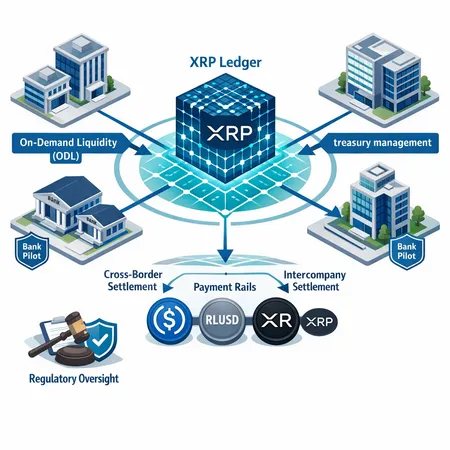
In parallel with the on‑chain action, senior Ripple executives have been vocal about positioning XRP as payments infrastructure rather than just a tradable token. Public commentary has emphasized the token’s purpose in cross‑border liquidity and rails for real‑world finance, a framing that seeks to move the conversation from speculative narratives to utility and settlement.
That messaging is strategic: institutional adoption depends not just on price but on integration — custody solutions, cleared settlement mechanisms, compliance tooling, and predictable liquidity corridors. U.Today captured remarks from Ripple’s leadership that point toward a deliberate shift to emphasize infrastructure use cases for XRP, and that narrative is now a part of investor conversations.
But narrative alone doesn’t equal product adoption. Real‑world rails require partnerships with banks, regulated custodians, and interoperable on‑ramps. Product teams at exchanges and services like Bitlet.app will be watching integration signals — new corridor launches, custody listings, and volume from treasury flows — as the practical tests for whether XRP is transitioning from tradeable asset to settlement rail.
Technical context: what drove the rebound and key levels to watch
The short‑term price action looks classic: an aggressive deleveraging wave cleared crowded shorts, funding rates normalized, and buyers stepped in to absorb the forced selling. Coverage at Cryptopolitan noted a roughly 12% recovery in the immediate aftermath, while other market summaries cited larger spikes as short squeezes compounded in a market‑wide bounce. Coinpaper highlighted how liquidations across derivatives amplified moves in XRP and other altcoins.
From a technical risk management standpoint, traders and product managers should monitor a handful of metrics rather than relying on a single price target:
- Immediate support — watch recent liquidation lows and the intraday accumulation zone. If those levels hold after the inflow event, buyers have likely internalized the fresh liquidity.
- Short‑term resistance — look to the prior swing highs and congestion bands where supply previously overwhelmed demand. Breaks above these zones often signal renewed trend participation.
- Trend filters — moving averages (50‑ and 200‑period) and RSI can confirm momentum; a cross of the shorter MA above the longer MA alongside rising on‑chain inflows strengthens a bullish thesis.
- Funding rates and open interest — falling funding rates after the rebound indicate reduced speculative heat; rising open interest with price appreciation suggests fresh leverage is returning.
Instead of precise dollar lines that vary by exchange and time, think in structural zones: the liquidation cluster (short‑term floor), the recent consolidation region (validation zone), and the multi‑month swing highs (major resistance). Monitoring exchange order‑book depth and stablecoin inflows can give earlier warnings of structural moves.
Is this rotation transient or the start of institutional on‑ramps?
Separate the mechanics from the thesis. The mechanics (inflows, liquidations, funding rate resets) can produce dramatic, but often transient, price moves. The thesis (XRP as payments infrastructure) is longer horizon and requires more than market flows: it needs products, counterparty adoption, custody, and regulatory clarity.
Three paths forward to consider:
- Transient rotation — if inflows were primarily speculative or short covering, markets may cool once funding normalizes and no new real‑world volume arrives. Price could retest support bands as liquidity rebalances.
- Catalyst‑driven adoption — if Ripple converts narrative into partnerships, custody listings, and transactional volume, repeat inflows could become recurring as institutions rotate treasury or settlement flows into XRP corridors.
- Hybrid outcome — episodic speculative spikes punctuated by gradual infrastructure wins. That would keep volatility elevated but gradually deepen structural liquidity.
For investors and product managers tracking this story, practical signals to watch are:
- Recurring exchange and custody inflows (not one‑day spikes) that indicate programmatic institutional activity.
- Volume on payments rails — actual transaction flows tied to cross‑border settlement or B2B corridors, not just spot trading volumes.
- Regulatory and custody milestones — formal custody products and clear compliance frameworks which reduce counterparty risk for institutions.
Coinpaper’s analysis of market mechanics and Cryptopolitan’s coverage of the liquidations give clues that the recent rally had a strong technical component. To flip to an infrastructure story, Ripple must show sticky demand from real payment flows rather than episodic speculative demand.
Practical takeaways for investors and product teams
- Treat the $11B inflow day as a structural liquidity event that temporarily improves execution for large orders — but don’t assume permanence without repeatable on‑chain volume.
- Integrate flow monitoring into decision models: track exchange inflows/outflows, stablecoin corridors, funding rates, and custody listings as leading indicators of institutional activity.
- Consider staged exposure: use smaller initial allocations and scale into confirmed infrastructure milestones (custody, announced corridor adoption, recurring settlement volume).
- Product teams should instrument rails: build metrics to distinguish spot trading volume from settlement‑grade transaction flow and collaborate with custodians to lower operational friction.
Narrative matters, but so do measurable rails. Ripple’s framing of XRP as payments infrastructure is a necessary step toward institutional adoption, and the recent inflows show there’s capital willing to redeploy into XRP when liquidity presents itself. The question for investors is whether those inflows repeat as a function of real‑world payments volume — and that’s what product teams and market watchers should be measuring this quarter.
For many traders and product managers, watching on‑chain liquidity and exchange routing in real time is now as important as macro views on BTC or broader crypto markets; after a day like this, execution strategy and custody readiness will decide who benefits the most.
Sources
- Over $11 billion flows into XRP in a day after massive crash — Finbold
- The foundation is set—Ripple exec signals XRP’s next wave is here — U.Today
- XRP recovers 12% in marketwide price rebound — Cryptopolitan
- Why crypto market up today: BTC hits 70K, XRP rockets 25% — Coinpaper
For deeper tracking, teams should correlate these flow signals with custody onboarding and corridor volume — product managers at platforms like Bitlet.app are already instrumenting these metrics as part of integration roadmaps. Also see ongoing coverage of XRP and infrastructure plays across the ecosystem such as DeFi for comparative flow dynamics.