Is the Recent BTC Liquidation Wave the Start of a Deeper Correction? A Trader’s Playbook

Summary
Executive snapshot
The past week in BTC clustered three liquidity shocks: a concentrated wave of liquidations exceeding $677M, large net outflows from spot Bitcoin ETFs totaling roughly $1.72B across five days, and a set of technical breakdowns that violated near‑term on‑chain supports. Those events interacted: thin spot liquidity and concentrated leverage created easy paths for price to move fast, while ETF sellers amplified the flow into the market. Below I dissect the signals that preceded the liquidation event, explain how ETF flows change the liquidity equation, identify key technical and on‑chain support levels to watch, and lay out a practical hedging and positioning playbook for intermediate traders and institutional allocators.
What signaled the liquidation wave before it happened
Market breakdowns rarely come from a single cause. In this episode, three measurable warning signs showed heightened systemic risk and helped set up the $677M+ liquidations reported by market analysts.
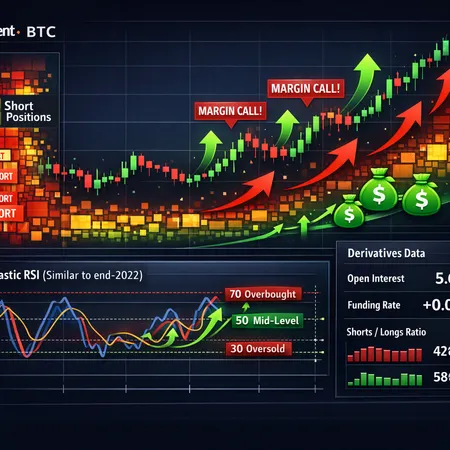
Concentrated leverage and stretched perpetual funding — When funding rates spike and large positions cluster near key price levels, one directional move can cascade. Exchanges and derivatives desks were carrying sizable open interest into the drop, which amplified stops and forced deleveraging. This dynamic was central to the post‑event analysis of the $677M liquidation cluster (see the detailed breakdown) analysis of the liquidations.
Order‑book thinning and single‑side liquidity gaps — The spot order book showed thinning bids at incremental price bands below recent lows. That means a relatively modest sell wave — whether from liquidations or ETF redemptions — could push price much further than normal because natural liquidity (resting limit bids) was sparse.
Clustered stop‑losses / behavioral risk concentration — On‑chain analysis and market microstructure indicators pointed to clustered stop placements just under widely watched intraday supports; once those areas broke, a cascade of automated exits and margin calls magnified the move. Ambcrypto’s postmortem highlights how these three warning signals combined to produce outsized liquidations.
Together, these signals explain why the market moved as it did: leverage and open interest set the bomb, thin spot liquidity provided little resistance, and clustered stops lit the fuse.
How $1.72B of ETF outflows increased fragility
Spot ETF flows matter for liquidity in two ways: they remove base spot liquidity and they change dealer balance sheets. The recent five‑day withdrawal of about $1.72B from spot Bitcoin ETFs is not just headline volume — it means sponsors or authorized participants sold spot BTC or redeemed with exchanges and custodians, removing bids that otherwise help absorb selling pressure. The reporting on ETF outflows captures that dynamic and the amplifying effect it had on the same timeframe as the liquidations spot ETF outflows report.
Operationally, when ETFs redeem: dealers may sell spot into the market to rebalance; arbitrage desks that usually provide a two‑way market can be net sellers; and market‑making inventory becomes constrained. The result is a thinner bid structure exactly when large derivative deleveraging needs to hit bids — a recipe for faster price deterioration.
This is why ETF flows are more than a headline: they are a liquidity amplifier. That doesn’t guarantee a multi‑month bear market, but it raises the odds of sharp, fast drawdowns while flows remain one‑sided.
Critical supports to watch — short, medium and long term
Price levels matter because they concentrate orders, stop placement and trader psychology. Below are the key areas to monitor, synthesizing on‑chain structure, order‑book behavior and technical levels highlighted in recent market commentary.
Short‑term (days–weeks): Watch the recent intraday lows and clustered bid bands around the under‑$90k area that acted as a psychological pivot during the drop. Coindesk’s guide to key levels flagged immediate supports and on‑chain bands traders should observe for short‑term stabilization key levels guide. If those intraday supports fail, expect elevated volatility and more aggressive stop cascades.
Intermediate (weeks–months): Look to larger realized price bands, longer timeframe VWAPs, and areas where long‑term holders increase accumulation. These zones tend to be where long‑dated buyers and institutions pause. The intermediate support is often where liquidity providers re‑enter and where derivatives desks are more willing to take the other side of trades.
Long‑term (months+): The 200‑week moving average and the long‑term realized price distribution are classic anchors for institutional allocators. These levels are where allocation committees and pension‑style buyers consider rebalancing. Keep in mind that long‑term technical supports are not precise floors — they are zones where risk/reward shifts in favor of accumulation for longer horizon players.
Combine these technical anchors with on‑chain metrics: exchange net flows, stablecoin lending balances, and realized concentration (where large holders’ cost bases sit). These metrics help answer whether a break is liquidity‑driven (order‑book) or conviction‑driven (capitulation to lower cost bases).
Why Ark Invest’s buy matters — narrative vs. mechanics
Institutional buys in the midst of drawdowns matter more for narrative than immediate liquidity. Ark Invest’s reported opportunistic purchase of roughly $21.5M in crypto company shares as Bitcoin slipped below $90,000 is a classic example: it signals that at least some allocators view the pullback as a buying opportunity and are willing to step in Ark Invest buy report.
Mechanically, $21.5M is small relative to daily spot volume and the size of derivative open interest. It will not by itself stop a liquidation cascade. But narrative effects matter: visible institutional buys can (1) re‑ignite risk‑on flows from other allocators, (2) anchor expectations that institutions remain interested at these levels, and (3) create asymmetric demand into dips. For allocators who measure crowd sentiment, that can be a cue to start scaling exposure — carefully.
So treat Ark’s buy as a signal of interest and conviction, not as a technical support or a guaranteed liquidity backstop.
Practical risk‑management and positioning strategies
What should intermediate traders and institutional allocators actually do when volatility spikes, liquidity thins and narrative signals diverge? Below are disciplined, evidence‑based approaches for derivatives and spot exposure.
For derivatives traders (perpetuals, futures, leverage users)
Cut leverage first, ask questions later. When the market shows the three warning signals described above, reduce maximum allowed leverage. For many intermediate traders, keeping leverage under 3x in a stressed environment lowers the probability of forced liquidation. Institutional prop desks should consider 1x–2x operational caps until liquidity normalizes.
Stagger exits and re‑entries. Avoid one‑off, market‑wide liquidations by breaking large positions into smaller, time‑weighted slices. Use TWAP/VWAP algorithms to avoid paying the spread you create when hitting a thin book.
Use options to buy insurance, not to speculate. Put spreads (buying a put and selling a lower strike put) or collars can provide downside protection while limiting premium cost. For example, a long spot holder wanting to maintain upside can buy puts to a defined delta rather than fully closing the position.
Be mindful of funding dynamics. In stressed moves, funding rates can oscillate wildly; manage funding exposure and consider cross‑exchange hedges if basis blowouts create arbitrage opportunities.
Avoid concentrated stop orders in crowded price bands. Market stops in thin order books are predictable and can be hunted. Use conditional limit orders with execution brackets when possible.
For spot allocators and institutional buyers
Scale into size via dollar‑cost averaging or tranches. Large allocations should be implemented across multiple fills and days, using limit orders and algorithmic execution to minimize market impact.
Allocate a tactical reserve for opportunistic accumulation. Narrative buys (like Ark’s) show some institutions will top up on weakness. Maintain a defined dry powder percentage (for example, 5–15% of target allocation) to act when liquidity and price dislocations present high expected value entries.
Hedge tail risk with liquid instruments. If you control a large spot book but worry about a deeper correction, consider hedging with listed futures or options. Collars let you retain upside while buying protection.
Monitor liquidity metrics, not just price. Exchange inflows/netflows, market‑maker inventory, and ETF redemption announcements are early warnings that liquidity could dry up further. Position size relative to the available bids at key levels should be a live risk parameter.
Audit counterparty and settlement risk. When executing large trades, use reputable custodians and counterparties; cheap liquidity that cuts corners can create operational blowups in stressed markets.
Execution playbook: sample tactics for the next 30–90 days
- If you are leveraged: reduce maximum leverage by at least half from normal sizing rules and remove concentrated directional exposure.
- If you are a spot allocator building a long‑term position: implement a tranche schedule and reserve dry powder for opportunistic buys; avoid one‑time market fills that will impact price.
- If you manage client allocations: communicate guardrails and potential drawdown scenarios; consider tactical hedges to cap short‑term downside while keeping long‑term exposure.
- For both sides: use limit orders and execution algorithms (TWAP/VWAP) to minimize market impact and avoid predictable stop areas.
Platforms such as Bitlet.app and other custody/execution venues can help by offering split execution strategies and staged allocations, but the most important edge is discipline in sizing and execution.
Final thoughts — narrative, mechanics and risk asymmetry
The recent cluster of liquidations, ETF outflows and technical breakdowns increased short‑term fragility. The liquidity mechanics — concentrated leverage into a thin book compounded by large ETF withdrawals — explain the speed and size of the move. Institutional signals like Ark Invest’s purchases are important for sentiment and longer‑term allocation decisions, but they do not substitute for prudent risk management in a market that can still be liquidity‑driven.
For intermediate traders and allocators, the practical response is straightforward: acknowledge the higher probability of sharp intraday moves, reduce concentrated leverage, stagger execution, and hedge tail risk with options or futures when necessary. Keep monitoring on‑chain liquidity metrics and ETF flows — these are the variables that will tell you whether this episode is a temporary liquidity shock or the start of something deeper.
Being prepared, sized correctly, and using disciplined execution will let you navigate the volatility while staying ready to increase exposure when risk/reward truly favors accumulation.
Sources
- Ambcrypto — Analysis of the $677M+ BTC liquidations and the warning signals: https://ambcrypto.com/bitcoin-677mln-liquidations-meet-these-3-signals-flashing-risk/
- Cointribune — Report on $1.72B pulled from spot Bitcoin ETFs over five days: https://www.cointribune.com/en/1-72b-pulled-from-bitcoin-etf-amid-fear-spike/?utm_source=snapi
- Coindesk — Key Bitcoin price levels to watch as downward pressure builds: https://www.coindesk.com/markets/2026/01/26/key-bitcoin-price-levels-to-watch-as-downward-pressure-builds
- Coindesk — Ark Invest bought $21.5M of crypto company shares as Bitcoin fell under $90,000: https://www.coindesk.com/markets/2026/01/26/ark-invest-bought-usd21-5-million-of-crypto-company-shares-as-bitcoin-fell-under-usd90-000
For background on liquidity execution and staged allocation features, see execution tools and custodian services available via Bitlet.app. Also monitor ongoing developments around Bitcoin and liquidity trends in broader DeFi markets as correlated flows can propagate across the ecosystem.