Monero’s Rally and the Privacy-Coin Crossroads: Momentum, Markets, and Regulatory Risk
Summary
Why XMR jumped: flow, liquidity and the privacy narrative
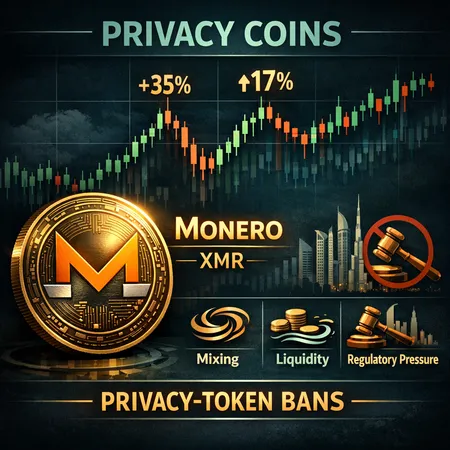
Monero’s recent multi-session moves — cited in market reports as spikes of roughly 35% in one swing and intraday moves near 17% in others — are not random. Short, concentrated bursts like these typically reflect three interacting drivers: concentrated buy flows, thin exchange liquidity, and a resurgent privacy narrative that pulls capital in quickly.
Market coverage that tracked the rallies noted sharp tops in daily gainer lists and strong, momentum-driven buying across sessions. For example, reporting on XMR’s moves highlighted both the scale of the jump and how quickly the price action unfolded, underscoring that these are flow-driven events as much as pure technical breakouts (CryptoPotato report). A deeper post-mortem pointed to concentrated bids and low order-book depth as culprits for outsized percentage moves (AMBCrypto analysis).
Liquidity and order-book dynamics
Privacy coins like XMR often trade with thinner order books than top-cap alts. When a relatively large buy hits tight liquidity, the price can gap higher before natural sellers emerge. That creates a cascade: momentum algos, retail FOMO and traders using cross-exchange arbitrage pile in, widening the move.
Two practical consequences:
- Slippage and execution risk increase — market orders move price significantly. Limit orders can be filled only partially.
- On-exchange indicators (volume spikes, widening bid-ask spreads) can mask off-exchange flows (OTC desks, P2P), making true liquidity hard to measure.
Narrative, timing and macro triggers
Narratives matter. Privacy coins periodically re-enter the spotlight due to geopolitical news, exchange actions, or regulatory chatter. Those narratives can amplify small technical breakouts into multi-session rallies, as capital that has been on the sidelines suddenly rotates in. In XMR’s case, both organic trader interest and short-term speculative positioning appear to have converged.
Longer macro cycles also matter: when BTC volatility compresses or makes a local top, money often seeks higher-beta altcoin plays. For many traders, Bitcoin still sets the cadence — but privacy tokens can detach temporarily when flow is concentrated.
Where privacy coins sit in the altcoin landscape
Privacy assets are structurally different from many layer-1s and DeFi tokens. Their utility—privacy—creates both unique demand and unique regulatory friction. As alts rotate, privacy coins may lead, lag or diverge depending on which of those forces dominates.
When markets favor narrative risk (high beta), privacy coins can outperform because the supply on exchanges is often limited and holders are less likely to sell. When markets prioritize regulatory safety or when major jurisdictions tighten rules, privacy coins tend to underperform or get repriced to include a regulatory premium.
Privacy tokens also have weaker listings depth on major centralized venues compared with mainstream altcoins. That means moves in either direction can be larger and quicker.
Relative performance and correlation
Empirically, privacy coins show variable correlation to general altcoin indices. On a neutral-to-bull market day they may rally with the broader speculative cohort; on risk-off days they may drop harder due to forced selling, delisting risk, or liquidity withdrawal. Traders often watch cross-market volumes and on-chain flows to gauge whether a rally is sustainable or purely transient.
For traders who follow sector rotations (e.g., DeFi, NFTs, memecoins), privacy coins require a different lens — be mindful of flow concentration and the ever-present regulatory overlay that can flip sentiment quickly. Platforms that track sector flows can help, and broader alt narratives (like DeFi yield changes) still bleed into privacy-token demand through broader market sentiment and capital allocation decisions (DeFi).
Technical indicators and structure traders care about
Technical analysis still matters in privacy markets — perhaps more so because thin liquidity makes clean price structure rarer. Traders commonly monitor the following:
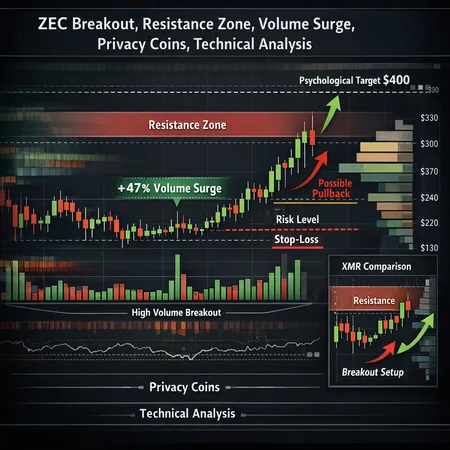
- Volume and Volume Profile: Confirm whether a breakout has real participation or is a narrow spike. Look for sustained upticks in exchange and P2P volume.
- VWAP and EMA ribbons: Short-term EMA crosses (8/21/50) for momentum entry; failures to reclaim key EMAs often signal exhaustion. VWAP helps gauge intraday fair value in illiquid markets.
- RSI & Momentum Divergences: Because moves can be violent, RSI can stay overbought longer; look for bearish divergences as early signs of exhaustion.
- Order Book Depth & Spread: Track depth at 1–5% price intervals and bid-ask changes — these tell you how much capital it takes to move price.
- On-chain indicators: For Monero, traditional on-chain transparency is limited by design, but trackers of exchange inflows/outflows and P2P volumes still give clues. Watch large withdrawals from exchanges as potential precursors to supply shocks.
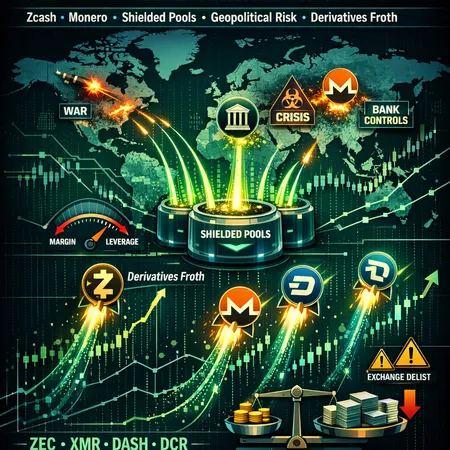
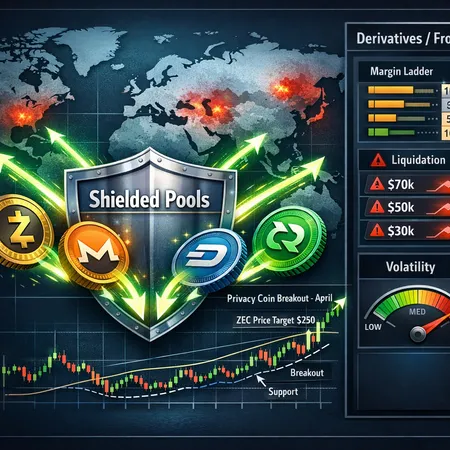
- Derivatives metrics: Where futures exist, open interest and funding rates matter. Sudden spikes in OI and positive funding can precede tops, especially if leverage is concentrated.
Combining these gives actionable setups: e.g., wait for a breakout with volume confirmation and reasonable order-book support; if funding is high and OI spikes, use smaller position sizes.
Regulatory pressure: Dubai’s ban and its likely market effects
Regulation is the single biggest exogenous risk for privacy assets. A recent policy shift in the UAE — Dubai’s ban on privacy tokens along with tighter stablecoin rules — underlines how jurisdictional policy can reshape market structure and liquidity (detailed reporting in CoinDesk’s article).
What this kind of policy change does in practical terms:
- Exchange delistings or restricted trading: Exchanges operating in or seeking to comply with Dubai/UAE rules may delist privacy tokens or restrict access for local users, reducing global visible liquidity.
- KYC-driven flow re-routing: Traders relying on centralized venues will be forced to use OTC desks, P2P markets, or noncustodial tunnels — all of which push volume off-exchange and make on-exchange metrics less representative.
- Pricing of regulatory risk: Markets price in higher expected enforcement costs and counterparty risk, which can both compress valuations and raise realized volatility.
Short-term, bans can paradoxically spark rallies: scarcity and fear of missing out can create a squeeze when buyers anticipate future delistings. But medium- to long-term, persistent restrictions typically reduce institutional participation and widen spreads.
How privacy tech and mixing strategies respond
Monero’s privacy is built in at the protocol level — ring signatures, RingCT and stealth addresses — which behave differently from tokenized “privacy” layers or mixers on transparent chains. That distinction matters: a ban on "privacy tokens" can be interpreted narrowly or broadly by exchanges and regulators, and uncertainty about which assets are affected increases risk.
If regulators clamp down, we can expect a few likely behavioral shifts:
- More P2P and OTC trading: Liquidity that once sat on exchanges moves to private channels.
- Greater use of protocol-native privacy (e.g., Monero) vs mixers: Native privacy coins may see increased demand from users seeking censorship resistance, while mixer services on transparent chains may become higher-profile targets.
- Increased operational risk for custodians and relays: Service providers will reassess compliance, potentially de-listing or suspending services tied to privacy features.
These shifts make market signals noisier and raise execution and custody complexities for traders.
Practical risk controls and a trader’s playbook
Balanced exposure to privacy tokens requires technical conviction plus operational and regulatory contingency planning. Below is a compact, practical playbook:
- Position sizing: limit any single privacy-token allocation to a fraction of your altcoin risk budget. Treat these as higher-idiosyncratic-risk bets.
- Use limit orders and staggered entry/exit: in thin markets, market orders can blow out your price. Stagger entries across multiple fills to reduce slippage.
- Predefine stop-loss rules and scenarios: use percentage stops and scenario stops tied to on-chain or exchange events (e.g., sudden exchange withdrawal spikes or delisting rumors).
- Monitor derivatives risk: if futures exist, watch open interest and funding; heavy leverage increases tail risk.
- Diversify custody: if you’re long for the long term, consider cold storage for coins you truly intend to HODL, and be aware of jurisdictional custody restrictions.
- Know your counterparties: increased OTC and P2P flows mean counterparty screening is vital. Use reputable desks and platforms with clear compliance/settlement tracks.
- Hedging: where possible, hedge tail risk with inverse exposure (short related alts or use options/futures) sized to your downside tolerance.
- Stay legally informed: regulatory shifts can happen fast. Keep a compliance checklist for exchanges and jurisdictions you or your brokers use.
Platforms and services can help with execution and custody — include such options in your contingency planning (for example, Bitlet.app is one of many tools traders may use to manage crypto flows carefully), but don’t rely on a single provider.
What to watch next: a short checklist for traders
- Exchange listings/delistings and official guidance from major centralized venues.
- Sudden surges in exchange withdrawals or large-deposit clustering (possible OTC load-in).
- Derivatives metrics: OI, funding spikes, liquidation cascades.
- Newsflow around jurisdictional policy (new bans or clarifying guidance).
- Volume confirmation for any breakout: sustainable rallies need follow-through across venues, not only a single exchange.
Final take: balancing upside and regulatory tail risk
Monero’s recent spikes are a concentrated reminder of how privacy coins live at the intersection of market microstructure and public policy. They can produce fast, outsized gains when flows and narratives align — but that same profile creates acute regulatory vulnerability and execution risk.
For traders and privacy-focused investors the correct posture is pragmatic: acknowledge the upside potential, but trade with position sizing, defined downside plans and contingency routes for custody and liquidity. Keep an eye on policy shifts like Dubai’s ban; they don’t necessarily kill demand, but they do change where demand lives and how easily it can be measured.
Sources