Solana Mobile’s SKR Token Launch: Product and Ecosystem Playbook for Mobile‑First Onboarding
Published at 2026-01-08 16:15:24
Solana Mobile’s SKR Token Launch: Product and Ecosystem Playbook for Mobile‑First Onboarding – cover image

Summary

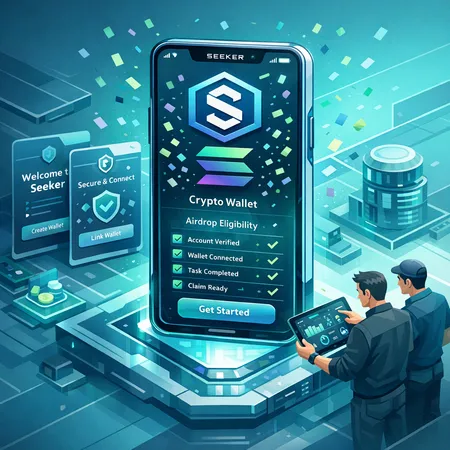
Solana Mobile’s SKR token is designed to act as both an economic layer and coordination mechanism for the Seeker smartphone, with an airdrop that targets early device interactions and ecosystem participation. The launch highlights how device-native tokens can smooth onboarding, bootstrap network effects, and create new monetization vectors for developers. Compared with initiatives like WalletConnect Pay and Wirex+Tron, SKR reflects a broader trend toward native mobile crypto stacks that combine hardware, UX, and on‑chain rails. Product managers should consider explicit incentive paths, clear UX for wallet setup, and measured supply mechanics to align mobile users with on‑chain activity and developer rewards.
content":"## What SKR aims to be: economic layer for a device-first stack\nSolana Mobile’s SKR token (scheduled for Jan 21) is being pitched as more than a loyalty point: it’s an explicit economic and coordination layer for the **Seeker phone** and the apps that run on it. The basic product thesis is straightforward — attach a native token to a mobile device that both rewards user behaviors and makes certain on‑device flows frictionless (e.g., payments, content unlocks, and protocol discovery). For many builders, [Solana](/en/blog/Solana) remains the primary L1 to optimize for low‑fee, high‑throughput mobile experiences, and SKR is a concrete experiment at the intersection of hardware, UX, and token economics.\n\nThe launch also follows a pattern: projects increasingly try to marry *device-level UX* with *on‑chain incentives* to accelerate adoption. That combination matters because a smartphone is the single largest user touchpoint for mainstream onboarding. Mentioning Bitlet.app here is relevant: merchant and P2P flows that are mobile‑first benefit from tighter integrations between wallets, payment rails, and incentives.\n\n## SKR airdrop mechanics: who gets what (and why it matters)\nThe public announcement outlines eligibility for an SKR airdrop tied to Seeker users and other qualifying on‑chain behaviors. In practice, that means: early device interactions, certain wallet activity, and possibly cross‑protocol criteria will determine allocation. The airdrop mechanics matter for three reasons: they set expectations, determine initial token distribution to power network effects, and influence short‑term token sell pressure.\n\nKey elements product teams should note about airdrop mechanics:\n- **Eligibility breadth vs. depth:** Broader eligibility (many wallets/devices) accelerates awareness but dilutes per‑user rewards. Narrow, behavior‑based criteria reward valuable actions but limit viral reach.\n- **Action-based vesting:** Requiring actions (e.g., staking SKR, using device features) or time‑based vesting reduces immediate sell pressure and aligns long‑term retention.\n- **On‑device proofs:** Devices can emit verifiable signals that prove Seeker usage without exposing private keys, enabling more precise provenance for airdrops.\n\nSolana Mobile’s announcement clarifies a Jan. 21 launch and explains which Seeker users are eligible; project teams should review those eligibility bands to infer how the team balances reach and retention ([announcement](https://crypto.news/solana-mobile-sets-jan-21-launch-date-for-skr-token-seeker-users-eligible-for-aidrop/)).\n\n## How mobile‑first tokens change onboarding dynamics\nTraditional onboarding funnels—install wallet, fund wallet, sign transaction—often lose users at each step. A mobile‑first token tied to a device can streamline that funnel by:\n- Lowering cognitive load: tokens preloaded or discoverable on device reduce the need for early funding.\n- Offering contextual incentives: in‑app rewards for first transactions, referrals, or app trials nudge users to act.\n- Embedding identity without custodial tradeoffs: device signals + on‑chain attestations can help apps personalize experiences while keeping custody with users.\n\nThis isn’t theoretical. The industry is building adjacent UX and payment rails to make wallet payments feel native. WalletConnect’s 2026 push to mainstream wallet payments is a good reference point—its emphasis is on UX primitives that make wallet payments as frictionless as card flows, which complements the device‑native approach of SKR ([analysis of WalletConnect Pay mainstreaming](https://en.cryptonomist.ch/2026/01/08/walletconnect-pay-mainstream-2026/)).\n\nFrom a product POV, mobile‑first tokens allow you to design incentives *around* common mobile behaviors (app installs, notifications, camera/GPS triggers), not around the contrived step of “please deposit crypto to use this app.” That reworks retention mechanics: rewards for repeated on‑device value creation (sharing, creating, transacting) rather than one‑time onboarding bounties.\n\n## Likely impact on SOL L1 activity and developer incentives\nAn L1 like SOL benefits from devices that funnel consistent transaction volume and developer interest: more dapps, more micro‑transactions, more composability. Expect the SKR launch to have the following effects on SOL activity:\n- **Short to medium term tx volume uptick:** airdrop claims, on‑device payments, and discovery flows will create bursts of activity.\n- **New revenue/opportunity signals for builders:** because mobile users behave differently (high frequency, low value), developers may prioritize light‑weight payment rails and UX primitives optimized for micro‑interactions.\n- **Redistribution of attention within the ecosystem:** teams building mobile SDKs, device integrations, and UX tooling gain higher value.\n\nDeveloper incentives will shift in two ways. First, economic: SKR rewards can be routed to developers (grants, bounties, revenue‑share) to seed mobile first dapps. Second, product: builders must optimize for *household UX*—fast sign‑in, single‑tap payment confirmations, and meaningful microrewards. If the SKR token has on‑chain utility (e.g., staking for priority access, gas discounts, or governance), it creates a tighter alignment between app usage and chain economic security.\n\nHowever, caution is warranted. A poorly designed token launch can lead to concentrated ownership, speculative sell pressure, and short‑lived activity spikes. Thoughtful vesting, usage‑linked incentives, and clear developer allocations mitigate these risks.\n\n## SKR in context: mobile payment and on‑chain rails beyond Solana\nSKR isn’t emerging in a vacuum. Several parallel initiatives show that the industry is converging on *native mobile crypto stacks* and on‑chain payment rails:\n- WalletConnect is explicitly targeting mainstreaming wallet‑based payments in 2026, focusing on UX primitives that reduce friction between merchants and wallets ([WalletConnect Pay coverage](https://en.cryptonomist.ch/2026/01/08/walletconnect-pay-mainstream-2026/)).\n- Wirex and Tron announced a fully on‑chain payment infrastructure, illustrating how payments, merchant rails, and tokenized rails can be combined to power everyday payments ([Wirex+Tron launch](https://www.altcoinbuzz.io/cryptocurrency-news/wirex-and-tron-launch-fully-on-chain-payment-infrastructure/)).\n- Even state actors are exploring chain‑native stable rails: Wyoming’s FRNT stablecoin on Solana demonstrates how public‑sector issuance can coexist with consumer mobile flows on the same L1 ([Wyoming FRNT issuance](https://thenewscrypto.com/wyoming-launches-state-backed-stablecoin-frnt-on-solana-network/?utm_source=snapi)).\n\nTogether these examples indicate a layered trend: better mobile UX (WalletConnect), merchant and payment infrastructure (Wirex+Tron), and rails for low‑volatility settlement (state or fiat‑backed stablecoins) are combining to make mobile crypto usable in everyday contexts. SKR fits into that stack as a device‑native coordination token that can accelerate discovery and retention.\n\n## Product playbook: practical recommendations for PMs and ecosystem builders\nIf you are designing a token or integrating SKR into your product, consider these tactical steps:\n1. Define value capture and flow: specify exactly what SKR is redeemable for (discounts, access, staking benefits) and ensure on‑device UX makes redemption trivial.\n2. Design eligibility around *repeatable* behaviors: reward sequences (first 3 payments, 10 daily opens) more than single actions to drive retention.\n3. Implement progressive vesting: front‑load small rewards, with larger claims unlocked by continued usage to reduce sell pressure.\n4. Provide developer primitives: SDKs, event hooks, and clear on‑chain APIs let builders rapidly integrate SKR into payments, content gating, and social features.\n5. Monitor SOL L1 economics: expect increased micro‑txs; consider batching, meta‑tx designs, or gas‑subsidy models.\n6. Communicate allocation and governance transparently: token distribution narratives shape community trust and developer participation.\n\nA focused implementation detail: make it simple for users to move from a trial token balance to using SOL for gas through in‑app swap rails or fiat onramps. This hybrid flow reduces drop‑off and channels activity back to the L1.\n\n## Measuring success: KPIs and risk signals\nGood metrics for SKR‑powered initiatives include:\n- Retention cohorts (Day‑7, Day‑30) for Seeker users versus control groups\n- Transaction frequency per active device (micro‑txs/day) and average tx value\n- Developer adoption (number of SDK integrations, dapps using SKR primitives)\n- Token velocity and on‑chain staking rates (how much SKR is locked vs. transacted)\n- Secondary market behavior (sell pressure, exchange listings) as a risk indicator\n\nRed flags: explosive but unsustained tx volume, highly concentrated token ownership, or rapid delisting on major venues. These suggest the launch stimulated speculative noise rather than genuine product‑market fit.\n\n## Conclusion: SKR as a strategic experiment for mobile crypto stacks\nSolana Mobile’s SKR launch is a valuable case study for product teams: it tests whether a device‑native token can convert mobile attention into sustained on‑chain activity and developer momentum. The airdrop mechanics and eligibility design will determine whether SKR is a *growth* lever or a short‑lived headline.\n\nViewed alongside WalletConnect’s UX push, Wirex+Tron’s payment infrastructure, and Wyoming’s FRNT stablecoin on Solana, SKR looks like part of an industry pivot to **native mobile crypto stacks** that combine UX, payments, and on‑chain settlement. For PMs and builders, the immediate tasks are clear: design clear incentive pathways, build simple SDKs for integration, and measure retention rather than raw signup counts.\n\nFor teams experimenting with mobile tokens, treat SKR as both inspiration and a cautionary example—aim for long‑term alignment over short‑term distribution spikes.\n\n### Sources\n- Solana Mobile SKR launch announcement: https://crypto.news/solana-mobile-sets-jan-21-launch-date-for-skr-token-seeker-users-eligible-for-aidrop/\n- WalletConnect Pay mainstreaming analysis: https://en.cryptonomist.ch/2026/01/08/walletconnect-pay-mainstream-2026/\n- Wirex + Tron on‑chain payments: https://www.altcoinbuzz.io/cryptocurrency-news/wirex-and-tron-launch-fully-on-chain-payment-infrastructure/\n- Wyoming FRNT on Solana coverage: https://thenewscrypto.com/wyoming-launches-state-backed-stablecoin-frnt-on-solana-network/?utm_source=snapi\n"}】

What SKR aims to be: economic layer for a device-first stack

Solana Mobile’s SKR token (scheduled for Jan 21) is being pitched as more than a loyalty point: it’s an explicit economic and coordination layer for the Seeker phone and the apps that run on it. The basic product thesis is straightforward — attach a native token to a mobile device that both rewards user behaviors and makes certain on‑device flows frictionless (e.g., payments, content unlocks, and protocol discovery). For many builders, Solana remains the primary L1 to optimize for low‑fee, high‑throughput mobile experiences, and SKR is a concrete experiment at the intersection of hardware, UX, and token economics.

The launch also follows a pattern: projects increasingly try to marry device-level UX with on‑chain incentives to accelerate adoption. That combination matters because a smartphone is the single largest user touchpoint for mainstream onboarding. Mentioning Bitlet.app here is relevant: merchant and P2P flows that are mobile‑first benefit from tighter integrations between wallets, payment rails, and incentives.

SKR airdrop mechanics: who gets what (and why it matters)

The public announcement outlines eligibility for an SKR airdrop tied to Seeker users and other qualifying on‑chain behaviors. In practice, that means: early device interactions, certain wallet activity, and possibly cross‑protocol criteria will determine allocation. The airdrop mechanics matter for three reasons: they set expectations, determine initial token distribution to power network effects, and influence short‑term token sell pressure.

Key elements product teams should note about airdrop mechanics:

  • Eligibility breadth vs. depth: Broader eligibility (many wallets/devices) accelerates awareness but dilutes per‑user rewards. Narrow, behavior‑based criteria reward valuable actions but limit viral reach.
  • Action-based vesting: Requiring actions (e.g., staking SKR, using device features) or time‑based vesting reduces immediate sell pressure and aligns long‑term retention.
  • On‑device proofs: Devices can emit verifiable signals that prove Seeker usage without exposing private keys, enabling more precise provenance for airdrops.

Solana Mobile’s announcement clarifies a Jan. 21 launch and explains which Seeker users are eligible; project teams should review those eligibility bands to infer how the team balances reach and retention (announcement).

How mobile‑first tokens change onboarding dynamics

Traditional onboarding funnels—install wallet, fund wallet, sign transaction—often lose users at each step. A mobile‑first token tied to a device can streamline that funnel by:

  • Lowering cognitive load: tokens preloaded or discoverable on device reduce the need for early funding.
  • Offering contextual incentives: in‑app rewards for first transactions, referrals, or app trials nudge users to act.
  • Embedding identity without custodial tradeoffs: device signals + on‑chain attestations can help apps personalize experiences while keeping custody with users.

This isn’t theoretical. The industry is building adjacent UX and payment rails to make wallet payments feel native. WalletConnect’s 2026 push to mainstream wallet payments is a good reference point—its emphasis is on UX primitives that make wallet payments as frictionless as card flows, which complements the device‑native approach of SKR (WalletConnect Pay coverage).

From a product POV, mobile‑first tokens allow you to design incentives around common mobile behaviors (app installs, notifications, camera/GPS triggers), not around the contrived step of “please deposit crypto to use this app.” That reworks retention mechanics: rewards for repeated on‑device value creation (sharing, creating, transacting) rather than one‑time onboarding bounties.

Likely impact on SOL L1 activity and developer incentives

An L1 like SOL benefits from devices that funnel consistent transaction volume and developer interest: more dapps, more micro‑transactions, more composability. Expect the SKR launch to have the following effects on SOL activity:

  • Short to medium term tx volume uptick: airdrop claims, on‑device payments, and discovery flows will create bursts of activity.
  • New revenue/opportunity signals for builders: because mobile users behave differently (high frequency, low value), developers may prioritize light‑weight payment rails and UX primitives optimized for micro‑interactions.
  • Redistribution of attention within the ecosystem: teams building mobile SDKs, device integrations, and UX tooling gain higher value.

Developer incentives will shift in two ways. First, economic: SKR rewards can be routed to developers (grants, bounties, revenue‑share) to seed mobile first dapps. Second, product: builders must optimize for household UX—fast sign‑in, single‑tap payment confirmations, and meaningful microrewards. If the SKR token has on‑chain utility (e.g., staking for priority access, gas discounts, or governance), it creates a tighter alignment between app usage and chain economic security.

However, caution is warranted. A poorly designed token launch can lead to concentrated ownership, speculative sell pressure, and short‑lived activity spikes. Thoughtful vesting, usage‑linked incentives, and clear developer allocations mitigate these risks.

SKR in context: mobile payment and on‑chain rails beyond Solana

SKR isn’t emerging in a vacuum. Several parallel initiatives show that the industry is converging on native mobile crypto stacks and on‑chain payment rails:

  • WalletConnect is explicitly targeting mainstreaming wallet‑based payments in 2026, focusing on UX primitives that reduce friction between merchants and wallets (WalletConnect Pay coverage).
  • Wirex and Tron announced a fully on‑chain payment infrastructure, illustrating how payments, merchant rails, and tokenized rails can be combined to power everyday payments (Wirex+Tron launch).
  • Even state actors are exploring chain‑native stable rails: Wyoming’s FRNT stablecoin on Solana demonstrates how public‑sector issuance can coexist with consumer mobile flows on the same L1 (Wyoming FRNT issuance).

Together these examples indicate a layered trend: better mobile UX (WalletConnect), merchant and payment infrastructure (Wirex+Tron), and rails for low‑volatility settlement (state or fiat‑backed stablecoins) are combining to make mobile crypto usable in everyday contexts. SKR fits into that stack as a device‑native coordination token that can accelerate discovery and retention.

Product playbook: practical recommendations for PMs and ecosystem builders

If you are designing a token or integrating SKR into your product, consider these tactical steps:

  1. Define value capture and flow: specify exactly what SKR is redeemable for (discounts, access, staking benefits) and ensure on‑device UX makes redemption trivial.
  2. Design eligibility around repeatable behaviors: reward sequences (first 3 payments, 10 daily opens) more than single actions to drive retention.
  3. Implement progressive vesting: front‑load small rewards, with larger claims unlocked by continued usage to reduce sell pressure.
  4. Provide developer primitives: SDKs, event hooks, and clear on‑chain APIs let builders rapidly integrate SKR into payments, content gating, and social features.
  5. Monitor SOL L1 economics: expect increased micro‑txs; consider batching, meta‑tx designs, or gas‑subsidy models.
  6. Communicate allocation and governance transparently: token distribution narratives shape community trust and developer participation.

A focused implementation detail: make it simple for users to move from a trial token balance to using SOL for gas through in‑app swap rails or fiat onramps. This hybrid flow reduces drop‑off and channels activity back to the L1.

Measuring success: KPIs and risk signals

Good metrics for SKR‑powered initiatives include:

  • Retention cohorts (Day‑7, Day‑30) for Seeker users versus control groups
  • Transaction frequency per active device (micro‑txs/day) and average tx value
  • Developer adoption (number of SDK integrations, dapps using SKR primitives)
  • Token velocity and on‑chain staking rates (how much SKR is locked vs. transacted)
  • Secondary market behavior (sell pressure, exchange listings) as a risk indicator

Red flags: explosive but unsustained tx volume, highly concentrated token ownership, or rapid delisting on major venues. These suggest the launch stimulated speculative noise rather than genuine product‑market fit.

Conclusion: SKR as a strategic experiment for mobile crypto stacks

Solana Mobile’s SKR launch is a valuable case study for product teams: it tests whether a device‑native token can convert mobile attention into sustained on‑chain activity and developer momentum. The airdrop mechanics and eligibility design will determine whether SKR is a growth lever or a short‑lived headline.

Viewed alongside WalletConnect’s UX push, Wirex+Tron’s payment infrastructure, and Wyoming’s FRNT stablecoin on Solana, SKR looks like part of an industry pivot to native mobile crypto stacks that combine UX, payments, and on‑chain settlement. For PMs and builders, the immediate tasks are clear: design clear incentive pathways, build simple SDKs for integration, and measure retention rather than raw signup counts.

For teams experimenting with mobile tokens, treat SKR as both inspiration and a cautionary example—aim for long‑term alignment over short‑term distribution spikes.

Sources

Share on:

Related posts

Wyoming's FRNT: How a State‑Issued Stablecoin on Solana Rewrites the U.S. Stablecoin Debate – cover image
Wyoming's FRNT: How a State‑Issued Stablecoin on Solana Rewrites the U.S. Stablecoin Debate

Wyoming's FRNT is the first U.S. state‑issued stablecoin, launched on Solana, and its public issuance forces policymakers to reconcile state-level innovation with federal banking and securities frameworks. Comparing FRNT to private bids like World Liberty Financial’s USD1/OCC effort highlights distinct legal routes, custody models, and likely adoption paths for public‑sector digital money.

Published at 2026-01-08 15:21:08
2026 Altcoin Narratives and Red Flags: Kaspa, Sui, Hyperliquid, CHEX and Meme-Scam Risks – cover image
2026 Altcoin Narratives and Red Flags: Kaspa, Sui, Hyperliquid, CHEX and Meme-Scam Risks

A practical survey of leading 2026 altcoin narratives — Kaspa’s PoW BlockDAG, Sui’s upgrade thesis, Hyperliquid’s breakout, CHEX’s rally — and the rising sophistication of meme‑coin scams. Actionable due‑diligence steps and red flags for retail investors and analysts included.

Published at 2026-01-07 16:29:46
Why Ethereum’s Infrastructure Upgrades and DeFi Milestones Matter for Institutional Flows – cover image
Why Ethereum’s Infrastructure Upgrades and DeFi Milestones Matter for Institutional Flows

Recent upgrades to Ethereum’s data capacity, surging stablecoin revenue and RWA demand, and a shift toward WETH signal a more institutional-ready ecosystem. This article explains what changed, why it matters, and practical steps for DeFi product and treasury teams.

Published at 2026-01-07 15:42:29